Town Profile
Living in Plymouth New Hampshire
A town profile from the brokerage with an office on Main Street — the college-town rhythm, the hospital and services that anchor the whole valley, the rivers and trails, and who Plymouth actually fits.
See Homes for Sale in PlymouthWelcome to Plymouth
The Town Every Road in the Valley Leads To
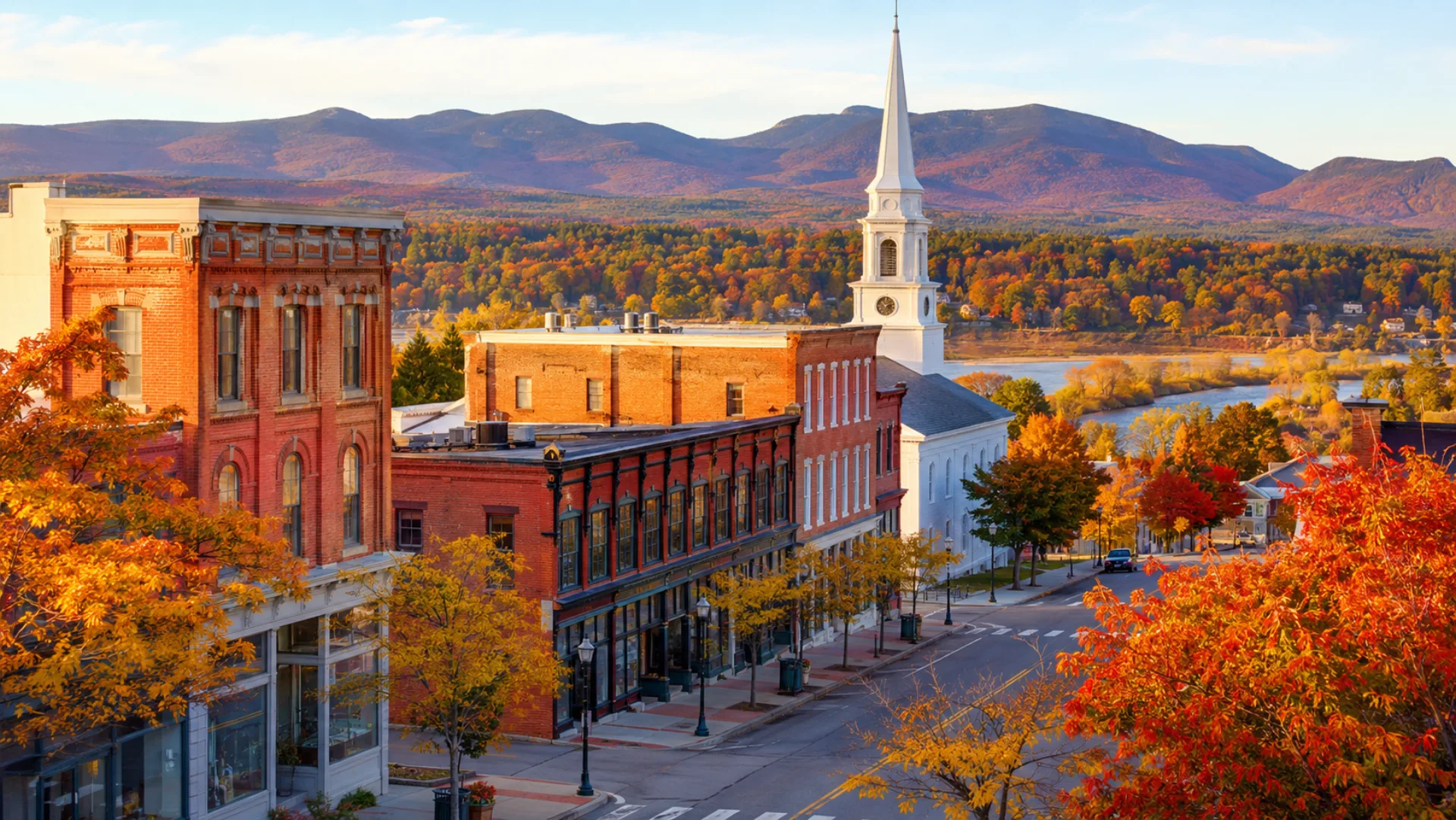
We keep a second office at 56 Main Street in downtown Plymouth, and the view from that window explains the town better than any statistic. In a single morning you'll see students crossing to class, a contractor grabbing coffee before a job in Rumney, a Holderness retiree heading to an appointment at the hospital, and a ski family stocking up before the drive to Waterville Valley. Everyone in this valley passes through Plymouth eventually — usually the same week.
Plymouth, New Hampshire sits where the Baker River meets the Pemigewasset, at the seam between the White Mountains and the Lakes Region. It's a Grafton County town of about 6,600 people with two of its own I-93 exits, a genuine walkable downtown, and the two institutions that shape everything else here: Plymouth State University at one end of Main Street and Speare Memorial Hospital above the other. Squam Lake is fifteen minutes east, Newfound Lake twenty minutes south, and three ski areas — Tenney, Waterville Valley and Loon — are between ten and thirty minutes away.
That combination — a working town with real services, ringed by the scenery people move north for — is why we tell so many buyers to at least look at Plymouth before committing to a resort address. This profile is the fuller version of that conversation: the college-town reality, the hub role, the outdoors, and the market, written by brokers who work this Main Street every week.
At a Glance
Plymouth New Hampshire at a Glance
- County
- Grafton County
- ZIP Code
- 03264
- Property Taxes
- Rate set each fall with the NH DRA — no state income or general sales tax
- Homes for Sale Now
- 33
Getting Here and Around
- I-93 Exits 25 & 26Two interstate exits serve the town — downtown Main Street is minutes from either ramp.
- Squam LakeAbout 15 minutes east through Holderness on Route 3 to Little Squam and the big lake.
- Waterville ValleyTwenty to twenty-five minutes northeast via Routes 175 and 49.
- Loon MountainAbout 30 minutes north on I-93 to the Lincoln exit.
- BostonRoughly 2 hours south on I-93 — closer than almost anywhere else in ski country.
Living in Plymouth
A College Town in the White Mountains
You can't write honestly about Plymouth without starting at the university. Plymouth State has been educating here since 1871 — Robert Frost taught at the Normal School a century ago — and today its campus climbs the hill at the south end of downtown with an enrollment measured in the thousands. The university is why the 2023 Census ACS puts Plymouth's median age at 26.8, decades younger than every other town in this valley, and why the town supports a density of cafes, restaurants and shops that a rural community of this size otherwise never could.
The campus gives back more than foot traffic. The Silver Center for the Arts puts theatre, music and dance on stage through the academic year at prices a family can justify, PSU's Division III teams — hockey and football especially — give winter weekends a hometown rooting interest, and lectures, galleries and community events are generally open to anyone who shows up. Add the Flying Monkey, the restored movie house downtown that books touring musicians and comedians, and Plymouth has an actual events calendar — something genuinely rare between Concord and the notches.
The student presence also defines the housing market's most distinctive layer. A meaningful slice of the in-town housing stock operates as academic-year rentals, which keeps investor demand persistent and gives sellers of walkable properties an audience most NH small towns can't offer. The rhythm is real, too: the town exhales every May and inhales every August. Some buyers love the energy of term time; others deliberately shop the neighborhoods across the rivers, a five-minute drive and a world quieter.
Living in Plymouth
The Everyday Hub of the Pemi Corridor
Plymouth's second identity is quieter but just as important: it's where this region does its errands. Speare Memorial Hospital — a 24-hour critical-access hospital with an emergency department — serves a coverage area that stretches from Waterville Valley to Newfound Lake. The full-size supermarkets, the pharmacies, the banks, the hardware and auto-parts stores, the walk-in clinic, the courthouse that handles the region's district-court business — they're all here, which is precisely why the surrounding towns can afford to stay as rural as they are.
For residents, that translates into a daily convenience the smaller towns simply can't match. Living in Campton, Rumney or Holderness means driving to Plymouth for most of the above; living in Plymouth means walking or making a five-minute hop. Commuters use the two interstate exits to reach Lincoln, Laconia or Concord, and the town's year-round employer base — the university, the hospital, the schools, the trades — keeps the economy running in mud season when tourist towns go dark.
Main Street itself is the part visitors remember. It's a real downtown in the old sense — a common at the north end, independent shops, restaurants that survive on locals rather than leaf-peepers, and sidewalks that stay busy after dark because the town has students, shift workers and families rather than just second-home weekenders. When people ask us what separates Plymouth from every other town profiled on this site, that's the answer: the others have scenery and quiet; Plymouth has scenery and a pulse.
Living in Plymouth
Outdoor Life on Two Rivers
Plymouth's geography is built around a confluence — the Baker River finishing its run down from Rumney and Wentworth to join the Pemigewasset right at the edge of town. Between the two you get easy canoe and kayak water, trout fishing within sight of downtown, and the Pemi River Trail, the flat riverside path locals use for morning runs and stroller walks. Just upstream, the Pemigewasset squeezes through the ledges at Livermore Falls, where a state forest on the Plymouth bank provides the river access — arrive early on a hot Saturday, because the whole valley has the same idea.
For trail time without a drive, the Walter-Newton Natural Area folds fields, forest and the small drop of Rainbow Falls into a conserved property a few minutes from downtown, and Plymouth Mountain's trailhead delivers a solid half-day hike to views over Newfound Lake. West of town on the Tenney Mountain Highway, Tenney Mountain is Plymouth's own ski area — a comeback story that gives the town lift-served turns ten minutes from Main Street, with none of the destination-resort parking scramble.
And when you want bigger terrain, Plymouth's position does the work. Waterville Valley's slopes are twenty to twenty-five minutes up Routes 175 and 49, Loon is about half an hour up the interstate, Squam's quiet coves are fifteen minutes east, and the White Mountain National Forest trailheads fan out in every direction. Plenty of our buyers ski three mountains and swim two lakes in a season — from one Plymouth driveway.
Living in Plymouth
Things to Do in Plymouth
Start downtown. Work through the coffee shops and restaurants along Main Street, browse the storefronts, and time a visit to the seasonal farmers market for local produce, bread and maple syrup. The town common anchors the calendar's small-town moments — holiday lighting, summer concerts, student move-in weekend chaos — and the Flying Monkey's marquee usually has a show worth planning an evening around.
The university doubles the options. Catch a play or a recital at the Silver Center, a hockey game in winter, or a football Saturday in the fall; check the galleries and lecture series if your tastes run quieter. Museums and family outings cluster nearby too — Polar Caves Park is minutes west in Rumney, the Squam Lakes Natural Science Center is a short drive east in Holderness, and scenic drives up either river valley fill a foliage afternoon.
Outdoors, rotate through the local circuit: a swim at the Livermore Falls day-use area, a loop at Walter-Newton, a paddle where the rivers meet, a Tenney ski night, an early-morning Plymouth Mountain climb. None of it requires a reservation or a resort wristband — which, once you live here, turns out to be the entire point.
Live Market Data
The Plymouth Market Right Now
For Sale in Plymouth — Live From the MLS
For-sale figures read the live MLS feed and change as homes come on and go under contract; sold figures are Owl's Nest Real Estate closings in Plymouth over the last 12 months.
The Market
The Plymouth Real Estate Market
Plymouth's market is the most layered one we work. In-town homes near campus and Main Street draw three buyer types at once — first-time buyers, PSU parents and rental investors — so well-priced walkable properties rarely sit. Beyond the village, the mix runs from classic New England neighborhoods across the rivers to farmhouses and view lots toward Tenney and Texas Hill, generally at prices well below the resort towns twenty minutes north. The 2023 ACS median home value of $277,300 tells the story: this is the valley's value play, and buyers priced out of Waterville Valley and Squam increasingly know it.
The live numbers below come straight from the MLS and update as the market moves. If you're shopping, every current Plymouth listing — with pricing, photos and history — is on our Plymouth homes-for-sale page. If you own here, our Plymouth seller guide explains how we price against actual Grafton County closings and market to the university, investor and ski-buyer pools at once. Either way, the people you'd be working with are the ones behind the window at 56 Main Street.
Plymouth NH — Your Questions, Answered
What county is Plymouth NH in?
Plymouth is in Grafton County, in western New Hampshire. Don't let the county-seat trivia confuse a search, though — Grafton County's administrative complex is up in North Haverhill, while Plymouth functions as the county's commercial center on the I-93 side and hosts the district courthouse that handles the area's circuit-court business. Day to day, everything that touches a Plymouth property — taxes, permits, assessments — runs through the town offices, not the county.
What is the zip code for Plymouth NH?
Plymouth uses ZIP code 03264 for the whole town, from the downtown core to the rural roads toward Tenney Mountain. The surrounding towns each carry their own: Holderness is 03245, Ashland 03217, Rumney 03266 and Campton 03223 — worth knowing, because homes with Plymouth convenience sometimes list under a neighboring ZIP a few minutes out.
What is the population of Plymouth NH?
Plymouth's population is about 6,618 according to the 2023 U.S. Census ACS five-year estimates — the largest town in the Pemi corridor, though still a small town by any wider measure. The number understates the daily reality: Plymouth State University's students, faculty and staff, plus hospital traffic and errand-runners from a dozen surrounding towns, make the downtown feel considerably busier than the census figure suggests. The student body also explains the town's strikingly young median age of 26.8.
Is Plymouth NH a good place to live?
For the right buyer, it's the most livable town in the region — and we say that as a brokerage headquartered in Campton. Plymouth is the only town in this valley where you can walk to groceries, a hospital, restaurants, a movie-house stage and a university, then be on a chairlift or a lake beach within thirty minutes. The honest trade-offs: the blocks nearest campus run louder during the academic year, in-town lots are smaller than the rural towns offer, and September traffic exists. Buyers wanting total quiet usually land in Rumney or Holderness; buyers who want convenience, culture and a real community calendar tend to pick Plymouth and stay.
What is Plymouth NH known for?
Three things, mainly. Plymouth State University, which has anchored the town since 1871 and drives its arts, athletics and dining scene. Its role as the service hub of the Pemi-Baker region — Speare Memorial Hospital, the courthouse and the valley's everyday shopping are all here. And its position as a gateway: Plymouth is the last real downtown before the White Mountains, which is why generations of ski and lake travelers know its Main Street even if they've never lived here. Locals would add the outdoors — two rivers, Tenney Mountain and the trail network — as the fourth thing the highway signs don't mention.
How far is Plymouth NH from Boston and the mountains?
Boston is roughly two hours south via I-93, with Plymouth's own exits 25 and 26 meaning no back-road finish to the drive. In the other directions, almost everything is under half an hour: Tenney Mountain about ten minutes west, Squam Lake fifteen minutes east, Waterville Valley twenty to twenty-five minutes via Routes 175 and 49, Loon Mountain about thirty minutes north, and Newfound Lake about twenty minutes southwest. That centrality is Plymouth's quiet superpower — it's the point from which the whole region is a short drive.