Sell With Us
Sell Your Home in Bridgewater New Hampshire
Frontage on the sunset side of Newfound, view homes on the hillside above it, and a tax line buyers check before they call — we sell the east shore for what makes it different.
What's Your Bridgewater Home Worth?
Selling in Bridgewater
The Shore That Faces the Sunset
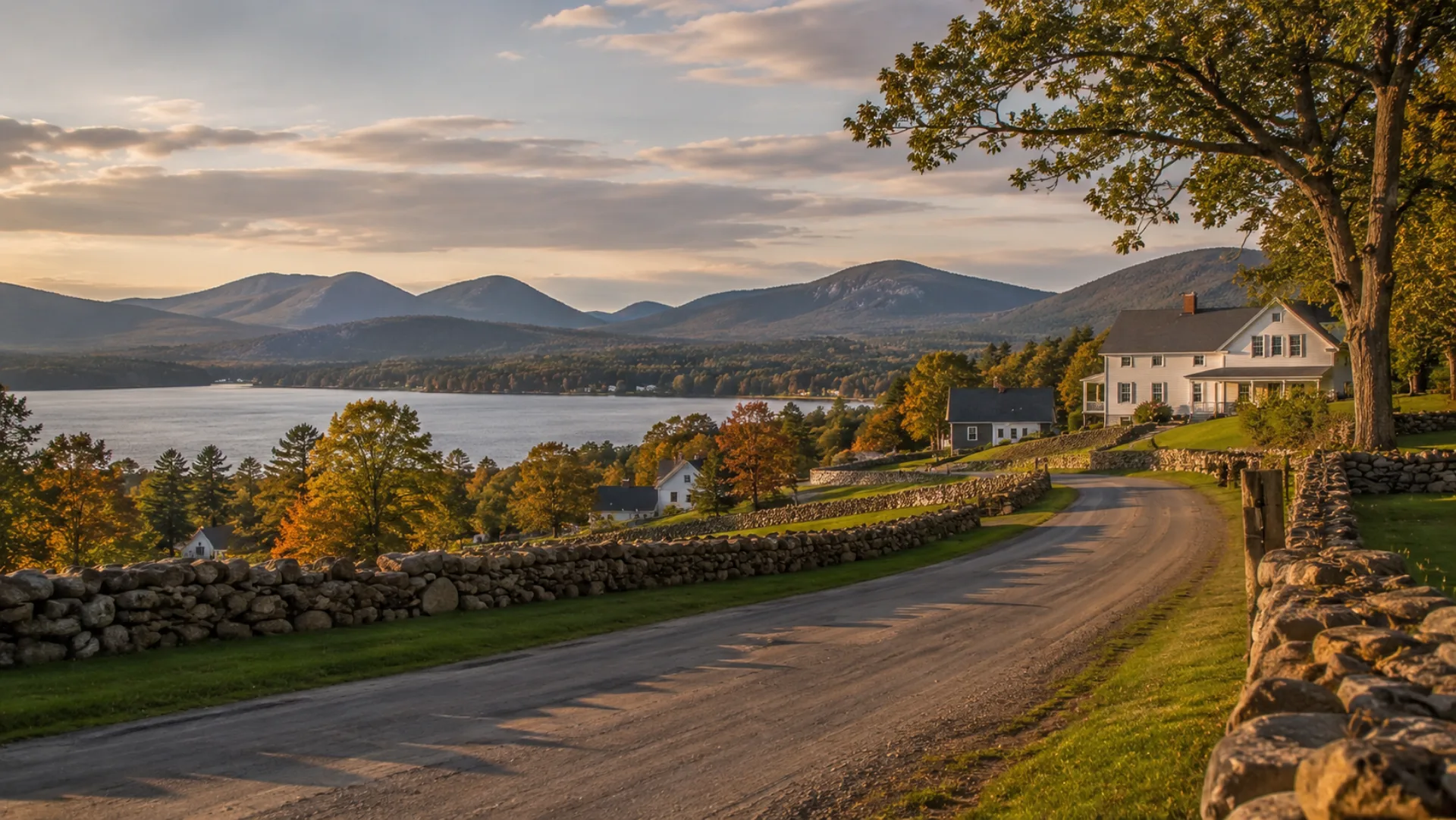
Bridgewater is the town on Newfound most buyers see before they ever learn its name. Drive Route 3A up Newfound's eastern shore and you're in it the whole way — the road riding the hillside with the water below, Whittemore Point reaching into the lake, driveways dropping toward docks on one side and climbing toward views on the other. There's no village center along that road and the town has never wanted one: about a thousand year-round residents make their homes here, errands happen a few minutes away in Bristol, and the quiet is the product.
We sell here from one exit up the interstate, and Bridgewater listings reward an agent who understands what makes the east shore specifically valuable. The frontage faces west, so evenings end with sun coming across the water instead of sinking behind the trees. The hillside stacks lake views that most towns in this region cannot offer at any price. And the tax bill — the line every second-home buyer compares before touring — has sat near the bottom of the local table year after year.
This page is how we approach a Bridgewater sale: the market numbers below whenever the MLS gives us enough Bridgewater closings to show honestly, and answers to the east shore's actual questions — private gravel roads, view-lot pricing, and what a low-tax reputation is really worth in a listing.
Live Market Data
The Bridgewater Market Right Now
For Sale in Bridgewater — Live From the MLS
For-sale figures read the live MLS feed and change as homes come on and go under contract; sold figures are Owl's Nest Real Estate closings in Bridgewater over the last 12 months.
Bridgewater Local Knowledge
One Road, Two Elevations and No Downtown
Bridgewater occupies the strip between Newfound's east shore and the ridge of Bridgewater Mountain behind it, with Route 3A as its single spine — Bristol at one end, Hebron's end of the lake at the other. The housing follows the topography in layers: waterfront along the lake side of 3A and out Whittemore Point, view homes on the slope above the road, and homesteads with acreage on the upland roads, where Bridgewater Mountain Road climbs to the open meadows locals call the Sky Fields and the hiking spreads toward Little Sugarloaf. Almost nothing along the way is commercial, and the town has kept it that way on purpose.
That mostly-residential character shapes who lives here and when. Much of the shore is second homes, so Bridgewater fills through the warm months and exhales after foliage; the year-round core is small, private and settled. For a seller the practical consequence is real: with no passing retail traffic there are no accidental buyers, so marketing has to place a property in front of its audience deliberately — and that audience, as the next section shows, is layered exactly the way the hillside is.
Bridgewater Local Knowledge
Bridgewater NH Real Estate Sells in Three Elevations
The lowest elevation is the frontage — the lake side of Route 3A and Whittemore Point — and it is the market's summit in every other sense: seldom offered, quickly claimed, and studied by buyers who may have watched this shore for years. The middle elevation is the view home, above the road with the lake spread beneath the windows, where value hangs on what those windows actually deliver — how much water, how much sky, whether the sightline survives summer leaf-out or depends on it. The top elevation is land and homesteads on the upland roads, selling on acreage, privacy and the short drive to Bristol's services, often with current-use enrollment in the file.
Each layer prices off its own logic, and the discipline is keeping them apart. Frontage comps against frontage, adjusted by the foot and the character of the shore. View homes comp against view homes — and because a lake view can mean anything from a panorama to a glint between trunks, we photograph the actual sightline for the listing and carry it into the appraisal conversation rather than letting a generic comparable average it away. As for the west-facing premium, we treat it as a claim to be demonstrated: paired closings on this lake show buyers paying for evening sun, and we would rather show a buyer that spread than adjective them toward it. On the east shore, the sun is a comp, not a slogan.
Bridgewater Local Knowledge
The Tax Line Is Part of the Listing
Ask around the lake and you'll hear it as folklore: Bridgewater is the cheap-tax town. The seed of it is true and structural — a shoreline of high-value property carries much of the levy while the town keeps its spending modest, and the resulting rate has held among the lower ones in this corner of New Hampshire for years. But the state resets every town's rate each fall, and folklore quoted as fact is how listings lose credibility. So we market the number, not the reputation: the current rate, your actual tax card, and the honest year-over-year picture, stated plainly where every comparison-shopping buyer will find them.
Handled that way, the tax line does quiet, persistent work for a Bridgewater seller. Second-home buyers weighing the shore towns run this arithmetic early — on identical budgets, a lower annual bill either widens what they can borrow or pays for the boat — and a listing that documents the advantage converts that math into preference. It also frames negotiation usefully: a buyer who has seen the carrying costs in writing argues less about them later. Small numbers, told truthfully, move big decisions here.
Bridgewater Local Knowledge
A Second-Home Shore Changes Hands on Its Own Clock
Many Bridgewater sales are second homes passing between second-home families, and those sales run on a calendar driven by summers, not school years. The strongest launch for anything near the water is when the east shore is doing what buyers imagine — docks in, evenings long, the lake lit from the west — while fall favors the view homes, when foliage does the staging and the sightlines open. What we plan around is the emptying: once the seasonal households head home, showings thin, and a lakeside listing that lingers into the gray months reads staler than it is. If the timing is yours to choose, we choose it together and early.
On rental income, the honest version: Newfound books genuine weekly summer business, and an east-shore house with water access earns well through those weeks — but this shore has no winter engine, and we underwrite accordingly. A four-season home can stretch the calendar through foliage and modest ski-season use; a summer place is a summer business, and we value it as exactly that. If you've rented, we present the record the way an income-minded buyer reads it; if you haven't, the analysis below produces a grounded number either way. On this shore we sell the house first and the income honestly second — that order is the credible one.
The Buyer Pool
Four Buyers Study the East Shore
The first is the sunset hunter — the buyer who has decided the water must face west and will pass on other frontage to wait for it; when a Whittemore Point or 3A-side property appears, they move with unusual speed. The second is the carrying-cost analyst: second-home households comparing the shore towns line by line, for whom Bridgewater's tax picture tips an otherwise even choice. The third buys elevation — the view-home and acreage buyer who prefers a hillside panorama to a dock, and often arrives through our land searches rather than the lake ones. And the fourth is the privacy buyer, for whom the absence of a village, a strip or a crowd is not a shortcoming to overlook but the entire reason Bridgewater beats the towns that have them.
Marketing to them is a matter of leading with the right fact. The sunset hunter needs the orientation and the frontage documented; the analyst needs the tax card and the numbers; the elevation buyer needs the sightline photographed in more than one season; the privacy buyer needs the quiet conveyed without a crowd of adjectives. One of those facts is your property's headline, and choosing it correctly is the first thing we do — on a shore with no walk-in traffic, a listing only works when it reaches the right watcher with the right first sentence.
What Is Your Bridgewater Home Worth
Pull an instant, comps-based number from recorded sales around Bridgewater — then have us hand-adjust for the three things algorithms miss on this shore: orientation, sightline and the tax card.
Selling a Bridgewater home that earns rental income?
Our experience operating vacation rentals gives us a different perspective when evaluating potential rental properties.
Selling in Bridgewater — Your Questions, Answered
How do you put a defensible price on a view lot with no house on it?
By pricing the file, because raw land sells on what a buyer can prove and permit. We document the sightline itself — photographed from the buildable area, in leaf-on and leaf-off conditions when the calendar allows — then assemble what land buyers and their lenders ask for: a survey or solid boundary evidence, legal access with any recorded rights over the road in, driveway feasibility on the grade, septic test-pit results, power at the lot line, and the parcel's current-use status. Comparables for view land are thin everywhere and thinner here, so the file does the persuading that comps can't. It also finds the right audience: serious New Hampshire land shoppers do their homework — many of them literally in our buying-land guide — and a documented lot is the one they shortlist.
Our road above 3A is private, shared by four houses, and the plowing has always been a handshake. Will that surface at closing?
Almost certainly, and it's far cheaper to handle before listing than during a contingency. Lenders on financed purchases routinely ask for a written, recorded road maintenance agreement on private ways — without one, some loan programs balk, which quietly shrinks your buyer pool toward cash. The fix is usually straightforward: a short agreement drafted by a real estate attorney, allocating plowing and grading among the households, signed and recorded before the sign goes up. Neighbors tend to cooperate once they understand it protects the value of all four properties, not just yours. If an agreement genuinely can't be assembled, we disclose the arrangement as it stands and aim the marketing at buyers the gap doesn't stop — but the recorded version is the one that keeps every option open.
We're selling the house and the wooded lot across the road in one deal. How does the transfer tax handle that?
The state taxes the consideration, however many parcels carry it. RSA 78-B applies $1.50 per $100 to what the buyer pays, split evenly between the parties — so a $560,000 house and a $120,000 back lot sold together mean $680,000 of consideration, and the seller's half comes to $5,100 at closing. Whether the parcels travel on one deed or two doesn't change the total, though how the price is allocated between them can matter for other reasons — the buyer's basis in each parcel, and the current-use status of the wooded lot if it's enrolled — so we have the closing attorney paper the allocation deliberately rather than by default. Bridgewater adds no local transfer tax of its own.
Can we actually advertise Bridgewater's low taxes, or is that asking for trouble?
Advertise the fact and skip the folklore. The true version is strong enough: the town's rate has stayed low by area standards year after year, a function of a valuable shoreline carrying the levy alongside a small municipal budget. What we never do is print a stale rate or a neighbor's anecdote, because New Hampshire towns reset rates every fall and a buyer's agent will check — a wrong number costs more credibility than the right one earns. Our listings state the current rate and your property's actual annual bill from the tax card, and let the arithmetic speak. Buyers comparing the shore towns do that math anyway; giving them accurate inputs simply makes sure your house is the one the spreadsheet favors.
Is the west-facing sunset premium real, or just something agents say at listing appointments?
It's real, bounded, and provable — which is exactly how we present it. Buyers on this lake pay more for frontage that holds the evening sun, and the cleanest evidence is paired closings: comparable waterfront on opposite shores settling at different numbers with orientation as the main difference. What we won't do is inflate it into a blank check, because orientation is one input among several — frontage quality, lot size and the house itself still carry most of the price. Where the premium reliably shows up is attention: west-facing listings draw faster, deeper interest, and an evening photo session on an east-shore deck does more selling than a page of copy. We schedule the photography for the hour this shore was made for.
The leach field sits on the only flat ground of our sloped lot. Should we worry before listing?
Worry less, prepare more. Hillside lots concentrate two questions buyers will definitely ask: where the system is, and where a replacement could legally go if it ever failed — because on a steep parcel the answer isn't obvious, and an engineered design has setbacks and slope limits to respect. So we get ahead of both: locate the system, pump and inspect it, dig out the approved design if one exists, and — when the lot is genuinely tight — have a septic designer sketch the replacement area before anyone asks. New Hampshire's disclosure statute, RSA 477:4-c, requires you to state in writing what you know about the system regardless; arriving with an inspection and a plan turns that disclosure from a red flag into proof of a well-kept house. On sloped land, the seller who has already answered the where-would-it-go question owns the negotiation.
Keep Exploring Bridgewater
Bridgewater for Buyers
Know the East Shore
Plan Your Sale
Ready-to-Sell Program
Preparing to Sell?
For qualifying listings, we help prepare your property for market — with a complimentary pre-listing home inspection and up to $2,500 in approved preparation expenses advanced upfront and reimbursed from your sale proceeds at closing.