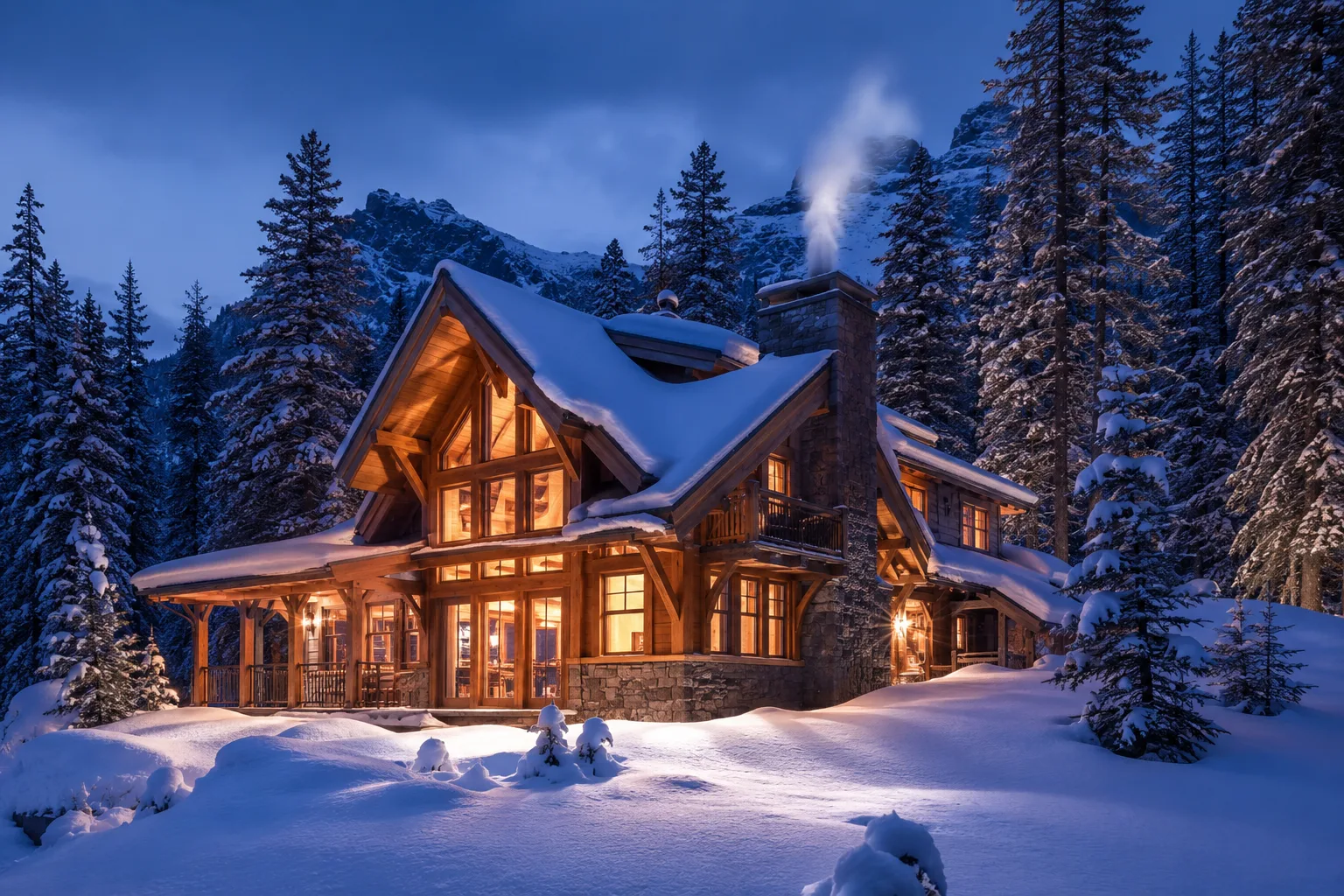

Buying land in New Hampshire comes down to five checks: current-use tax status (RSA 79-A), NHDES septic approval, a well site that clears the setbacks, legal road frontage and access, and financing built for raw land. Get those right and a lot can be the best-value way into the White Mountains or Lakes Region. This guide walks through each one.
Why land in New Hampshire is worth the homework
The case for buying land in NH starts with what the state doesn't take. There's no broad income tax and no sales tax, so the carrying cost of raw land is essentially its property tax bill — and on acreage enrolled in current use, that bill can be startlingly small. Add the supply picture: along the Route 49 corridor, the White Mountain National Forest hems in the buildable valley floor, and towns like Campton and Thornton can't sprawl. A finite supply of buildable lots about two hours from Boston, next to a national forest — that math has aged well.
The other half of the case is optionality. A finished house is one decision; a lot is a menu. Build now, build in five years, hold the timber, park a future retirement plan on it, or lay out a family compound in New Hampshire with room for the next generation. The buyers who win with land are usually the ones who couldn't find the house they wanted — so they bought the hillside it should sit on.
The two land markets — White Mountains and Lakes Region
New Hampshire land is not one market, and pricing it as one is the classic out-of-state mistake.
The White Mountains side is ski-and-summer country: Campton, Thornton, Woodstock, Lincoln, Rumney, up through the notches. Lots here sell on view, brook frontage, and drive time to Waterville Valley, Loon and the trailheads. Sloped lots are the norm, which means driveways and site work often do more to the budget than the land price does. The buyer profile is second-home builders and future year-rounders. If a finished house fits better, compare homes for sale in Campton NH and Thornton NH real estate against the cost of building.
The Lakes Region side — Bristol and the Newfound towns, Ashland, Holderness, Meredith and out toward Winnipesaukee — sells on water. Anything with frontage or deeded water access carries the lake premium (our Lakes Region waterfront guide compares the lakes behind it). Back from the water, the hill towns around Newfound Lake hide some of the best-value acreage in the state.
Both markets share one rule — the cheap lot is cheap for a reason, and the reason is almost always in the sections below.
Current use taxation and RSA 79-A
Many larger parcels on the market are enrolled in current use under RSA 79-A, which assesses qualifying open land on its productive value rather than its market value. The tax savings are dramatic; it's why a fifty-acre woodlot can carry a smaller tax bill than a condo.
| Category | Minimum to qualify |
|---|---|
| Forest land | 10 acres |
| Farm land | 10 acres, or any size producing $2,500+ a year in crops |
| Unproductive land | 10 acres |
| Wetland | Any size |
Source: NH DRA Current Use Criteria Booklet.
What buyers need to understand: enrollment transfers with the land, and buying current-use land doesn't trigger a penalty by itself. The land use change tax — 10% of the full and true (market) value of the changed portion — comes due only when land is taken out of current use, typically by building on it. Carve a house lot out of a forty-acre parcel and the tax applies to the acreage actually removed; the rest can stay enrolled as long as it still meets the minimums. Every purchase-and-sale agreement on current-use land should spell out who bears that tax if the buyer's plans trigger it. The NH property taxes guide covers the rest of the tax picture, including how views get assessed.
Perc tests and NHDES septic approval
Outside the handful of villages with municipal sewer, a future house runs on a septic system — and whether the lot can support one is the biggest go/no-go question in a land deal. New Hampshire's process, run by the NHDES Subsurface Systems Bureau:
- Test pits. An NHDES-permitted septic designer digs test pits to find the seasonal high water table and any ledge or impermeable layer. A percolation test is also run in some cases — "perc test" is the shorthand everyone uses for the whole evaluation.
- Subdivision approval, if the lot is under 5 acres. Since 1967, lots under five acres not on sewer need NHDES subdivision approval showing they can support a septic system. A small lot with no such approval on record is a red flag worth a call to NHDES before offering.
- Approval for construction. The designer's plan goes to NHDES; an approval for construction is valid for four years. An expired approval usually means a redesign, not just a paperwork renewal.
- Operational approval after the system is installed and inspected.
Ledge near the surface, a high water table, poor soils, or setbacks to wells and wetlands can shrink the buildable envelope or force an engineered system that costs multiples of a conventional one.
How this works in practice: on any unapproved lot, make the offer contingent on test pits and state septic approval, full stop. The best listings already carry an approval — worth paying for, because it converts the biggest unknown into a filed document. Mind the calendar, too: test pits want unfrozen ground, so a January deal often carries a spring contingency date. If the "lot" comes with an old seasonal camp on it, the log cabins guide covers how converting a camp to year-round use runs through this same septic process, and our overview of camps and cabins for sale in New Hampshire covers the wider camp market.
Wells and water
The drinking water comes from under the lot, usually via a drilled bedrock well. Two things matter at the buying stage.
- Siting. Under NHDES rules a well must sit at least 75 feet from a septic tank or leach field serving up to 750 gallons per day — which covers a typical house of up to five bedrooms — and that protective radius has to fit on your land. On a small or oddly shaped lot, your septic, your well and the neighbors' systems can genuinely constrain where the house goes.
- Quality. New Hampshire bedrock delivers naturally occurring arsenic and radon often enough that testing is routine, and PFAS testing has joined the standard panel. None of these are deal-killers; treatment systems solve them.
Depth and yield are unknowable until the drill rig shows up, so budget a realistic contingency rather than a hoped-for number, and talk to drillers who work the specific town — they know the neighborhood geology better than any map.
Road frontage, zoning, and Class VI roads
Every town writes its own zoning, and the differences are real money. Minimum lot sizes and road frontage requirements vary town to town and district to district — a parcel that's buildable in Thornton might not meet frontage in the next town over. Before committing to any lot, pull the zoning ordinance and confirm three things: the lot is a legal lot of record, it meets (or is grandfathered from) current dimensional requirements, and the intended use is permitted in that district.
Then there's access, where the traps live:
- Class VI roads. These are public roads the town no longer maintains — no plowing, no grading. Under RSA 674:41, building on one used to require a vote of the select board after planning-board review. Since July 1, 2026 (SB 281, Chapter 256 of the Laws of 2025), that vote is no longer required: the owner signs a waiver acknowledging the town won't maintain the road, provide services or accept liability, records it at the registry of deeds, and shows the lot and structures are insurable. Zoning, frontage variances and every other rule still apply. The practical problems don't change either — no winter plowing, emergency access, and lenders who are wary of Class VI collateral. The "bargain" forty acres up a Class VI road is still the most common mirage in NH land shopping.
- Private roads. Buildable and common — but conventional lenders routinely want a road maintenance agreement before they'll finance, and hunting for one that doesn't exist is no fun mid-contract. Some towns now have a written private-road building policy (allowed since a 2025 amendment); ask for it.
- Driveway permits. A curb cut onto a town road needs a permit from the town; onto a state highway like Route 49 or Route 3, from NHDOT. Sight lines decide it, and on a fast stretch of state road a lot without a safe curb-cut location has a problem no survey will fix.
Shoreland, wetlands, easements and utilities
Shoreland. On lakes and ponds over 10 acres, fourth-order and larger rivers, and other designated waters, the Shoreland Water Quality Protection Act (RSA 483-B) covers the first 250 feet from the reference line. Most new construction there needs an NHDES shoreland permit. Primary structures must sit at least 50 feet back; the woodland buffer between 50 and 150 feet keeps at least 25% unaltered; and once impervious surface in the protected zone passes 20%, an engineered stormwater system is required, with added buffer-planting rules past 30%. Septic setbacks from the water are also larger than elsewhere, which can decide where a lakefront house sits.
Wetlands. Filling or dredging a wetland needs an NHDES wetlands permit, and many towns add their own wetland buffers on top. Get a wetland delineation on any parcel where the "buildable" area sits near wet ground.
Easements and title. Rights-of-way, utility easements, old logging roads and deeded lake access for back-lot owners all run with the land. A title search by a New Hampshire attorney and a current boundary survey catch them before closing, not after.
Power and internet. Ask the utility for a line-extension estimate early: a long private power run up a mountain driveway is a real line item. Confirm broadband at the address, not just in the town.
Timber, views, and what actually drives land value
Wooded acreage is a crop as well as a setting. Harvesting triggers New Hampshire's timber tax — a 10% yield tax on the stumpage value, with an intent-to-cut filed with the town first — and a well-run harvest can fund a chunk of the site work. More often the calculation runs the other way: buyers clear selectively for the view, and the view is the value. A ridgeline lot that opens to Franconia Ridge or across a valley is a different asset after the cut than before it. Do it with a licensed forester — high-graded land shows the scars for decades, and inside the shoreland zone the cutting rules above apply.
Financing land is different
Banks treat raw land as riskier collateral than houses, and the terms show it: land loans typically want bigger down payments — often in the 20–35% range — with shorter terms and somewhat higher rates, and the friendliest lenders are the local and regional banks that know these towns. Three routes that consistently work:
- A local-bank land loan, refinanced into construction financing when you're ready to build.
- A construction-to-permanent loan from the start, if the build timeline is real — one closing, land purchase and build wrapped together.
- Seller financing, which turns up more often on rural land than people expect, especially on parcels held by one family for a long time. The request can be structured as part of the offer.
Closing costs: New Hampshire's real estate transfer tax is $0.75 per $100 of price paid by each side ($1.50 per $100 in total), land closes through attorneys or title companies like any other property, and a boundary survey — if the lot hasn't had one in decades — belongs in the budget. For the full purchase process, see the New Hampshire home buyer guide.
Land due diligence checklist
| Check | Who does it | Why it matters |
|---|---|---|
| Zoning, frontage, lot of record | Town planning / zoning office | Decides whether a house is allowed at all |
| Test pits and septic approval | NHDES-permitted designer | The main go/no-go for a building lot |
| Road class and access | Town office; attorney | Class VI and private roads change permits, plowing and lending |
| Boundary survey | Licensed land surveyor | Confirms acreage, frontage and encroachments |
| Title and easements | NH real estate attorney | Rights-of-way and access rights run with the land |
| Current-use status | Town assessor | Who pays the 10% change tax, and when |
| Shoreland / wetlands | NHDES; wetland scientist | Setbacks and permits near water |
| Power and broadband | Utility; providers | Line-extension costs can be large |
| Builder site visit | Local builder | Site-work cost on slopes and ledge |
The buy-then-build path
Here's how the timeline goes when it goes well. Buy the lot in fall or winter (the negotiating season), run the septic and survey diligence, and spend the cold months on design. Spring: driveway permit, site work, well. Then the build — and this is where the local reality check comes in. Good builders in the Waterville Valley corridor and Lakes Region book out well in advance, and mountain builds carry line items flatland budgets miss: long driveways, power runs, frost-depth foundations, snow-load engineering. Getting a builder's eyes on a lot before closing is one of the most valuable steps in the whole process — a builder can read a slope quickly and tell you whether the site work is modest or a second mortgage. The build itself — permits, energy code and real costs — is covered in our guide to building a new home in New Hampshire.
The reward for the patience is the thing you can't buy finished: the right house, on the right site, facing the right ridge.
Where to look right now
Live land inventory, straight from the MLS, town by town: Campton land, Thornton land and homesites inside Owl's Nest Resort on the Route 49 corridor; Woodstock land and Lincoln for the Loon side; Plymouth and Rumney for year-round hill-town acreage; Ashland and Bristol for the Squam-and-Newfound side of the story. For the broader context, browse the White Mountains and Lakes Region area pages — and for anyone new to the state entirely, the moving to New Hampshire guide is the place to start.
Selling land in New Hampshire
Everything above runs in reverse for anyone holding the acreage: a current survey, test pits or a filed septic approval, and organized current-use paperwork turn "raw acreage" into an "approved building site" — often a very different price. Our guide to selling land in New Hampshire covers pricing and preparation in full; the sellers hub and town pages for Campton, Thornton and Plymouth cover the rest.
Frequently asked questions
Is buying land in NH a good investment?
Held patiently, it has been — supply in the valleys is genuinely finite, carrying costs are low (especially in current use), and the buyer pool two hours north of Boston keeps growing. But land is illiquid and forgives no skipped diligence; the return comes from buying the right lot, not just any lot.
How much does land cost in New Hampshire?
The honest answer is that the range is enormous — a back-lot acre in a hill town and a Newfound-view parcel are different markets entirely. Price per acre falls as acreage rises, and value concentrates in the attributes: frontage, view, septic approval, access. Browse the live land listings rather than trusting any static number.
What is current use, and should the land stay in it?
Current use (RSA 79-A) assesses qualifying open land — generally ten-plus acres of forest, farm or unproductive land — at its productive value instead of market value, cutting the tax bill dramatically. Most buyers of larger parcels keep it enrolled and pay the land use change tax, 10% of market value, only on the acreage they eventually develop.
Do you need a perc test before buying land in NH?
If the lot has no state septic approval and no municipal sewer, yes — make the purchase contingent on test pits by an NHDES-permitted designer and on state septic approval. An approval for construction is valid for four years, so check the date on any approval that comes with a listing. It's the difference between a building lot and an expensive place to park a camper.
How much road frontage is needed to build?
Whatever the town's zoning ordinance says for that district — there is no statewide number, and requirements genuinely vary town to town. Verify frontage, lot-of-record status and permitted use against the specific town ordinance before offering, and ask whether a lot with short frontage would need a variance from the zoning board.
Can you build on a Class VI road in New Hampshire?
Often, yes. Since July 1, 2026, RSA 674:41 no longer requires a select-board vote: the owner signs and records a waiver releasing the town from maintenance and liability and shows the property is insurable. Zoning and frontage rules still apply, the town still won't plow, and lenders may balk, so price the private road upkeep in.
Can you live in a camper or tiny home on your land while building?
Town-dependent. Some towns allow temporary occupancy during construction by permit; others prohibit camping on private lots beyond short stints. Ask the town's building department before planning on it — it's a five-minute call that prevents a very awkward summer.
Can you finance land with a regular mortgage?
No — raw land takes a land loan (bigger down payment, shorter term) or a construction-to-permanent loan for a near-term build. Local banks that know these towns are consistently the best starting point, and seller financing is worth asking about on long-held rural parcels.
Walk the land before you buy it
No listing photo tells you how a lot sits — where the water moves in spring, where the morning sun lands, whether the knoll that looks buildable is ledge with a haircut. That takes boots on the ground. Owl's Nest Real Estate walks parcels with serious land buyers across the Route 49 corridor and the Lakes Region. Start browsing on the property search.
This guide is general information, not legal, tax or engineering advice. Zoning ordinances, current-use rules, septic and shoreland regulations, and lending terms change and vary by town — confirm current details with the town, NHDES, your lender and your own advisors before relying on them. Figures and statutes checked as of September 2026.
Sources and further reading
- NH DRA — Current Use Criteria Booklet (RSA 79-A)
- NH Department of Revenue Administration — Current Use
- NHDES — Septic Systems (subdivision and construction approval)
- NHDES SSB-6 — Before You Buy a Property
- NHDES DWGB-21-1 — Site Selection for Private Drinking Water Wells
- NHDES — Protected Shoreland (RSA 483-B)
- NH RSA 674:41 changes for Class VI and private roads (Alfano Law summary)
- NH RSA 79 — Forest Conservation and Taxation (timber yield tax)
- UNH Cooperative Extension — Forestry and land resources