
Newfound Lake is a roughly 4,100-acre, 183-foot-deep lake shared by Bristol, Bridgewater, Hebron and Alexandria, New Hampshire — one of the state's clearest big lakes, with about 22 miles of shoreline, no commercial strip, and no invasive plants. Waterfront is scarce: five waterfront homes sold in the first ten months of 2024, at a $1.4 million median.
This guide covers what makes Newfound different, how Bristol, Bridgewater, Hebron and Alexandria compare as markets, what's actually for sale on and near the water, and the waterfront rules that trip up out-of-state buyers.
Most buyers find Newfound the same way: they start out shopping Winnipesaukee, see what waterfront costs there, and ask whether there's anything quieter. Or they read that Newfound Lake NH has some of the clearest water in the country and drive up to see for themselves. Either way, the second question is always the same — why doesn't anyone talk about this lake? The honest answer is that the people who own here like it that way. Newfound lake real estate is a small, tight market with a lot of families who've held their places for generations. For anyone who already knows they want water, the lakefront homes page has everything currently listed on and around the water in the region.
Newfound Lake at a glance
| Fact | Newfound Lake |
|---|---|
| Surface area | About 4,100 acres (roughly 7 square miles); some surveys put it near 4,450 |
| Depth | 183 feet maximum, about 74 feet average |
| Size | About 6 miles long and 2.5 miles wide; 22 miles of shoreline, five islands |
| Shore towns | Bristol, Bridgewater, Hebron, Alexandria (Grafton County) |
| Water quality (2025) | 27.7-foot clarity, 3.8 ppb phosphorus, no harmful algal blooms (NLRA) |
| Invasives | No invasive plants found in the NLRA's 2026 shoreline survey; spiny water flea detected in 2025 |
| Public beach | Wellington State Park, Bristol — $5 adults, $2 ages 6–11 (2026) |
| Public boat ramp | NH Fish & Game ramp beside Wellington, free, open 24/7 |
| From Boston | About 2 hours via I-93 Exit 23 and Route 104 |
Sources: Lakes Region Tourism Association, Newfound Lake Region Association, NH State Parks. Figures as of September 2026.
What makes Newfound different
Start with the water, because that's the whole story here.
Newfound Lake covers about 4,100 acres — closer to 4,450 by the figure Wikipedia uses — which makes it one of the largest lakes in New Hampshire, and one of the deepest: 168 feet by the old soundings, 183 by the surveys most people cite now. The average depth is around 74 feet. The lake is fed by eight underground springs plus two cold rivers, the Fowler out of Alexandria and the Cockermouth out of Groton, and it drains through the Newfound River right in downtown Bristol on its way to the Pemigewasset. All that depth and cold spring water is why the lake stays so clear.
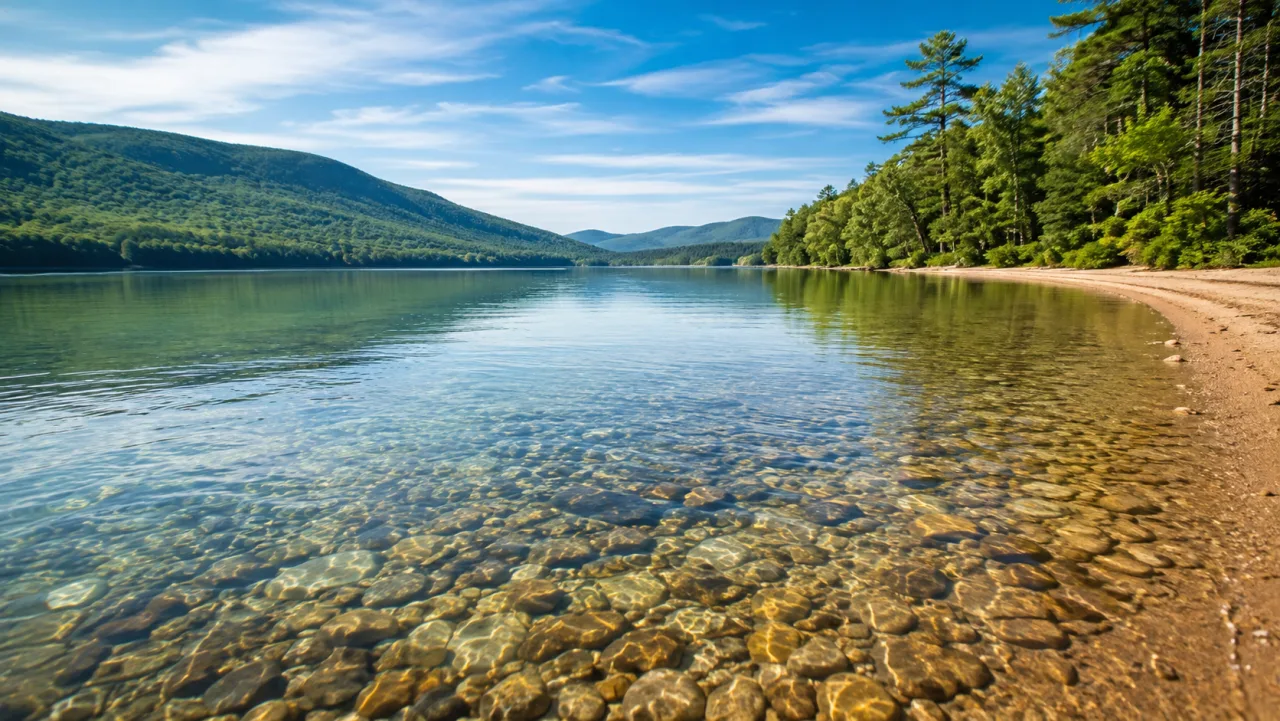
And it is genuinely clear. Is Newfound the cleanest lake in New Hampshire? Nobody hands out an official trophy for that — but a widely circulated analysis ranked Newfound the 8th clearest lake in the entire United States, and Yankee magazine has called it the most beautiful lake in New Hampshire. More convincing than any ranking: the Newfound Lake Region Association has been protecting this watershed since 1971, and its volunteers measure water quality weekly at seven sites from mid-May through September. The 2025 numbers are the kind other lake associations envy — water clarity of 27.7 feet, total phosphorus down to 3.8 parts per billion, and no harmful algal blooms even in a year when cyanobacteria reports rose statewide. Weed Watcher volunteers surveyed the entire shoreline again in 2026 and found no invasive plants. One caution the NLRA flags honestly: the invasive spiny water flea, a tiny zooplankton that hitchhikes on fishing line and boats, was found in the lake in 2025 — one more reason Clean, Drain, Dry matters at every launch. On a calm July morning you can drift over twelve feet of water and count the pebbles on the bottom.
Then there's the quiet. Winnipesaukee is roughly ten times Newfound's size, with more than ten times the shoreline, and it has the boat traffic, marinas, and commercial strip to match. Newfound has none of that. There's no Weirs Beach here, no bar you can dock at, and thousands of acres of the surrounding watershed are in permanent conservation. Several century-old summer camps still hold long stretches of shoreline, which keeps whole sections of the lake dark and undeveloped. On a Saturday in August, when Winnipesaukee looks like a highway, Newfound looks like a lake.
That combination — clean, deep, quiet — is the product. It's also why supply is so tight, covered below.
The four towns around the lake
Newfound's shoreline is split among four towns, and they are genuinely different markets. The first question on any search for homes for sale on Newfound Lake NH is which town — because the answer changes the taxes, the services, and the kind of property you'll find.
Bristol
Bristol is the gateway and the working heart of the lake. The town holds the southern shore and most of the west side, including Wellington State Park, and it's where the Newfound River leaves the lake and drops through the old mill district downtown. Bristol is the only shore town with a real downtown — a brick-front main square with restaurants, a hardware store, groceries, and services — and it carries most of the year-round population, a bit over 3,000 people. For a house to live in full-time with plowed roads, a school system, and a five-minute run to a grocery store, Bristol is usually the starting point. It's also where most of the lake's non-waterfront inventory sits, which makes it the value entry point for buyers who want Newfound access without Newfound frontage.
Bridgewater
Bridgewater runs up the east side of the lake, and it's the quiet-money town. No downtown, roughly a thousand residents, and a long, coveted stretch of shoreline including Whittemore Point. Bridgewater has carried one of the lower property tax rates in the state for years — its 2025 rate was $6.35 per $1,000 of assessed value, and Hebron's was $9.55 — because a large waterfront tax base and a small town budget will do that. Rates reset every fall, so confirm the current number before building it into the math; our guide to NH property taxes explains how to compare towns. East-shore frontage here gets afternoon sun and sunset views across the water, and when a true waterfront home comes up in Bridgewater, it rarely lasts long.
Hebron
Hebron owns the north end of the lake, and it's the postcard. The village common — white church, town office, general store — is about as quintessentially New Hampshire as it gets, and roughly 600 people live here year-round. The north end of the lake is shallower and sandier than the rest, which families with small kids love, and it's ringed with conserved land: NH Audubon's Paradise Point Nature Center protects a stretch of natural shoreline, and the NLRA's Grey Rocks conservation area sits where the Cockermouth River comes in. Hebron waterfront is scarce and priced like it. What comes up more often is village and near-lake property with deeded or association beach access.
Alexandria
Alexandria is the sleeper. The town only touches the lake along a short piece of the southwest shore off West Shore Road, and the rest of it is classic rural New Hampshire — old farms, dirt roads, and the whole eastern flank of Mount Cardigan, where the AMC runs its Cardigan Lodge. For buyers, Alexandria is where the dollar goes furthest: trading proximity for acreage, with many properties carrying deeded rights to a shared beach on the lake. If the plan is a big garage, a view, and a ten-minute drive to the boat, look here.
And one honorable mention: Groton, just up the Cockermouth valley behind Hebron. No lake frontage, but it's home to Sculptured Rocks Natural Area, where the river has carved a granite gorge full of potholes and channels on its way down to the lake — the local swimming hole for generations, and one of the stranger and prettier spots in the state. Groton land and camps are the deep-value end of this market.
What's actually for sale here
The Newfound market has two distinct products, and it pays to know which one you're shopping for.
The old family camps. A large share of Newfound lake property is original stock: seasonal cottages built anywhere from the 1920s through the 1970s, held in the same families for decades. These are the classic camps — knotty pine, a woodstove, a screened porch over the water, maybe a boathouse that predates every rule now on the books. When they sell, it's often because a generation turned over and no heir wanted to buy the others out. They're wonderful, and they come with diligence work: seasonal water lines, older septic systems, and additions built long before permitting was what it is now. More on that below.
The year-round homes. Mixed in — and growing every year — are winterized, four-season houses: camps that were torn down or rebuilt, plus newer construction on the roads above the lake. These carry real foundations, drilled wells, modern septic, and heating systems that don't care what February does. They cost more, and they should.
On price: don't trust a price table in an article, this one included, because this market is thin enough that three sales can move the whole picture. What holds is the structure. True waterfront — your own frontage, your own dock rights — is the top of this market and trades at a premium that surprises nobody who's shopped Squam or Winnipesaukee, though Newfound still generally comes in under both for comparable frontage. Water-access properties — a home near the lake with deeded or association rights to a shared beach and sometimes a mooring — are the middle tier and, frankly, where the best value on this lake lives. Village and rural homes in Bristol, Alexandria, and Groton are the entry point. For scale, Meredith-based Roche Realty Group's tallies of MLS closings counted five Newfound waterfront sales at a $1.4 million median in January–October 2024, up from ten sales at a $1,087,500 median in all of 2021 — a small sample, but the direction is clear. Check what's on the market right now for the current reality.
One distinction worth underlining, because it's the single most common confusion in Newfound purchases: waterfront and water-access are different products at very different prices. Waterfront means you own to the water. Water-access means you have legal rights — deeded in the chain of title, or through a road or beach association — to use a shared piece of shoreline. Water-access can be a terrific buy, but read the actual language: some rights include a mooring or dock space, some are beach-only, some associations have waiting lists for boat slips, and some "lake views" come with no rights at all. The deed language on any water-access property belongs in the review before an offer gets written.
Waterfront rules and the diligence that matters
Buying on the water in New Hampshire comes with a rulebook, and Newfound's cleanliness exists partly because of it. Three things every buyer here should have in front of them:
The Shoreland Water Quality Protection Act. State law — RSA 483-B — governs the first 250 feet of land from the water's edge on every public waterbody in the state, Newfound included. Inside that protected shoreland, primary structures must sit at least 50 feet back from the water, a natural vegetated buffer has to be maintained along the waterfront, there are limits on how much of the lot you can clear and pave, and most construction, landscaping, or tree work near the water needs a shoreland permit from NHDES before anything gets touched. Towns can layer stricter rules on top. What this means practically: that 1940s camp sitting 20 feet off the water is grandfathered, but you can't tear it down and rebuild it wherever you like — expansions and rebuilds get complicated fast, and the permitting timeline belongs in the plans, not the surprises. Before buying any Newfound waterfront with renovation dreams, talk to the town and, usually, a local surveyor who knows the shoreland file. Our Lakes Region waterfront buyer's guide covers the shoreland numbers, dock-permit limits, and the full due-diligence checklist.
Septic, seriously. Almost everything around this lake is on private septic, and the old camps are where buyers get hurt. Since September 1, 2024, RSA 485-A:39 has required a New Hampshire–licensed septic evaluator to inspect any developed waterfront property whose system lies within 250 feet of the water before it changes hands — at the buyer's expense — and a system found in failure must be replaced within 180 days of the transfer. Systems are sized by bedroom count, many original camp systems were built to standards that no longer exist, and a failed leach field 60 feet from the cleanest lake in the region is both a five-figure repair and a permitting project with setback constraints on a small lot. On every older lake property, get the septic design and a full inspection with the tank pumped — not a "visual assessment." No exceptions, no matter how charming the porch is.
Water and winter. Plenty of seasonal camps draw water from the lake or a shallow dug well through lines that were never buried below frost. That's fine for a July place; it's a project if the plan is Thanksgiving on the lake. If year-round use is the goal, budget for a drilled well and frost-protected plumbing where they don't already exist, and drive the road to the house imagining February — some private lake roads around Newfound are association-maintained, some barely, and the maintenance agreement (or the absence of one) belongs in the diligence.
None of this should scare anyone off. It's the same rulebook that keeps the water clear enough to justify the price. It just rewards buyers who work with someone who has walked these specific shorelines before.
The lake through the seasons
What is the lake like outside of August? Here's the honest calendar.
Summer is the main event. Wellington State Park at 614 West Shore Road in Bristol has the largest freshwater swimming beach in the entire New Hampshire state park system — a half-mile of sand under the pines — plus picnic groves and a peninsula nature trail. Day use in 2026 costs $5 for adults and $2 for children 6–11; younger children and New Hampshire residents 65 and over get in free. Day-use reservations open 30 days ahead on ReserveAmerica (walk-in spots go first-come), pets aren't allowed, and the park is staffed daily from mid-May to mid-September, then open weekends with self-serve payment into October. A Fish & Game boat launch adjoins the park with free, 24-hour year-round access, and there are several more ramps around the lake, so getting a boat in is rarely the problem it is on some lakes — our guide to boat launches in New Hampshire covers the public ramps statewide. The water is cold into June — it's spring-fed and 180 feet deep, that's the deal — and glorious from July on.
Fishing is quietly excellent and one of Newfound's underrated selling points. All that deep, cold, oxygen-rich water makes this one of the better lake trout and landlocked salmon fisheries in the state, with smallmouth bass along the rocky drop-offs and salmon stocked annually. Serious trollers work this lake from ice-out on, and in winter the bob-house crowd sets up over the deep holes for lake trout — check the current Fish and Game rules for the season specifics, because salmon and trout regulations here have their own fine print.
Fall might be the best-kept secret on the lake. The hills around Newfound — Cardigan to the west, the Groton highlands to the north — light up in late September, the summer crowd is gone, the water holds enough warmth for a brave swim into early October, and the salmon fishing picks back up. For property tours, this is the season to come.
Winter is quieter but far from dead. The regional snowmobile corridor network runs through these towns — the NH Snowmobile Association clubs groom hundreds of miles through this part of the state — and the skiing situation is better than most people realize: Ragged Mountain is about 20 minutes from Bristol down Route 104, Tenney Mountain in Plymouth is about 25 minutes from the north end of the lake, and Cannon, Loon, and Waterville Valley are all within roughly 45 minutes up I-93. A winterized Newfound house is a legitimate ski base, not just a summer place in hibernation.
And the whole year runs on one logistical fact: Bristol is about two hours from Boston, straight up I-93 to exit 23. Close enough for a Friday-night arrival, far enough that the lake never turns into a suburb.
Rental potential, honestly
The property-manager's read, rather than the brochure version:
Newfound is a strong summer rental market. The lake's reputation — clean water, Wellington's beach, the quiet — books solid weekly rentals from late June through Labor Day, and a true waterfront house with a dock commands premium weekly rates in that window. Foliage adds a few more good weeks. The honest caveat is the winter: unlike Campton and Thornton rentals sitting between two major ski resorts, Newfound-area homes don't have a headline ski draw at the front door, so the off-season calendar depends on how well the house works as a Ragged/Tenney ski base and a snowmobile-trail property. A four-season house near Bristol with hot tub and trail access can book year-round; a seasonal camp is a twelve-week business, and it should be underwritten that way.
The rules are the same statewide framework covered in the Campton Airbnb guide — the state Meals and Rentals tax registration is mandatory before the first guest, and town-level short-term rental rules evolve at every March town meeting, so call the specific town office before buying on a rental thesis. For owners who'd rather hand the whole operation to someone local, that service exists.
How to buy on this lake
Here's the structural fact that shapes everything: Newfound has about 22 miles of shoreline, minus the state park, minus the summer camps, minus the conservation land, minus everything held by families who have no intention of selling. The tradable supply of Newfound lake homes for sale in any given year is small, and the best waterfront frequently sells fast — sometimes before it's widely marketed, through agents who work the lake and know who's thinking about selling.
So the playbook is unglamorous and it works:
- Decide the product first. True waterfront, water-access, or near-lake value — the budgets and the search strategies are completely different, and buyers who haven't decided end up chasing all three and winning none.
- Get financing fully underwritten before shopping. When a good camp hits in June, the winner is usually whoever can move in days, not weeks.
- Watch the market continuously, not casually. Set up listing alerts for Bristol, Bridgewater, Hebron, and Alexandria to see new inventory the day it lands — on a lake this tight, knowing about a property before it lists is often the entire game.
- Tour in the off-season. Anyone can love a lake house in July. Seeing the road, the driveway, and the light in November tells you what you're actually buying.
Newfound sits inside the broader Lakes Region market; for anyone still weighing this lake against Squam, Winnisquam, or Winnipesaukee, the Lakes Region overview walks through how they compare.
Frequently asked questions
Is Newfound Lake the cleanest lake in New Hampshire?
There's no official ranking, but Newfound has as strong a claim as any lake in the state. It's spring-fed and deep, its 2025 clarity reading was 27.7 feet with phosphorus at 3.8 parts per billion, and no invasive plants have been found on its shoreline. One analysis rated it the 8th clearest lake in the country, and the NLRA's weekly monitoring data backs the reputation up with forty years of numbers.
How deep is Newfound Lake?
Deep — 183 feet at its deepest point by the commonly cited surveys, with an average depth around 74 feet, which makes it one of the deepest lakes in New Hampshire. That depth, plus the springs that feed it, is why the water stays cold into June and clear all summer, and why it supports a strong lake trout and landlocked salmon fishery.
What towns are on Newfound Lake NH?
Four towns share the shoreline: Bristol on the south and west, Bridgewater on the east, Hebron at the north end, and Alexandria on a short stretch of the southwest shore. Groton sits just upstream in the hills without frontage. Anyone searching Newfound Lake NH real estate is really searching those four town markets, each with its own tax rate, services, and mix of camps and year-round homes.
How much do waterfront homes on Newfound Lake cost?
Few sell in any year, so medians swing. Roche Realty Group's tallies of MLS closings counted five Newfound waterfront sales at a $1.4 million median in January–October 2024, versus ten sales at a $1,087,500 median in 2021. Original seasonal camps sit at the lower end, rebuilt year-round homes with good frontage at the top, and water-access homes with deeded beach rights typically cost far less than true frontage.
How far is Newfound Lake from Boston?
About two hours door to door — I-93 north to Exit 23 in New Hampton, then about ten minutes west on Route 104 into Bristol. That puts the lake close enough for Friday-night arrivals from Greater Boston and southern New Hampshire, and about 25 minutes from Plymouth and the White Mountains ski areas off I-93.
Can the public access Newfound Lake?
Yes, generously. Wellington State Park in Bristol has the largest freshwater swimming beach in the state park system, with 2026 day-use fees of $5 for adults and $2 for children 6–11. A free NH Fish & Game boat ramp next to the park is open 24 hours, year-round, and there are additional launches around the lake.
Are there really homes for sale on Newfound Lake right now?
Usually a handful, spanning everything from original camps to rebuilt year-round waterfront — and the good ones don't linger, because families hold shoreline here for generations. Water-access and near-lake homes in Bristol, Alexandria, and Groton come up more often. The current inventory is the only honest answer to this question on any given day.
Seeing the lake in person
Water-clarity statistics only go so far; the thing that actually sells Newfound is standing on the shore at Wellington on a clear morning and looking down into it. Owl's Nest Real Estate lists and sells in all four shore towns and can cover the lake in an afternoon — deed language pulled on anything with water rights, the septic and shoreland questions walked through before commitment, and a straight answer when a property is priced on charm instead of substance. Browse the lakefront listings or set up an alert to watch the market.