
Sell With Us
Sell Your Home in Waterville Valley New Hampshire
Condo-smart pricing from in-building comps, a rental calendar turned into sale evidence, and a buyer list that skis, golfs and books this valley in every season.
What's Your Waterville Valley Home Worth?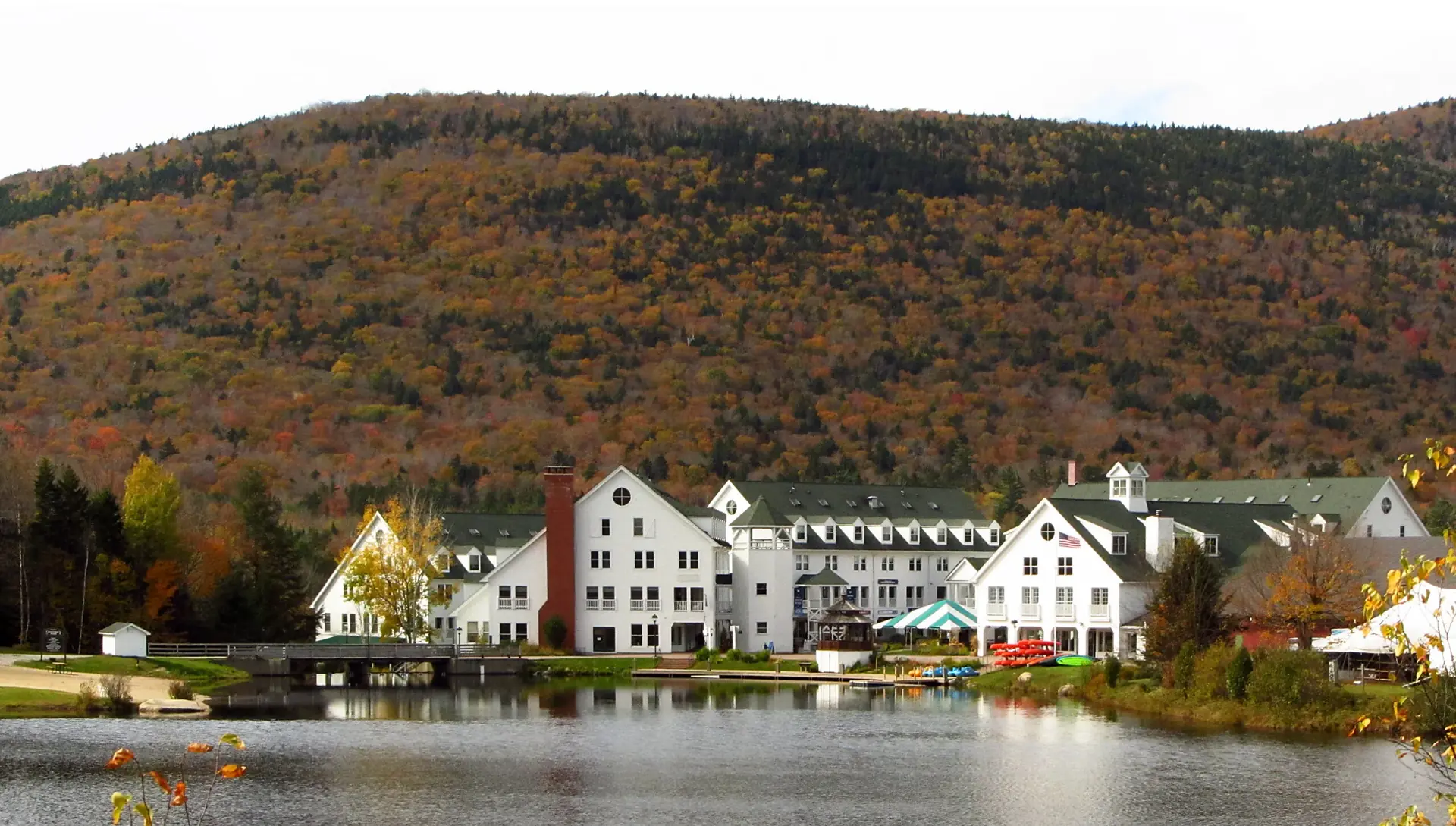
Selling in Waterville Valley
A Market With a Fixed Number of Front Doors
Route 49 climbs eleven miles from our Campton office, follows the Mad River into a bowl of four-thousand-footers, and stops. Waterville Valley has no through road because the White Mountain National Forest surrounds the town completely — which means the supply of homes here was capped decades ago and will never grow. I can't think of another market I work where a seller starts with that kind of structural advantage.
But the valley rewards sellers who understand what they actually own. This is a village of condominiums first — lodge suites by Town Square, townhouses along the golf course and Snow's Brook, slopeside associations under Mount Tecumseh — with a thin band of single-family homes and almost no buildable land. Selling a condo here is a different exercise from selling a house in Campton or Plymouth, and treating it the same way is the most common mistake I see out-of-area agents make on valley listings.
Our team lists, sells and manages vacation rentals along this corridor week in and week out, so what follows is the playbook we actually use — how the condo market really works, when the valley's two high seasons help a listing and when they hurt it, and answers to the questions valley owners bring us.
Live Market Data
The Waterville Valley Market Right Now
For Sale in Waterville Valley — Live From the MLS
For-sale figures read the live MLS feed and change as homes come on and go under contract; sold figures are Owl's Nest Real Estate closings in Waterville Valley over the last 12 months.
Waterville Valley Local Knowledge
Mostly Condos, a Handful of Houses, Almost No Land
The numbers behind the valley's housing stock explain the whole market. Condominiums make up the large majority of homes in town — a legacy of Tom Corcoran's 1966 planned resort — running from studio lodge suites within a walk of Town Square up to multi-bedroom townhouses on the nine-hole golf course and along Snow's Brook. Single-family homes exist in limited numbers, and only a handful change hands in a typical year. Buildable land is rarer still, because the national forest boundary fixed the town's footprint long ago.
Each tier sells differently. A condo seller is rarely the only game in town — your true competition is the other units in your own complex, current and recent, and buyers absolutely shop that way. A single-family seller has the opposite situation, and it's enviable — in most years you can count the houses for sale in Waterville Valley on one hand, so a well-presented house meets buyers who have been waiting for exactly it, sometimes for seasons. And plenty of those buyers arrive sideways, typing Waterville NH real estate into a search bar and dropping the Valley entirely — either way they land on the same forest-locked inventory, and scarcity does a lot of a seller's work. What scarcity doesn't do is set the number, which is where the next two sections come in.
Waterville Valley Local Knowledge
A Condo Sale Here Is an Association-Document Sale
When we list a valley condo, the association package gets assembled before the photography does. New Hampshire condominium law entitles your buyer to the association's documents with a review period — declaration, bylaws, budget, fee schedule, rules — and in this town those papers are the product. Fees vary meaningfully from complex to complex, and so does what they buy: shuttle access, pools, amenity memberships and rental policies differ association by association, and a buyer weighing two similar units is really comparing two fee-and-amenity packages. A listing that lays that comparison out clearly wins it; a listing that makes the buyer dig loses momentum in the review period.
The same logic governs pricing. Valley condos price against in-building and in-complex comps first — what the last few sales in your association closed for, adjusted for floor, exposure, condition and renovation — and only then against the wider village. Two units with identical square footage in different complexes can close tens of thousands apart because one fee covers what the other doesn't, so pulling comps by square footage alone misprices the association itself. We track those closings complex by complex, and when the appraiser calls, we hand over the same in-building sheet we priced from.
Waterville Valley Local Knowledge
Waterville Valley Real Estate Sells on Two Peaks
Most New Hampshire towns have one selling season. This valley has two, because the town was planned four-season from the start — 62 alpine trails and one of the Northeast's biggest Nordic networks in winter, then golf, eighteen clay tennis courts, Corcoran Pond and the Town Square calendar of concerts and fireworks all summer. Buyer traffic follows that rhythm. Winter brings the year's heaviest showing activity, and a condo shows beautifully with snow on the ground — though we plan around plowing, shuttle timing and ski-locker logistics on every winter showing. Summer is the second peak, when family renters turn into family buyers and inventory is typically at its broadest, meaning more competition on the sell side.
The quiet stretches matter just as much. Mud season, April into mid-May, is the calmest buying window of the year — fewer buyers, but unhurried ones, and less to compete with. Foliage weeks bring serious second-home shoppers who can finally inspect roofs, decks and drainage before snow hides them. And November's stick season is when buyers assume anyone still on the market is motivated, which is exactly why we'd rather choose your launch window deliberately than drift into it. Which peak fits your home depends on what it does best — a slopeside association leads with winter, a golf-course townhouse with July — and that's a strategy conversation we have before the sign metaphorically goes up, since this village doesn't really do yard signs.
Waterville Valley Local Knowledge
Your Rental Calendar Can Price the Home
Because the valley is genuinely busy in winter and summer both, short-term rental demand here runs two seasons deep — a real difference from one-trick ski towns, and one investors notice immediately. If your condo has spent years earning — whether through a rental program or a calendar you managed yourself — that history is pricing evidence most sellers never think to use. Gross revenue by season, occupancy, the 8.5% Meals and Rentals tax you've remitted on stays under 185 days, the fees behind the net figure — organized properly, it lets an investor underwrite your asking price instead of taking our word for it.
Program-managed units deserve a specific mention, because the valley has plenty of them — lodge-style suites where a front desk or management company handles the bookings. Those sales carry an extra layer: the management agreement, its term and fees, and how the forward calendar is handled all belong in the sale file from day one, and rental policies differ by association, so we confirm yours in writing rather than assuming. If you've never rented at all, we'll model what the unit could earn — our team operates rentals in this market, so the projection comes from booking calendars we actually see, and it widens your buyer pool from second-home families to include the investors who buy income.
The Buyer Pool
Three Buyers Circle Every Valley Listing
Ski families come first — households that learned the valley through race weekends, ski school or a rented winter week, and want the mountain, the Nordic network and the ice arena within a shuttle ride. Boston and southern New England second-home buyers are the deepest pool: the valley sits about two hours up I-93, close enough for ordinary weekends, and New Hampshire's lack of an earned-income or general sales tax keeps a steady stream of Massachusetts buyers looking north. And rental investors round it out — buyers who understand the two-peak booking calendar and pay attention to the details that drive it, starting with how walkable a unit is to Town Square and the shuttle routes, which is consistently where rental demand and resale interest concentrate.
The three don't want the same unit. The ski family wants the locker room and the shuttle stop, the second-home buyer wants the pond and the tennis courts as much as the trails, and the investor wants the spreadsheet to work. Our job before launch is deciding which of them your home genuinely fits and building the marketing for that buyer — and in this valley, more often than in most towns, the honest answer is all three at once, which is when listings get competitive.
What Is Your Waterville Valley Home Worth
Run the instant estimate against real MLS closings around the valley, then let us true it up complex by complex — in a condo market, the association is half the number.
Selling a Waterville Valley home that earns rental income?
Our experience operating vacation rentals gives us a different perspective when evaluating potential rental properties.
Selling in Waterville Valley — Your Questions, Answered
What association documents do I need before listing my Waterville Valley condo?
Plan on the full package: the declaration and bylaws, current budget and fee schedule, rules and rental policy, reserve information and any meeting minutes discussing upcoming work. New Hampshire condominium law gives your buyer the right to association documents with time to review them, so the question isn't whether they'll see the file — it's whether it's organized before the offer or scrambled together during the contingency period. We request everything from the association at listing, because a complete file on day one is the cheapest deal insurance a valley condo seller can buy.
My condo is in a rental program. Do the future bookings go to the buyer?
Only if the contract says so — none of it is automatic. The purchase-and-sale agreement decides whether the buyer honors the stays on the calendar, how deposits and prepaid revenue get prorated at closing, and whether the management agreement itself continues, gets renegotiated or ends with your ownership. One piece never transfers: your Meals and Rentals registration is personal to you, so the buyer registers as a new operator before collecting the 8.5% tax on stays under 185 days. To an investor buyer a full forward calendar is an asset, and we structure the handoff so it stays one.
How much transfer tax will I owe on my Waterville Valley sale?
The state's rate under RSA 78-B works out to $1.50 per $100 of the sale price, and buyer and seller split it down the middle — your side is $0.75 per $100. Sell a valley condo for $350,000 and your half is $2,625; sell a single-family home for $800,000 and it's $6,000, collected on the settlement statement at closing. Waterville Valley adds no local transfer tax on top. It's one line among several on a seller's statement, and our closing-costs guide covers the rest of them.
My association is discussing a special assessment. Do I have to tell buyers?
Yes — a levied or seriously contemplated special assessment is exactly the kind of material fact a seller needs to put on the table, and in a condo town buyers' agents ask about it on nearly every showing anyway. Hiding it doesn't work: the assessment shows up in budgets, minutes and the association's own responses during document review, and a buyer who finds it there instead of in your disclosure renegotiates from a position of distrust. The workable approaches are to pay it off before closing, credit it, or price it in openly — we've closed valley sales all three ways, and the choice usually comes down to the assessment's size and timeline.
Is selling a Town Square condo different from selling a single-family home in the valley?
Completely different sales. A condo near Town Square trades on walkability, the association's fee-and-amenity package and its rental record, and it competes head-to-head with other units in the same complex — buyers compare in-building before they compare across the village. A valley single-family home barely has competition at all: only a handful trade in a typical year, so the sale runs on scarcity, preparation and patience for the right buyer rather than on association paperwork. The condo sale is won by the tightest document file; the house sale is won by presentation and precise pricing in a market with very few comps. We run both, and we run them differently on purpose.
Should I list my valley home for ski season or for summer?
Start from what your home shows best, because this town genuinely has two peaks. Slopeside and ski-oriented condos earn their premium in early winter, when buyers see the lifestyle running at full speed — and when a rental unit's winter calendar is filling, which strengthens an investor's math. Golf-course and pond-side properties argue for late spring into summer, the valley's second demand wave and its broadest inventory. The sleeper windows are foliage, which brings committed second-home shoppers, and mud season, when the few active buyers face almost no competing listings. What we avoid is drifting onto the market in November by accident; in stick season, buyers read lingering listings as motivated ones.
Keep Exploring Waterville Valley
Waterville Valley for Buyers
Know the Valley
Plan Your Sale
Ready-to-Sell Program
Preparing to Sell?
For qualifying listings, we help prepare your property for market — with a complimentary pre-listing home inspection and up to $2,500 in approved preparation expenses advanced upfront and reimbursed from your sale proceeds at closing.