

How much are closing costs in New Hampshire? Closing costs in NH run about 1.3% to 2.2% of the price for a seller before commission and about 1.6% to 2.8% for a financed buyer before prepaids. On a $535,000 home that is roughly $7,400–$10,900 for the seller. Each side pays the state transfer tax of $0.75 per $100 ($4,013 each on $535,000).
Who pays what in NH: the transfer tax is split evenly ($1.50 per $100 combined under RSA 78-B). Sellers then pay prorated property taxes, title and settlement fees, recording fees and a closing attorney; buyers pay lender fees, title insurance, recording and prepaid escrow items. Add commission and the full cost of selling a house in New Hampshire usually lands between 6% and 9%.
Those figures use the Lakes Region's $535,000 first-half-2026 median single-family price (per Roche Realty's H1 2026 market review) as the example; all-in with a 5% commission, that sale costs about $34,200–$37,700. Buyer concessions push seller closing costs closer to 3%. The two numbers that matter most are the transfer tax and the commission, and the commission is far more negotiable than most sellers think.
Our team builds seller net sheets — a line-by-line estimate of what you'll actually walk away with — every week from our offices on Route 49 in Campton and Main Street in Plymouth, from the Pemi Valley to the Waterville Valley condo market to the big lake. This guide answers who pays which closing costs in New Hampshire and when, breaks down every line on a seller's and a buyer's settlement statement, shows the seller's math at three price points under three commission scenarios, adds up the full cost of selling, and includes a closing cost calculator you can run on your own numbers. For the full process from listing to closing, see our guide to selling a house in New Hampshire and the New Hampshire home seller guide; buyers should start with the New Hampshire home buyer guide. This article is just the money.
Key takeaways
- Seller taxes and fees in New Hampshire typically run about 1.3–2.2% of the sale price before commission and concessions; Clever's 2026 analysis of NH seller costs (updated October 1, 2026), which folds in average buyer incentives, puts the figure near 3.2%.
- The real estate transfer tax under RSA 78-B costs the seller $0.75 per $100 of the price — $4,013 on a $535,000 sale — and the buyer pays an equal share.
- Prorated property taxes vary widely because NH's 2025 town tax rates run from $2.62 per $1,000 of assessed value in Hart's Location and $5.33 in Moultonborough to $36.54 in Charlestown (NH Department of Revenue Administration), and the town line itself can move the number.
- Commission is the largest single line — Clever's 2026 New Hampshire data puts the average at 5.03% total — and it has always been negotiable.
- Bankrate's state table, built on LodeStar's 2025 purchase closing-cost data, puts New Hampshire's average at $6,445, or 1.29% of a $501,296 average price — a figure that leaves out lender fees, commissions and prepaid escrow.
- Most costs are settled on closing day, but buyers pay earnest money, inspections and the appraisal weeks earlier, and sellers get their tax-escrow refund from the old lender within 20 business days of payoff.
- New Hampshire charges no state capital gains tax on your sale profit; the transfer tax applies whether or not you made money.
In this guide
- NH closing cost calculator
- Who pays closing costs in New Hampshire?
- How much are closing costs in NH for sellers?
- Cost of selling a house in New Hampshire: full breakdown
- How much are closing costs in NH for buyers?
- When are closing costs paid? Who pays when
- How to reduce the cost of selling
- NH wrinkles that change the math
- Frequently asked questions
In this guide
- NH Closing Cost Calculator
- Who Pays Closing Costs in New Hampshire?
- How Much Are Closing Costs in NH for Sellers?
- Cost of Selling a House in New Hampshire: Full Breakdown
- How Much Are Closing Costs in NH for Buyers?
- When Are Closing Costs Paid? A Timeline of Who Pays When
- How to Reduce the Cost of Selling a House in New Hampshire
- New Hampshire Wrinkles That Change the Math
- Know Your Number Before You List
- Sources and further reading
- Frequently asked questions
NH Closing Cost Calculator
Use this New Hampshire closing cost calculator to estimate a seller's net proceeds or a buyer's cash to close. Enter the price and your own numbers; the transfer tax is computed exactly under RSA 78-B ($0.75 per $100 per side, rounded to the whole dollar, $20 minimum each). The other lines start at the figures this guide uses — a 5% total commission, $1,100 in title and settlement fees, $43 in recording fees, a $1,000 closing attorney and, for the sample net sheet, an $8,000 annual tax bill with 4½ months owed at closing and a $250,000 mortgage payoff. The buyer side assumes 20% down, loan origination at 0.75% of the loan (the midpoint of the 0.5–1% range), $1,000 in appraisal and other lender fees, title insurance at the filed $2.00 per $1,000 plus a $75 simultaneous lender's policy, $150 to record the deed and mortgage, a $1,000 closing attorney and two months of property-tax escrow. Every one of those is editable, and the tables further down show the same math for sellers at $400,000, $535,000 and $750,000 and for buyers at $300,000, $450,000 and $600,000, so you can check the calculator against them.
Interactive Estimate · RSA 78-B Transfer Tax Built In
New Hampshire Closing Cost Calculator
Enter a price and your own numbers. The transfer tax is exact; the fees start at the figures in this guide and every one can be changed.
Estimated seller net sheet
- Sale price
- $535,000
- Transfer tax, seller's half (RSA 78-B)
- −$4,013
- Prorated property taxes
- −$3,000
- Title & settlement fees
- −$1,100
- Recording fees
- −$43
- Closing attorney
- −$1,000
- Seller closing costs
- −$9,156
- Commission (5% total)
- −$26,750
- Total cost of selling
- −$35,906
- Mortgage payoff
- −$250,000
Estimated net proceeds
$249,094
- Closing costs as a share of price
- 1.7%
- Total cost of selling as a share of price
- 6.7%
Estimate only, not a settlement statement. Fees vary by lender, attorney and town; your closing attorney’s figures and the lender’s Loan Estimate govern. Transfer tax per RSA 78-B at $0.75 per $100 per side, $20 minimum each.
A calculator can't know your town's tax rate, your closing date or what your buyer will ask for after inspection. For a net sheet built on those, request a free home valuation and ask for the net sheet with it.
Who Pays Closing Costs in New Hampshire?
Both the buyer and the seller pay closing costs in New Hampshire, for different items. The one cost they share is the transfer tax, split evenly at $0.75 per $100 each. Everything is ultimately negotiable in the purchase contract, but here's how NH closing costs customarily fall between buyer and seller:
| Cost | Seller | Buyer |
|---|---|---|
| Transfer tax (RSA 78-B) | $0.75 per $100 | $0.75 per $100 |
| Property taxes | Prorated through closing day | Prorated from closing day |
| Listing-side commission | Yes, per the listing agreement | — |
| Buyer-agent compensation | Only if offered/negotiated | Negotiated case by case post-settlement |
| Title insurance (lender's & owner's) | — | Typically yes |
| Appraisal, inspection, loan fees | — | Yes |
| Prepaid interest, insurance and tax escrow | — | Yes, if financed |
| Mortgage payoff and discharge | Yes, from proceeds | — |
| Seller credit toward buyer costs | Only if negotiated | Reduces cash to close |
| Deed preparation / seller's attorney | Yes | Own attorney, if hired |
| Recording fees | Documents clearing seller's title | Deed and mortgage recordings |
| Association resale documents (condo/resort) | Customarily yes | Capital contribution, if the association charges one |
The buyer-agent line deserves a note. Since the 2024 National Association of Realtors settlement changed how buyer-agent compensation works nationally, whether and how much a seller contributes toward the buyer's agent is negotiated deal by deal. Many New Hampshire sellers still offer buyer-side compensation because it widens the buyer pool, but it's a strategy decision now, not an assumption — and it's one of the first things we discuss when we sit down with a seller.
How Much Are Closing Costs in NH for Sellers?
Every sale is different, but the New Hampshire closing costs on a typical seller's settlement statement come down to six recurring lines:
- Real estate transfer tax — the seller's half is $0.75 per $100 of the sale price (0.75%) under RSA 78-B.
- Prorated property taxes — your share of the town tax bill through the closing date.
- Title and settlement fees — usually in the neighborhood of $1,000–$1,200.
- Recording and administrative fees — small; figure around $43 for the deed-related recordings.
- Closing attorney — commonly a flat $750–$1,250 for seller-side representation.
- Commission — averaging about 5% total in New Hampshire (5.03% in Clever's 2026 data), and negotiable.
Add a mortgage payoff if you carry one (that's your own equity settling a debt, not a fee, but it comes out of proceeds at the table) and any concessions you've negotiated with the buyer, and that's the whole picture. Concessions are the swing line: Clever's 2026 analysis put the average NH buyer incentive at about 2% of the price, which is why its all-in closing-cost figure (about $12,300 on a $387,000 home, or 3.18%, as of its October 1, 2026 update) sits above the 1.3–2.2% you'll see in our tables, where concessions are left out. Notably absent from the list: New Hampshire has no state income tax on the gain from selling your home — we cover that in detail in our companion guide to capital gains tax when selling a home in New Hampshire.
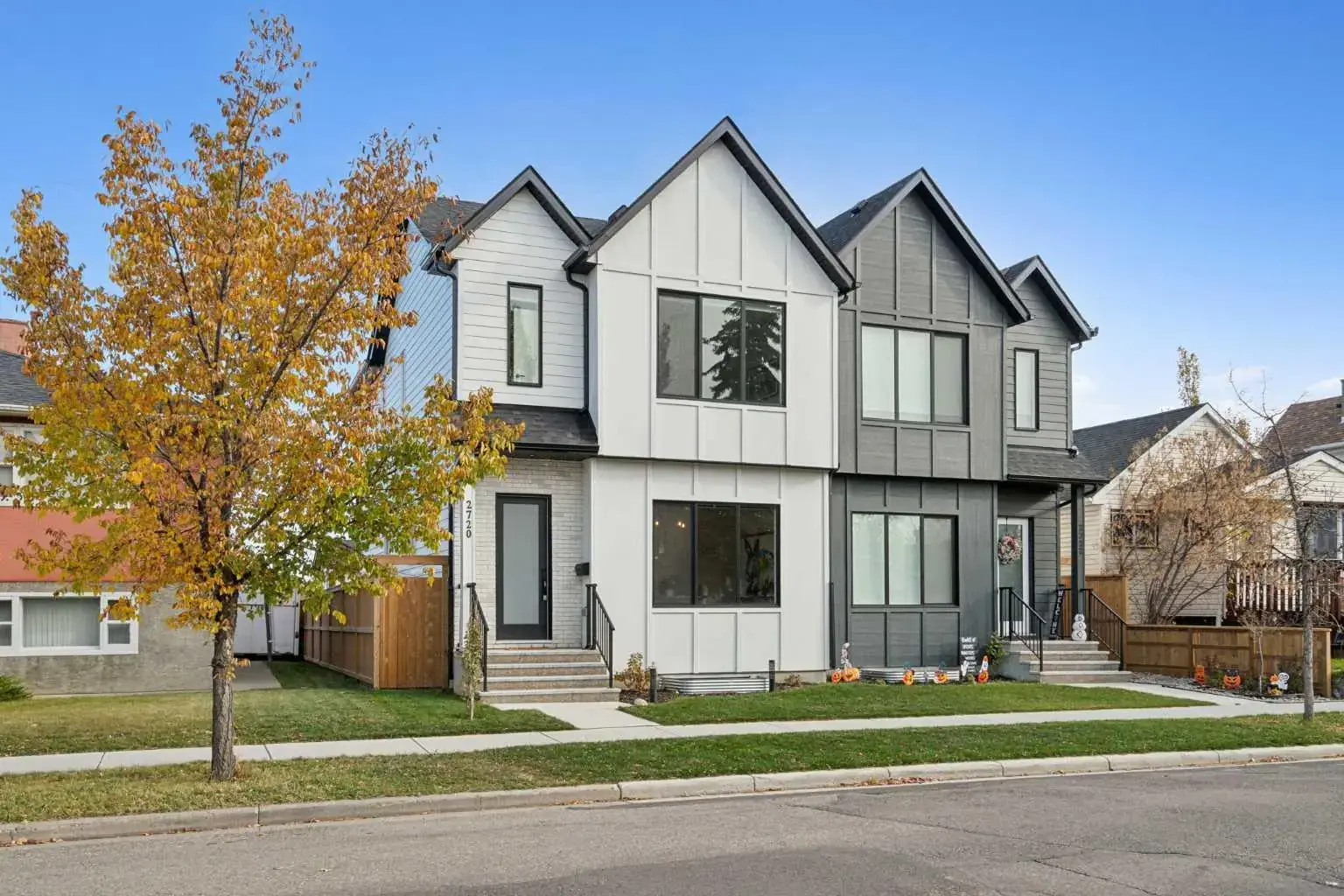
Seller closing costs in New Hampshire at $400K, $535K and $750K, with 2.5%, 5% and 6% commission
Here are the closing costs NH sellers typically see, using the same settlement statement at three realistic New Hampshire price points — roughly a Plymouth or Campton single-family, the Lakes Region median, and a higher-end lake or resort property. To see which column your house falls in, look at what similar homes for sale in New Hampshire are listed at. Property-tax prorations are shown as ranges because they depend on your town's rate and your closing date; everything else is arithmetic. Concessions are left out because they're negotiated deal by deal.
| Line item | $400,000 sale | $535,000 sale | $750,000 sale |
|---|---|---|---|
| Transfer tax — seller's half (RSA 78-B, $0.75/$100) | $3,000 | $4,013 | $5,625 |
| Prorated property taxes (town + closing date) | $1,100–$3,400 | $1,500–$4,500 | $2,100–$6,300 |
| Title & settlement fees | ≈ $1,100 | ≈ $1,100 | ≈ $1,100 |
| Recording fees | ≈ $43 | ≈ $43 | ≈ $43 |
| Closing attorney (flat fee) | $750–$1,250 | $750–$1,250 | $750–$1,250 |
| Taxes & fees before commission | $6,000–$8,800 (1.5–2.2%) | $7,400–$10,900 (1.4–2.0%) | $9,600–$14,300 (1.3–1.9%) |
| Commission scenario A: 2.5% listing side only (buyer pays own agent) | $10,000 | $13,375 | $18,750 |
| All-in, scenario A | $16,000–$18,800 (4.0–4.7%) | $20,800–$24,300 (3.9–4.5%) | $28,400–$33,100 (3.8–4.4%) |
| Commission scenario B: 5% total (near the NH average) | $20,000 | $26,750 | $37,500 |
| All-in, scenario B | $26,000–$28,800 (6.5–7.2%) | $34,200–$37,700 (6.4–7.0%) | $47,100–$51,800 (6.3–6.9%) |
| Commission scenario C: 6% total | $24,000 | $32,100 | $45,000 |
| All-in, scenario C | $30,000–$32,800 (7.5–8.2%) | $39,500–$43,000 (7.4–8.0%) | $54,600–$59,300 (7.3–7.9%) |
Read the scenarios as the three ways NH sales are commonly structured since the 2024 NAR settlement: the seller pays only the listing side (A), the seller pays both sides at about the state average (B), or a full-service 6% (C). On a $535,000 house, the gap between A and C is about $18,700, more than every tax and fee in the table combined. That is why the commission conversation comes before the net sheet, not after it.
Two honest notes on the table. First, at a 5% total commission the all-in rows work out to roughly 6.3–7.2% at these price points; buyer concessions negotiated after inspection, or a closing date deep into a tax period in a higher-rate town, are what push real-world totals toward 9%. Second, every line keys off the price — which is why the first step of any net sheet we build is a free professional home valuation, not a guess.
Cost of Selling a House in New Hampshire: Full Breakdown
Closing costs are only part of the bill. The full cost of selling a house in New Hampshire also includes the money you spend before listing and after closing. Here's how the pieces typically stack up, as a share of the sale price:
| Cost bucket | Typical range | On a $535,000 sale |
|---|---|---|
| Seller closing costs (transfer tax, prorated taxes, title, attorney, recording) | ≈ 1.3%–2.2% | $7,400–$10,900 |
| Commission (listing plus any buyer-agent compensation) | ≈ 5% total on average; negotiable | ≈ $26,750 at 5% |
| Buyer concessions (inspection or closing-cost credits) | 0%–2%+ (NH average ≈ 2% per Clever) | $0–$10,700 |
| Pre-listing prep (repairs, paint, cleaning, staging) | Often 1.5%–2.7% (per HomeLight); less for a move-in-ready house | Varies with condition |
| Moving | Local ≈ $883–$2,568; out of state ≈ $3,000–$9,500 (per HomeLight) | Same |
| Typical total, commission included | ≈ 6%–9%, before prep and moving | ≈ $34,200–$48,400 |
You'll see much larger "cost to sell" headlines online, but those add every prep, staging, moving, and concession line at its average at once. A well-prepared house that doesn't need a big inspection credit usually lands in the 6–7% range; the 9% end is where sizable concessions or a steep tax proration come in. The sections below walk the $535,000 column from top to bottom, because the reasoning behind each line matters more than the totals.
What does it cost to sell a house in NH, all in?
Here is the whole bill at three prices, with every bucket a seller actually pays: commission, the transfer tax and other closing costs, repairs or concessions after inspection, and the move. Assumptions: mid-range closing costs from the table above, a 5% total commission, repairs or credits of 1% of the price, and a $2,000 local move (inside HomeLight's $883–$2,568 local range). The mortgage payoff is shown separately because it is your own debt being retired, not a cost of the sale, but it comes out of the same wire.
| Cost of selling | $400,000 sale | $535,000 sale | $750,000 sale |
|---|---|---|---|
| Commission (5% total) | $20,000 | $26,750 | $37,500 |
| Transfer tax, seller's half | $3,000 | $4,013 | $5,625 |
| Other closing costs (tax proration, title, recording, attorney), midpoint | $4,393 | $5,143 | $6,343 |
| Repairs or buyer concessions (1%) | $4,000 | $5,350 | $7,500 |
| Local move | $2,000 | $2,000 | $2,000 |
| Total cost of selling | $33,393 (8.3%) | $43,256 (8.1%) | $58,968 (7.9%) |
| Proceeds before mortgage payoff | $366,607 | $491,744 | $691,032 |
| Mortgage payoff | Your balance plus interest to the payoff date, from the lender's payoff letter | ||
Swap in your own numbers: no repairs at all takes about one point off each total, a 6% commission adds one, and an out-of-state move ($3,000–$9,500 per HomeLight) adds $1,000–$7,500. A seller who prepares well, negotiates the commission and moves locally usually lands near 6–7%; one who gives a large inspection credit and moves across the country can pass 10%.
The transfer tax, explained
New Hampshire's real estate transfer tax (RSA 78-B) is the state's one unavoidable tax on the sale itself: $1.50 per $100 of the price, split evenly — $0.75 per $100 (or fractional part of $100) from the seller and the same from the buyer, with each side's tax computed to the nearest whole dollar. On $535,000, the arithmetic is $535,000 ÷ 100 × $0.75 = $4,012.50, which rounds to $4,013 per side. The seller reports the sale to the Department of Revenue Administration on Form CD-57-S (the buyer files CD-57-P), and the closing attorney collects the tax and handles payment so the deed can be recorded. There's a minimum of $20 per side on transfers with consideration of $4,000 or less, which mostly matters for nominal family transfers. The 50/50 split is statutory, but like nearly everything in a purchase contract, the parties can negotiate who actually funds it — in practice, each side paying its own half is the strong norm at every closing table we sit at. For the exemptions, the forms and how the NH real estate transfer tax fits alongside the state's other taxes, see our New Hampshire taxes guide.
Prorated property taxes: the line that surprises people
New Hampshire funds schools and town services primarily through property taxes, so rates are high by national standards and vary a lot town to town — 2025 total rates ran from $2.62 per $1,000 of assessed value in Hart's Location and $5.33 in Moultonborough to $36.54 in Charlestown, per the NH Department of Revenue Administration. That spread is not abstract up here: two similar houses a few minutes apart on either side of the Campton–Thornton line can carry meaningfully different annual tax bills, and it's one of the first questions relocating buyers ask us. Most NH towns bill twice a year (summer and December), and at closing the attorney prorates the current period so you pay for exactly the days you owned the home. Sell mid-cycle in a higher-tax town and this line can quietly outweigh everything except the transfer tax and commission. If you escrow taxes with your lender, remember the escrow balance comes back to you after payoff — sellers often forget they have money coming the other way. Our guide to New Hampshire property taxes explains how town rates are set, and the Plymouth property tax guide shows what a real bill looks like in our area.
Title, settlement, recording, and the attorney
In New Hampshire, closings are customarily handled by a closing attorney or title company — customary, not legally required. The buyer typically pays for their lender's title insurance and their own owner's policy; the seller's side of the title work — settlement fees, payoff coordination, discharge tracking — usually lands around $1,000–$1,200, plus about $43 in county registry recording charges for the documents that clear your title. Many sellers also engage their own attorney to review the purchase and sale agreement (the P&S — the binding contract that governs the deal once signed) and prepare the deed, commonly a flat $750–$1,250. That's money well spent on a transaction this size.
Bottom line on the $535,000 example: roughly $7,400 to $10,900 in taxes and fees, and about $34,200–$37,700 all-in if a 5% total commission is paid. Subtract your mortgage payoff and what's left is your net.
Sample seller net sheet: what you walk away with on a $535,000 sale
Here is the same sale laid out the way a net sheet reads, using mid-range assumptions: an $8,000 annual property-tax bill with about 4½ months unpaid at closing, a $1,000 attorney fee, a 5% total commission, and a $250,000 mortgage balance. These are the calculator's starting values, so the sheet above reproduces this table until you change a number. Your own numbers will differ; the structure won't.
| Line | Amount |
|---|---|
| Sale price | $535,000 |
| Transfer tax, seller's half | −$4,013 |
| Prorated property taxes ($8,000 × 4.5 ÷ 12) | −$3,000 |
| Title & settlement fees | −$1,100 |
| Recording fees | −$43 |
| Closing attorney | −$1,000 |
| Seller closing costs subtotal | −$9,156 (1.7%) |
| Commission (5% total) | −$26,750 |
| Total cost of selling | −$35,906 (6.7%) |
| Mortgage payoff | −$250,000 |
| Estimated net proceeds | $249,094 |
Two things move this number most in real life. A $5,000 inspection credit to the buyer takes the net to $244,094 and the total cost to 7.6%. And a mortgage payoff figure includes interest through the payoff date, so it's always a little higher than the balance on your last statement. When we prepare a listing proposal, we hand sellers a net sheet with these exact lines filled in for their town, their closing date, and their likely price — the Plymouth and Campton seller guides show what that looks like town by town.
Estimate your own seller closing costs in five steps
Online closing cost calculators for New Hampshire mostly get the transfer tax right and guess at everything else. The math is simple enough to do on the back of an envelope, and doing it yourself shows you which lines actually move:
- Transfer tax: multiply your expected price by 0.0075 and round to the nearest dollar ($450,000 × 0.0075 = $3,375).
- Property-tax proration: take your annual tax bill, divide by 12, and multiply by the months since the period your last payment covered. Your town's tax bill shows the billing periods.
- Fixed fees: add about $1,100 for title and settlement, $43 for recording, and $750–$1,250 for a closing attorney.
- Commission and concessions: multiply the price by the total commission in your listing agreement, then add any credit you expect to give the buyer.
- Net: subtract all of it, plus your mortgage payoff, from the price. That's your estimated walk-away number.
The calculator above does exactly these five steps. For a figure built on your actual town rate and a real price opinion rather than an average, request a free home valuation and ask for the net sheet with it.
How Much Are Closing Costs in NH for Buyers?
A financed buyer's closing costs in New Hampshire typically run about 1.6% to 2.8% of the price before prepaid items. Four groups of costs make up the total:
- The buyer's half of the transfer tax. The same $0.75 per $100 the seller pays under RSA 78-B: $3,375 on a $450,000 purchase, $4,013 on $535,000. It's the largest single buyer line in this state, and a bigger one than buyers moving from most other states expect.
- Lender fees. Origination (commonly 0.5–1% of the loan) or separate application, processing and underwriting charges, plus the appraisal. Discount points, if you buy down the rate, are extra.
- Title insurance and recording. The lender requires a lender's policy; an owner's policy protects you and is customarily bought at the same time. At the filed rate of $2.00 per $1,000 with a $75 simultaneous lender's policy, that's about $975 on a $450,000 purchase. Recording the deed and the mortgage, each with its $25 LCHIP surcharge, adds roughly $150.
- Prepaid items and escrow. Interest from the closing date to the end of the month, the first year of homeowners insurance, and a starting balance in the escrow account for property taxes. The tax piece follows the town: on a $450,000 home in a town with an $8,100 annual bill, every two months of escrow is $1,350. Because NH towns bill twice a year, the amount depends on how close your closing falls to the next bill.
Inspections, a radon or water test and a septic evaluation are paid before closing, but they belong in the same budget. Cash buyers skip the lender fees, the lender's policy, the mortgage recording and escrow, so their costs are mostly the transfer tax, the owner's title policy, the deed recording and an attorney — set the calculator's down payment to 100% to see that version.
Every loan-related line varies by lender, loan type and down payment, so the lender's Loan Estimate, which itemizes all of these charges, is the number to trust. What matters to a seller is the pressure point: when a buyer's cash to close is tight, a request for a seller credit toward closing costs is common, and that credit comes straight out of your net. Our New Hampshire home buyer guide and buyers page cover the purchase side in more detail.
Buyer closing costs in NH at $300K, $450K and $600K
This is the buyer side of the calculator, worked at three prices. The transfer tax is exact ($0.75 per $100, rounded to the whole dollar). The lines assume a conventional loan with 20% down; lender fees vary by lender, so treat them as a range and check them against your Loan Estimate. For comparison, Bankrate's state table using LodeStar's 2025 data puts the average New Hampshire purchase closing at $6,445 (1.29% of the price), but that figure leaves out lender fees, so it lines up with the transfer-tax, title, recording and attorney rows below rather than the total.
| Buyer line item | $300,000 purchase | $450,000 purchase | $600,000 purchase |
|---|---|---|---|
| Transfer tax, buyer's half ($0.75/$100) | $2,250 | $3,375 | $4,500 |
| Loan origination (0.5–1% of the loan) | $1,200–$2,400 | $1,800–$3,600 | $2,400–$4,800 |
| Appraisal and other lender fees | $300–$1,800 | $300–$1,800 | $300–$1,800 |
| Owner's + lender's title insurance | ≈ $675 | ≈ $975 | ≈ $1,275 |
| Deed and mortgage recording (incl. $25 LCHIP each) | ≈ $150 | ≈ $150 | ≈ $150 |
| Buyer's closing attorney / settlement | $750–$1,250 | $750–$1,250 | $750–$1,250 |
| Buyer total before prepaids | $5,300–$8,500 (1.8–2.8%) | $7,400–$11,200 (1.6–2.5%) | $9,400–$13,800 (1.6–2.3%) |
| Prepaids and escrow (taxes, insurance, interest) | Set by your lender and town; see the buyer section above | ||
Where the buyer numbers come from: origination fees commonly run 0.5% to 1% of the loan amount, and some lenders charge separate application, processing and underwriting fees instead (per Zillow and Credible). Title insurance uses the guideline New Hampshire rates of one major underwriter, CATIC (January 2017 rate sheet): $2.00 per $1,000 for the owner's policy, with the lender's policy issued simultaneously for $75. Rates differ by underwriter and change over time, so confirm the current premium with your title agent. Recording follows RSA 478:17-g: $10 for the first page and $4 for each additional page, plus a $2 per-document surcharge (RSA 478:17-j) and a $25 Land and Community Heritage Investment Program (LCHIP) surcharge on each deed and mortgage; some registries add postage, so check your county registry's fee schedule. Lower-priced homes carry a higher percentage on both sides because the flat fees don't shrink with the price.
Can the seller pay the buyer's closing costs in NH?
Yes. A seller credit (also called a seller concession or interested-party contribution) is written into the purchase and sale agreement and shows up on the settlement statement as a credit to the buyer and a debit to the seller. New Hampshire sets no limit of its own; the cap comes from the buyer's loan program:
| Loan type | Maximum seller contribution |
|---|---|
| Conventional, less than 10% down | 3% of the price |
| Conventional, 10% to under 25% down | 6% |
| Conventional, 25% or more down | 9% |
| Conventional, investment property | 2% |
| FHA | 6% |
| VA | 4% in concessions, on top of normal closing costs |
The conventional caps are Fannie Mae's interested-party contribution limits (Selling Guide B3-4.1-02), the FHA cap is HUD's, and the VA rule is in the VA Lenders Handbook. A credit can only pay real closing costs and prepaids, never the down payment, and it can't exceed the buyer's actual costs. Most purchase loans don't let buyers roll closing costs into the loan amount the way a refinance can, so the alternatives are a seller credit or a lender credit in exchange for a slightly higher rate.
When Are Closing Costs Paid? A Timeline of Who Pays When
Closing costs are mostly settled on closing day, but not all at once and not only then. Here is the order money moves in a typical financed New Hampshire sale, which runs about 30–45 days from accepted offer to closing:
| Stage | Buyer pays | Seller pays |
|---|---|---|
| Before listing | — | Pre-listing inspection, repairs, paint, cleaning, staging; a road maintenance agreement or septic pumping if needed |
| Offer accepted, P&S signed | Earnest money deposit, held in escrow and credited at closing (often 1–3% of the price; the P&S sets the amount) | Nothing yet; the listing agreement sets the commission owed at closing |
| Inspection period (first 1–3 weeks) | Home inspection, radon and water tests, septic evaluation; lender application and appraisal fee | Association resale documents for a condo or resort property; repairs or a credit if negotiated |
| Loan Estimate and Closing Disclosure | Loan Estimate arrives within 3 business days of application; the Closing Disclosure at least 3 business days before closing (CFPB rule) | Reviews the seller settlement statement and payoff letter the week of closing |
| Closing day | Cash to close by wire: down payment, half the transfer tax, lender and title fees, recording, prepaids, minus the deposit and any seller credit | Nothing out of pocket in most sales: commission, half the transfer tax, tax proration, attorney, recording and the mortgage payoff are deducted from proceeds |
| After closing | Pays the next town tax bill (the proration already credited the seller's share); escrow funded at closing covers it on a mortgage | Receives the net proceeds by wire; the old lender refunds any escrow balance within 20 business days of payoff (RESPA, 12 CFR 1024.34); the closing agent may issue a Form 1099-S reporting the sale for next year's federal return |
One timing point that trips up sellers: if the town has already billed and you've paid a period that runs past closing, the proration goes the other way and the buyer reimburses you at the table. That's why the same house can show a tax debit in a June closing and a credit in a December one.
How to Reduce the Cost of Selling a House in New Hampshire
Negotiate the commission — it's the biggest line
Commission dwarfs every other cost, and it has always been negotiable. Clever's 2026 New Hampshire data puts the average at 5.03% total (about 2.59% listing side and 2.44% buyer side), but the right structure depends on your property, price point, and how much competition exists for your listing. Ask any agent you interview to justify their fee with a marketing plan and results — our recent sold listings are the kind of receipts you should expect to see, and our sellers page explains how we earn ours.
Prep beats price cuts
The most expensive "closing cost" is one that never appears on the settlement statement: selling below your home's potential because it went to market unprepared. A price reduction on a $535,000 listing is measured in five figures; the prep that prevents it is usually measured in hundreds or low thousands. That's the logic behind our Ready-to-Sell Program, which advances up to $2,500 in approved prep costs — reimbursed at closing — and includes a complimentary pre-listing inspection for qualifying listings, so the house hits the market at full strength and surprises surface before a buyer's inspector finds them.
Control concessions before they exist
Concessions — credits to the buyer for repairs after inspection — are the least predictable cost on the sheet, and the most controllable. A pre-listing inspection converts unknown repair leverage into a known, managed number: you either fix the item on your own schedule and terms, or you price it in openly. Sellers who skip this step routinely give back more at the negotiating table than the inspection would have cost.
Watch the calendar
Your property-tax proration is a function of your closing date relative to the town's billing cycle, so if timing is flexible, it's worth a conversation — and the calendar affects price too. For more on timing the market itself, see our guide to the best time to sell a house in New Hampshire and our 2026 New Hampshire housing market outlook. If speed matters more than the last dollar, our guide to selling a house fast in New Hampshire weighs the trade-offs.
Shop the flat fees
Attorney and settlement fees are small next to commission, but they're flat fees in a competitive market — a phone call comparing two or three closing attorneys' seller-side packages takes twenty minutes and occasionally saves a few hundred dollars. Just don't pick on price alone; a responsive closing attorney who chases your mortgage discharge properly is worth every dollar.
What about selling by owner?
Some sellers look at the commission line and consider going it alone. It's a fair impulse, and we wrote an honest guide to selling a house by owner in New Hampshire — but know that FSBO sellers still pay the transfer tax, attorney, and marketing costs, still usually offer buyer-side compensation, and per National Association of Realtors research, FSBO homes typically sell for meaningfully less than agent-assisted sales. The commission saved is often smaller than the price left behind. If you do sell by owner, the closing itself works the same way: a closing attorney or title company prepares the deed, collects the transfer tax, and handles your payoff for a flat fee.

New Hampshire Wrinkles That Change the Math
These are the line items we see catch sellers off guard in our corner of the state — the ones a national closing-cost calculator won't show you.
Resort and condo association paperwork
If you're selling a condo or a home in an association — common in Waterville Valley and at Owl's Nest Resort — budget for the association resale package: the documents, budget, and statement of account the buyer's lender will require. Associations set their own document and statement fees, and some charge the buyer a capital contribution on top. None of these are huge, but they take lead time — we order association documents the week a property goes under agreement, not the week before closing. Second-home sellers have a few more wrinkles, covered in our guide to selling a lake house or second home in NH.
Current use land and the 10% change tax
Plenty of properties in Grafton County carry acreage enrolled in current use under RSA 79-A, which taxes the land at its undeveloped value. The land stays enrolled through a sale — but if the buyer (or you, pre-sale) takes it out of current use to develop, a Land Use Change Tax of 10% of the land's full market value comes due. Who bears that risk is a negotiation point that belongs in the P&S, not a surprise at the registry. If you own acreage, check your enrollment status before you list; our guide to selling land in New Hampshire goes deeper.
Private roads, wells, and septic
Off the state highways, many of the homes we sell sit on private roads — and buyers' lenders increasingly want a recorded road maintenance agreement before they'll close. If your road has only a handshake arrangement among neighbors, papering it properly is a modest legal cost that's far cheaper to handle before listing than during a financing contingency. Similarly, buyers commonly ask sellers of homes with private septic to pump and inspect the system as a condition of sale; New Hampshire law (RSA 477:4-c) already requires you to disclose what you know about private water and septic in writing, so getting ahead of it is usually smart. Our guide to NH seller disclosure requirements covers the full list.
Know Your Number Before You List
Every line on the settlement statement keys off one number: your sale price. Start with a free professional home valuation and we'll build you a full seller net sheet — transfer tax, your town's proration, fees, commission options, and your realistic walk-away number. Then talk to our team in Campton or Plymouth — we'll walk you through every dollar, no obligation. Our sellers page shows how we market homes town by town, and our housing market forecast, linked above, covers where prices and inventory stand right now.
This guide is general information for New Hampshire home sellers and buyers, not tax or legal advice. Rules and customary fees change — confirm the specifics of your closing with your CPA and your closing attorney.
Sources and further reading
- NH RSA Chapter 78-B — Tax on Transfer of Real Property
- NH Department of Revenue Administration — Real Estate Transfer Tax FAQ
- NH Department of Revenue Administration — Real Estate Transfer Tax at a glance ($0.75 per $100 on buyer and seller, $20 minimum)
- IRS Topic No. 701: Sale of Your Home ($250,000 / $500,000 exclusion)
- NH RSA 478:17-g — Registry of deeds recording fees and LCHIP surcharge
- CATIC — New Hampshire title insurance premium rates
- NH RSA Chapter 79-A — Current Use Taxation
- NH RSA 477 — Seller Notification and Disclosure Requirements
- Clever Real Estate — Seller Closing Costs in New Hampshire (2026)
- HomeLight — Cost of Selling a House in New Hampshire
- Bankrate — Closing costs by state (LodeStar 2025 data: New Hampshire $6,445, 1.29%)
- Fannie Mae Selling Guide B3-4.1-02 — Interested Party Contributions
- CFPB — Closing Disclosure explainer (3-business-day rule)
- CFPB — Regulation X §1024.34 (escrow refund within 20 business days of payoff)
- National Association of Realtors — Research and Statistics
- Roche Realty Group — Lakes Region H1 2026 Market Review
Frequently asked questions
How much are closing costs in New Hampshire?
For a seller, closing costs in New Hampshire are typically 1.3% to 2.2% of the sale price before commission: about $6,000–$8,800 on a $400,000 home, or $7,400–$10,900 on $535,000. For a buyer with a mortgage, they typically run about 1.6% to 2.8% before prepaid taxes, insurance and interest: about $7,400–$11,200 on a $450,000 purchase. Each side pays $0.75 per $100 of transfer tax. With a 5% total commission, the seller's all-in cost is usually 6% to 7%, and up to about 9% with sizable buyer concessions.
Who pays closing costs in New Hampshire, the buyer or the seller?
Both, in different buckets. The transfer tax is split evenly ($0.75 per $100 from each side under RSA 78-B). Sellers customarily pay the listing commission, their prorated property taxes, deed preparation, and their own attorney; buyers pay their loan costs, title insurance, inspections, and their own half of the transfer tax. Buyer-agent compensation is negotiated case by case.
What is the cost of selling a house in New Hampshire?
Usually about 6% to 9% of the sale price. Commission (about 5% total on average) is the biggest piece; taxes and fees add roughly 1.3–2.2%, and buyer concessions can add up to about 2% more. On a $535,000 home that's roughly $34,200–$37,700 without concessions; counting 1% for repairs or credits and a $2,000 local move, it's about $43,300, or 8.1%.
Is there a closing cost calculator for NH?
Yes — the calculator at the top of this guide estimates a seller's net proceeds or a buyer's cash to close from your price, town tax bill and fees, with the RSA 78-B transfer tax computed exactly. To run the number by hand, multiply the price by 0.0075 for each side's transfer tax and round to the whole dollar, add your town's tax proration, then add the fixed fees: about $1,100 title and settlement, $43 recording and $750–$1,250 attorney for a seller; lender fees, title insurance, about $150 recording and an attorney for a buyer.
What are average closing costs in New Hampshire?
There is no official statewide average, because property-tax prorations and concessions vary sale to sale. Built from the fixed lines (transfer tax, title and settlement, recording and attorney fees) plus a typical tax proration, average seller closing costs in New Hampshire land around 1.3–2.2% of the price. Two published averages bracket that: Bankrate's state table using LodeStar's 2025 data puts the average New Hampshire purchase closing at $6,445, or 1.29% of the price, excluding lender fees and commissions, while Clever's 2026 seller analysis (updated October 1, 2026), which includes average buyer incentives, puts seller costs at about 3.18%, or roughly $12,300 on a $387,000 home.
When are closing costs paid in NH?
Mostly on closing day. Buyers wire their cash to close, which already nets out the earnest money deposit and any seller credit, and sellers have their costs deducted from the proceeds, so most sellers bring no money to the table. A few costs come earlier: the buyer pays the inspection and appraisal during the first weeks under contract, and the seller pays for any pre-listing repairs. Lenders must deliver the Closing Disclosure at least 3 business days before closing.
Can the seller pay the buyer's closing costs in New Hampshire?
Yes, through a seller credit written into the purchase and sale agreement. New Hampshire sets no cap; the buyer's loan does. Conventional loans allow 3% of the price with under 10% down, 6% with 10% to under 25% down and 9% with 25% or more down; FHA allows 6% and VA allows 4% in concessions. The credit can cover closing costs and prepaids but not the down payment, and it comes straight out of the seller's net.
Do I pay capital gains tax on top of closing costs when I sell in NH?
Not to New Hampshire, which has no state capital gains tax. Federally, up to $250,000 of gain ($500,000 for married couples filing jointly) on a main home is excluded if you owned and lived in it for 2 of the last 5 years. Closing costs such as commission and your share of the transfer tax also reduce the taxable gain. Our guide to capital gains tax when selling a home in New Hampshire has worked examples.