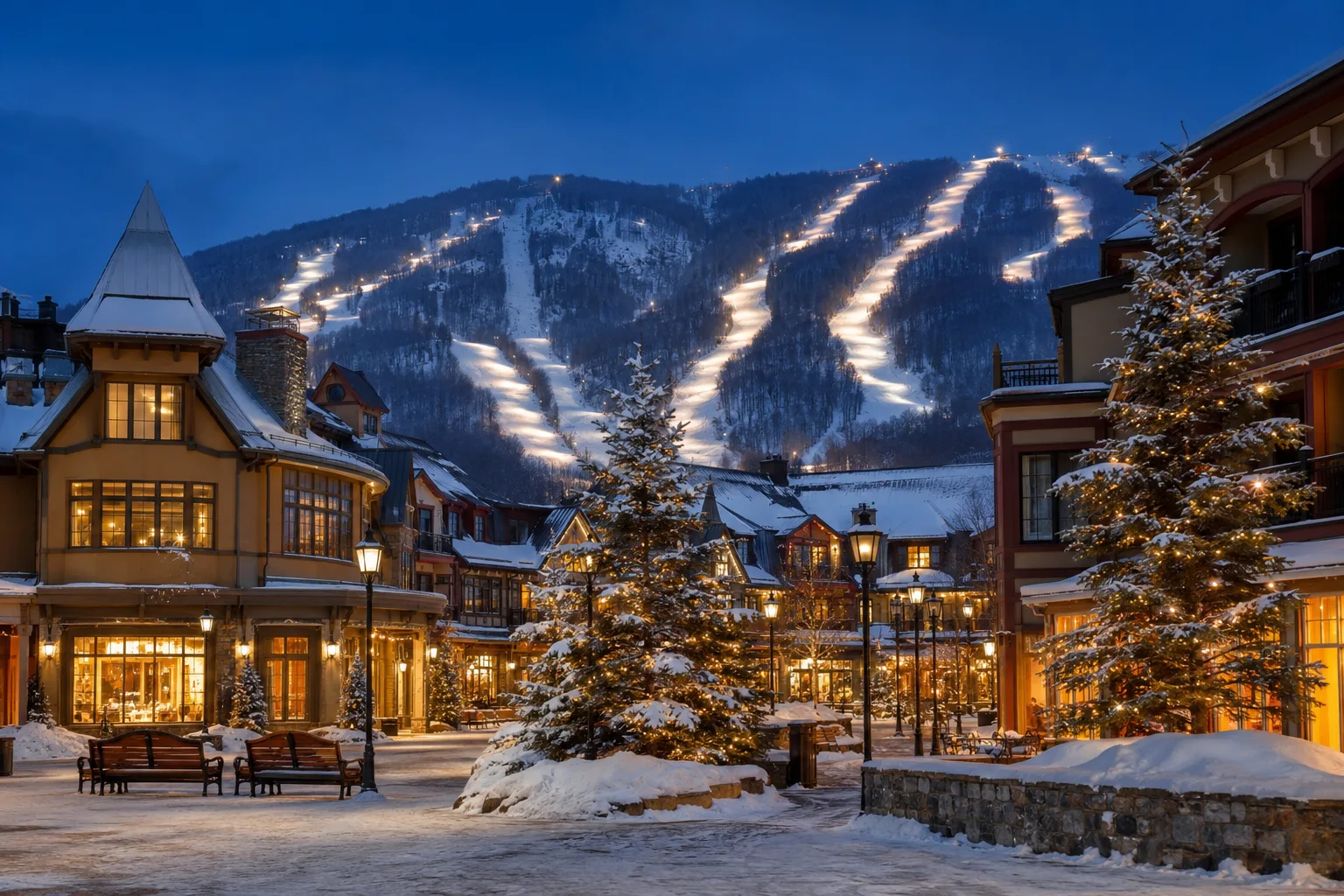

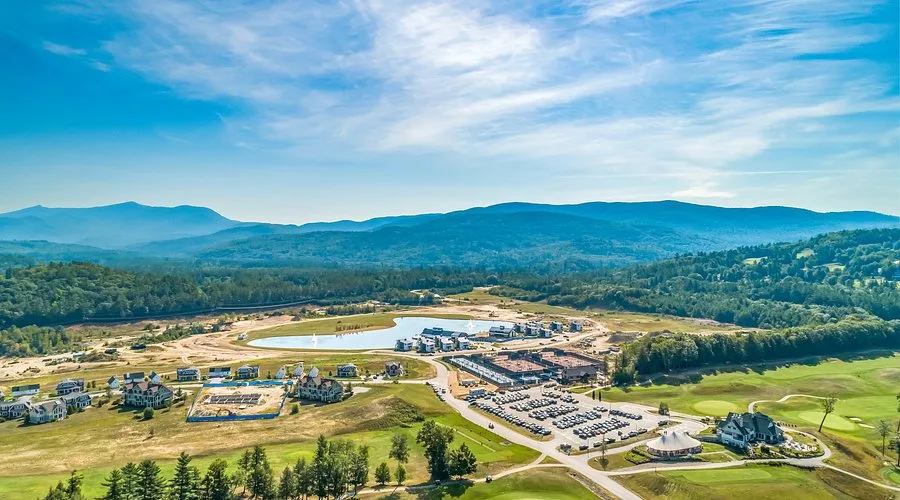
Waterville Valley, NH is a four-season resort town of about 500 year-round residents, two hours north of Boston at the end of Route 49: 62 ski trails and Nordic skiing in winter, golf, clay-court tennis, hiking and Corcoran Pond in summer, and a walkable Town Square. The surrounding national forest caps its housing supply for good.
Route 49 leaves Interstate 93 at Campton, follows the Mad River for eleven miles, and ends. There is no through traffic, because the town sits in a bowl of 4,000-foot peaks inside the roughly 800,000-acre White Mountain National Forest; the only other ways out, Tripoli Road and Sandwich Notch Road, are largely unpaved seasonal roads that close in winter.
That dead-end road explains almost everything about the place. It's why the valley feels calm even on holiday weekends, why kids ride bikes to the pond without anyone worrying, and why the Waterville Valley real estate market behaves unlike almost any other ski town in New England: the national forest boundary means the supply of homes here is effectively capped. Nothing new can sprawl up the road, because there is no road.
Most buyers discover Waterville Valley as a ski destination and are surprised to learn the summer is, if anything, busier. This guide covers what the valley offers in every season — and what to know about its housing market before you start looking. It draws on what our team sees on the ground: our brokerage works this corridor every week from offices on Route 49 in Campton and Main Street in Plymouth, and we operate vacation rentals here as well as sell homes.
In this guide
- Waterville Valley at a glance
- A valley with one road in
- Winter: a serious mountain with no lift lines to match
- Summer and fall: the seasons locals keep to themselves
- Town Square: the walkable heart of the valley
- A year in the valley, season by season
- The Waterville Valley real estate market
- Taxes and the cost of owning
- Getting here, and the towns next door
- Frequently asked questions
Key takeaways
- Waterville Valley is ringed entirely by the White Mountain National Forest, so the town's housing supply is effectively capped — it cannot grow outward, ever.
- Demand is genuinely year-round: 62 alpine trails and 70+ km of Nordic skiing in winter, then golf, 18 clay tennis courts, Corcoran Pond, and Town Square events in summer.
- Condominiums make up the large majority of the housing stock; single-family homes and buildable land are the scarce assets and trade infrequently.
- New Hampshire levies no tax on earned income and no general sales tax; towns fund themselves through property taxes, and Waterville Valley's 2025 rate of $9.96 per $1,000 is one of the lowest of any real market in the state — association fees are the bigger variable.
- Because both winter and summer draw visitors, short-term rental demand runs two seasons deep — and New Hampshire's 8.5% Meals & Rentals tax applies to stays under 185 days.
Waterville Valley at a glance
| Drive from Boston | About 130 miles / 2 hours via I-93 (Exit 28) and Route 49 |
|---|---|
| Year-round population | Just over 500 residents (2020 census) |
| Alpine skiing | 62 trails on 265 acres, 2,020 ft of vertical, 10 lifts, snowmaking on 100% of the terrain |
| Property tax (2025) | $9.96 per $1,000 of assessed value |
| Nearest towns | Campton (I-93 exit 28) 11 miles; Plymouth about 25 minutes |
| Cross-country skiing | 70+ km of groomed Nordic trails threading into the national forest |
| Summer | 9-hole golf course, 18 clay tennis courts, Corcoran Pond, hiking from the village |
| Housing stock | Mostly condominiums, with a limited supply of single-family homes and very little buildable land |
| State taxes | No New Hampshire tax on earned income and no general sales tax |
A valley with one road in
The valley was settled in the 1760s and incorporated in 1829, spending its first century as a farming outpost and summer retreat at the end of the valley road. The modern town dates to 1966, when Olympic ski racer Tom Corcoran bought the old Waterville Inn and opened Waterville Valley Resort on Mount Tecumseh — one of New England's first purpose-built resort villages, planned from the start around skiing, golf, and tennis rather than growing haphazardly out of a mill town.
Because Corcoran's village was laid out inside a fixed national forest boundary, the town never developed the strip-mall approach road that most ski towns eventually acquire. The entire town is about ten minutes end to end, and nearly everything — slopes, trails, shops, restaurants, the pond — is reachable on foot, by bike, or on the free shuttle.
Winter: a serious mountain with no lift lines to match
Alpine skiing on Mount Tecumseh
Waterville Valley Resort skis bigger than its reputation: 62 trails across 265 acres, 2,020 feet of vertical from a 4,004-foot summit, and ten lifts led by a high-speed six-passenger bubble chair. Snowmaking covers 100% of the terrain, per the resort's mountain stats, which matters in a New England winter. The Green Peak expansion added a second peak of intermediate cruisers and glades, and the resort installed a T-bar serving Exhibition — the steep, front-and-center trail that hosts elite mogul competition.
The birthplace of freestyle skiing
The resort launched the nation's first freestyle skiing instruction program in 1969 and hosted the first national freestyle championships in 1971 — which is why the sport's hall of fame calls the valley the birthplace of freestyle. That heritage came full circle when the FIS Freestyle World Cup returned to the valley in recent seasons, and World Cup moguls competition has been a fixture here since. It's a small town that regularly skis on the world stage.
Nordic skiing, skating, and everything between
The valley's Nordic center grooms more than 70 kilometers of cross-country trails that wind deep into the White Mountain National Forest — one of the largest networks in the Northeast — plus fat-bike and snowshoe terrain. There's an indoor ice arena for hockey and public skating, and pond skating on Corcoran Pond when conditions allow. For owners, the practical point is this: a single winter day here can hold first tracks, a Nordic loop, and a hockey game without ever moving the car.
Summer and fall: the seasons locals keep to themselves
Summer is when the valley's planned-resort DNA shows. The town operates a 9-hole golf course along the Mad River, one of New England's largest clay-court tennis facilities — 18 outdoor har-tru courts plus indoor courts — and the White Mountain Athletic Club with indoor and outdoor pools. Corcoran Pond, in the middle of it all, rents kayaks, paddleboards, and pedal boats from the Town Square dock and is stocked with trout each season.
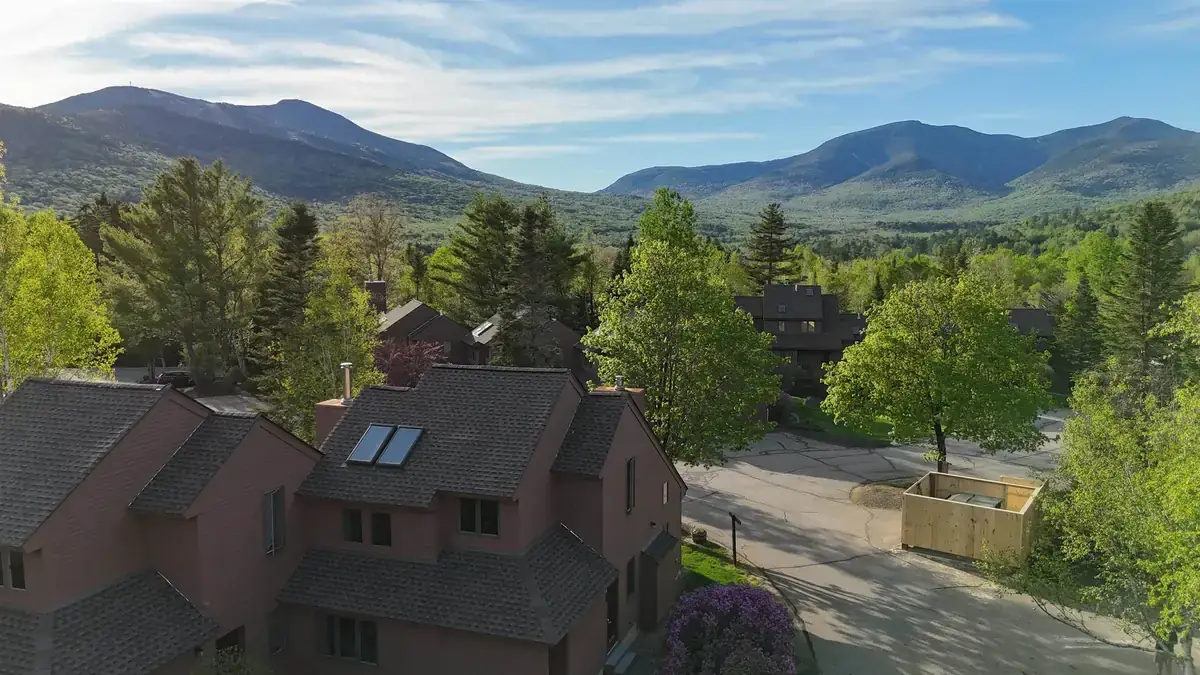
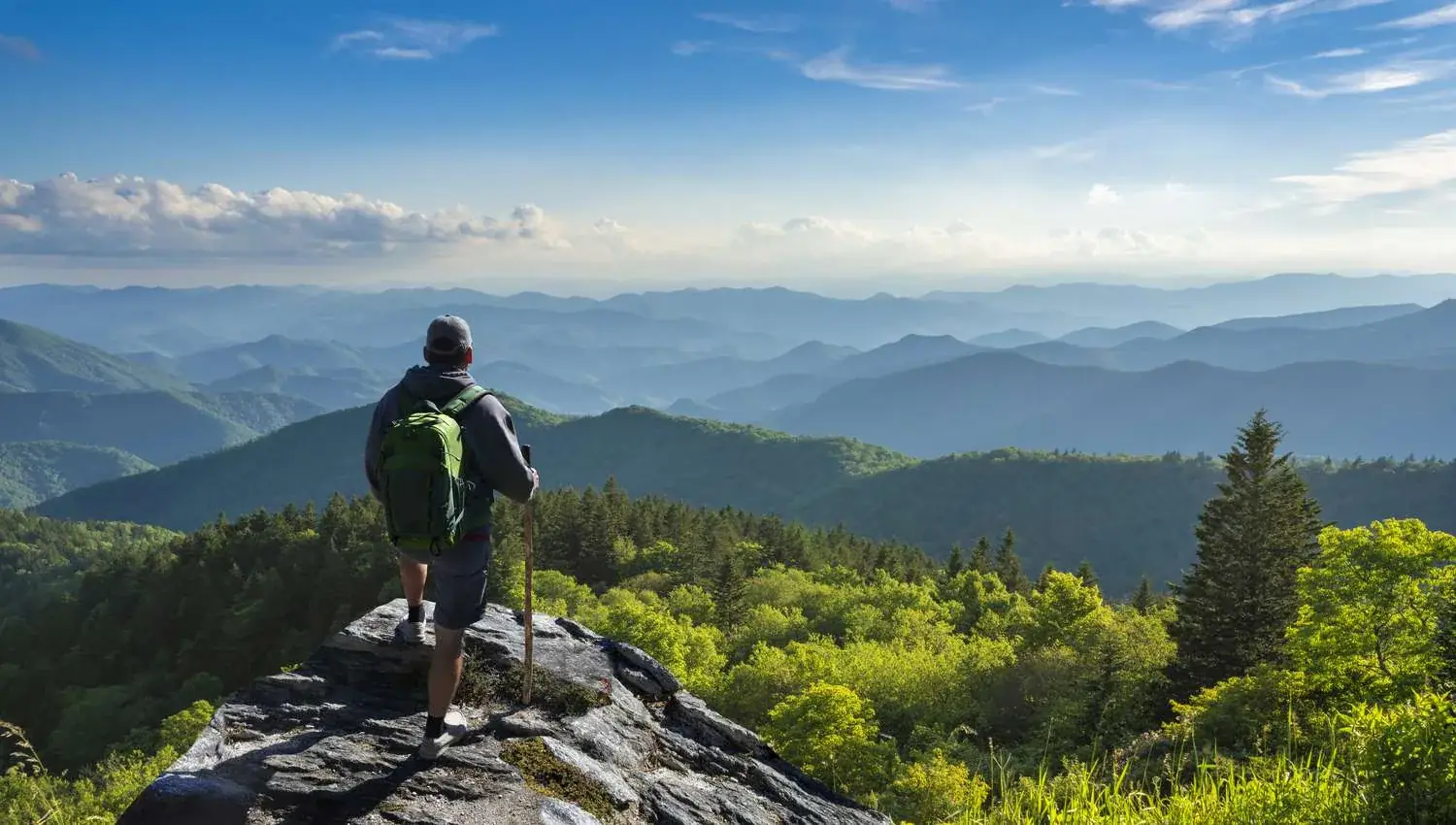
The hiking is genuinely front-door: Mount Tecumseh, long counted among New Hampshire's 4,000-footers, climbs straight from the ski area's parking lot, and the Greeley Ponds trail follows the valley floor to a pair of glacial tarns. The famous Welch–Dickey loop is fifteen minutes back down Route 49 in Thornton. Our guide to hiking near Waterville Valley covers distances, elevation gain and parking for each. Come late September, the valley's location — ringed by protected forest, near the Kancamagus Highway — makes it one of the best foliage bases in the state, and the quietest.
Town Square: the walkable heart of the valley
Town Square sits on the shore of Corcoran Pond with shops, restaurants, coffee, and a gazebo stage that hosts free concerts, food festivals, outdoor movies, and fireworks through the summer. It gives the valley something most New England ski towns lack: a true village center you can walk to for dinner, in every season.
The valley has a quieter cultural claim, too — Margret and H.A. Rey, creators of Curious George, summered here for decades, and the town's Rey Center carries on their legacy with art and science programming. It's the kind of detail that tells you this has always been a real community, not just a resort.
For buyers, walkability is also a value driver: properties within an easy walk of Town Square and the shuttle routes consistently attract the strongest rental demand and resale interest.
A year in the valley, season by season
Because the valley was planned as a four-season resort from day one, both the activity calendar and the property market have a distinct rhythm. Here is how the year actually runs — and what each stretch of it means if you own or are shopping here.
| Season | What's happening in the valley | What it means for buyers and owners |
|---|---|---|
| Winter (Dec–Mar) | 62 alpine trails on Tecumseh and Green Peak, World Cup moguls on Exhibition, 70+ km of Nordic grooming, ice arena and pond skating | Peak rental season and peak buyer traffic; homes show beautifully with snow, but confirm plowing, shuttle access, and ski-locker logistics on every showing |
| Mud season (Apr–mid-May) | Lifts close, trails thaw, the town takes a breath; some restaurants trim hours | The quietest buying window of the year — less competition and unhurried showings, though inventory is usually thin until late spring |
| Summer (Jun–Aug) | Golf on the Mad River course, 18 clay tennis courts, Corcoran Pond boating, Town Square concerts and fireworks | The valley's second demand peak; family rental bookings run long, and listing inventory is typically at its broadest |
| Fall (Sep–Oct) | Foliage ringed by protected forest, the best hiking weather of the year, quiet roads | Foliage weeks rival winter for rental demand; buyers can inspect roofs, decks, and drainage before snow hides them |
| Stick season (Nov) | The lull between leaves and lifts; snowmaking begins on the mountain | Sellers still on the market ahead of winter are often motivated; last practical window for a full exterior inspection |
The Waterville Valley real estate market
Two facts shape every purchase in the valley. First, supply is permanently constrained — the national forest boundary means the town cannot grow outward, so the housing stock changes very little from decade to decade. Second, the market is overwhelmingly second homes, which means inventory ebbs and flows with the seasons and well-priced properties move quickly. That scarcity dynamic is a local version of the statewide story: New Hampshire's inventory has been tight for years, and our New Hampshire housing market outlook covers where the broader numbers stand.
| Property type | Typical profile | How often it trades | Best fit for |
|---|---|---|---|
| Condominiums | Studio lodge suites near Town Square up to multi-bedroom townhouses on the golf course and Snow's Brook; association fees and amenities vary by complex | The most active segment — the large majority of valley sales in any year | Ski-and-golf families, first-time second-home buyers, owners who want rental income and low-maintenance lock-and-leave use |
| Single-family homes | A limited number exist, from valley-floor classics to slopeside and view properties covered on our luxury homes page | Only a handful in a typical year; well-priced listings draw prepared buyers fast | Buyers who want privacy and land inside the forest boundary and are ready to move when one surfaces |
| Land | The rarest category of all — the national forest boundary fixed the buildable footprint decades ago | Parcels surface occasionally; nearby Campton and Thornton offer far more acreage | Buyers set on building, usually with patience or a willingness to look down Route 49 |
Condominiums
The majority of homes here are Waterville Valley condominiums, ranging from studio lodge suites near Town Square to multi-bedroom townhouses on the golf course and along Snow's Brook. Entry points remain accessible by ski-town standards — there is real selection among homes under $500K — while larger townhomes generally fall in the $500K to $1M range. Association fees vary meaningfully between complexes, so compare what each fee actually covers: shuttle access, pools, and amenity memberships differ.
Single-family homes
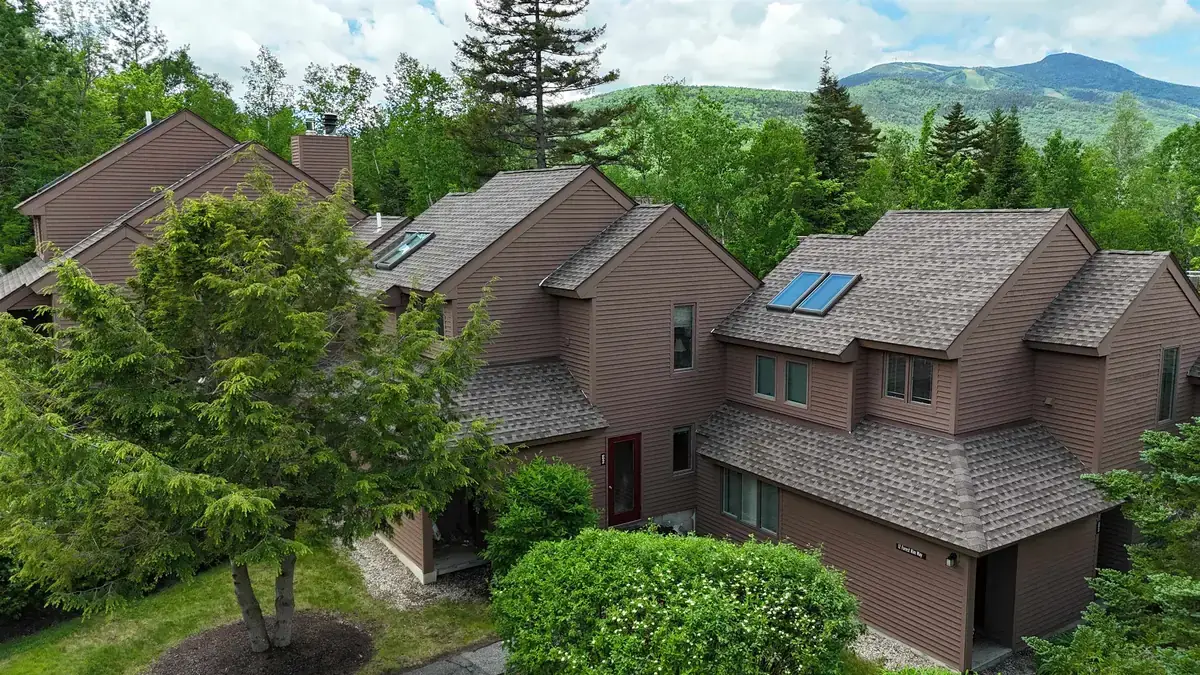
Single-family homes in Waterville Valley are the scarce asset — a limited number of them exist, and only a handful trade in a typical year. The upper end of the market, including slopeside and view properties, is covered on our luxury homes and homes over $1M pages. When one of these listings appears, prepared buyers win; if a valley house is on your list, it pays to have financing and representation lined up before it hits the market.
Land
Buildable land in Waterville Valley is the rarest category of all — the national forest boundary saw to that decades ago. Parcels do surface occasionally, and nearby Campton and Thornton offer far more acreage for buyers set on building.
Rental income
Because the valley is genuinely busy in both winter and summer, short-term rental demand runs year-round rather than one season deep — a meaningful difference from ski-only towns when you model carrying costs. Our team operates vacation rentals in this area ourselves, so we see the booking calendar firsthand: winter and summer both fill, and foliage weeks surprise people. Two practical notes: New Hampshire's Meals & Rentals tax (currently 8.5%) applies to stays under 185 days, and town and association rules apply, so verify them for any specific property. Our guide to second-home ownership in the White Mountains covers the practical side in more detail, and if nearby Owl's Nest Resort is also on your list, our owner's guide to vacation rentals at Owl's Nest walks through buying to rent there.
Taxes and the cost of owning
New Hampshire levies no tax on earned income and no general sales tax — and since 2025, no tax on interest and dividends either — which is a recurring reason Massachusetts buyers end up owning on this side of the border. Towns fund themselves through property taxes, and Waterville Valley's large resort tax base keeps its rate low: $9.96 per $1,000 in 2025, or about $3,984 a year on a $400,000 assessment. Down Route 49, Campton's 2025 rate was $17.46 and Thornton's $11.74.
For most valley owners the bigger carrying cost is the condominium association fee, which varies widely by complex depending on what it covers — shuttle access, pools, exterior maintenance, reserves. Rates reset every fall; our guide to New Hampshire property taxes explains how they are set and how to compare towns fairly.
If you already own in the valley and are weighing a sale into today's low-inventory market, start with a professional home valuation. The valley's two demand peaks shape listing strategy more than the calendar cliché suggests — our guide to the best time to sell a house in New Hampshire walks through the timing, and our NH Seller Guide covers the whole process, including our Ready-to-Sell Program, which pairs a pre-listing inspection with up to $2,500 in advanced preparation costs so a valley condo or home hits the market ready.
Getting here, and the towns next door
Year-round, the valley is reached only from I-93 Exit 28 via Route 49 — about two hours from Boston in normal traffic. In summer and fall, the largely unpaved Tripoli Road also links the valley to I-93 Exit 31 in Woodstock, but it closes to cars in winter, as does Sandwich Notch Road to the south. The Route 49 approach runs without the notorious weekend bottlenecks of ski towns farther north. Homes for sale in Campton NH and Thornton NH real estate, along the approach road, are where many buyers land when they want valley access with more land and friendlier price points — our Campton and Thornton neighborhood guide breaks them down, and the Waterville Estates guide covers the Campton amenity community whose name gets confused with the valley's. Campton is also home to Owl's Nest Resort NH, the four-season golf community we know better than anyone. Plymouth, twenty-five minutes away, covers the practical bases: hospital, university, and full-size grocery stores.
Frequently asked questions
How far is Waterville Valley from Boston?
About 130 miles — roughly a two-hour drive via I-93 North to Exit 28, then 11 miles up Route 49 to the resort village. It is one of the closest full-scale four-season resorts to Boston, and because Route 49 is a dead end, the last stretch avoids the weekend bottlenecks of ski towns farther north. Tripoli Road offers a seasonal shortcut from Exit 31 in summer and fall only.
Is Waterville Valley a year-round community?
Yes. Just over 500 people lived in the valley full-time at the 2020 census, supporting a town government, a recreation department, and year-round dining and services. It is small, but a genuine community rather than a winter-only resort; Plymouth, about 25 minutes away, covers the hospital, university and full-size grocery stores.
Are most homes in Waterville Valley condos?
Yes — condominiums make up the large majority of the housing stock, a legacy of the town's planned-resort origins, from studio lodge suites near Town Square to multi-bedroom townhouses on the golf course. Single-family homes exist in limited numbers, only a handful trade in a typical year, and they command a premium when they come to market.
Can a Waterville Valley home be rented out when the owner isn't using it?
Generally yes, and demand is strong in both winter and summer. Rules vary by condominium association, so confirm rental policies for any specific property before buying. Every operator needs a New Hampshire Meals and Rentals license, must collect the 8.5% tax on stays under 185 consecutive days, and must show the license number in online listings.
What is there to do in Waterville Valley in the summer?
A town-run 9-hole golf course, 18 outdoor clay tennis courts plus indoor courts, kayaking and paddleboarding on Corcoran Pond, hiking straight from the village — including Mount Tecumseh and Greeley Ponds — and free concerts, festivals, and fireworks at Town Square. Many owners say summer, not winter, is the valley's best season.
What are property taxes like in Waterville Valley?
Low by New Hampshire standards. The 2025 rate was $9.96 per $1,000 of assessed value — about $3,984 a year on a $400,000 assessment — thanks to a large resort tax base. There is no state tax on earned income or general sales. For most condo owners, the association fee is the larger and more variable carrying cost, so compare what each complex's fee covers.
Why is the housing supply in Waterville Valley so limited?
The town is completely surrounded by the White Mountain National Forest, so its developable footprint was fixed decades ago. No new land can be opened up on the edges of town, which means the housing stock barely changes from decade to decade — a permanent supply cap that shapes both prices and how quickly well-priced listings move.
See the valley for yourself
The best way to understand Waterville Valley is to spend a day here in the season you'd use it most. Browse current Waterville Valley homes for sale, run your own property search across the region, or talk with our team — our agents live and work in these mountains, from the Pemi Valley to the Lakes Region, and we're glad to point you to the right corner of the valley for how you actually plan to live.
Tax figures and program details are general information, current as of this writing; rates and rules change. Confirm specifics with the Town of Waterville Valley, the NH Department of Revenue Administration, and your CPA or attorney.
Sources and further reading
- Waterville Valley Resort — Mountain Stats
- Town of Waterville Valley — Official Town Website
- U.S. Forest Service — White Mountain National Forest
- Ski NH — Freestyle World Cup Returns to Waterville Valley
- NH Department of Revenue Administration — Meals & Rentals Tax
- NH DRA — Municipal tax rates
- Waterville Valley Resort — Getting here