
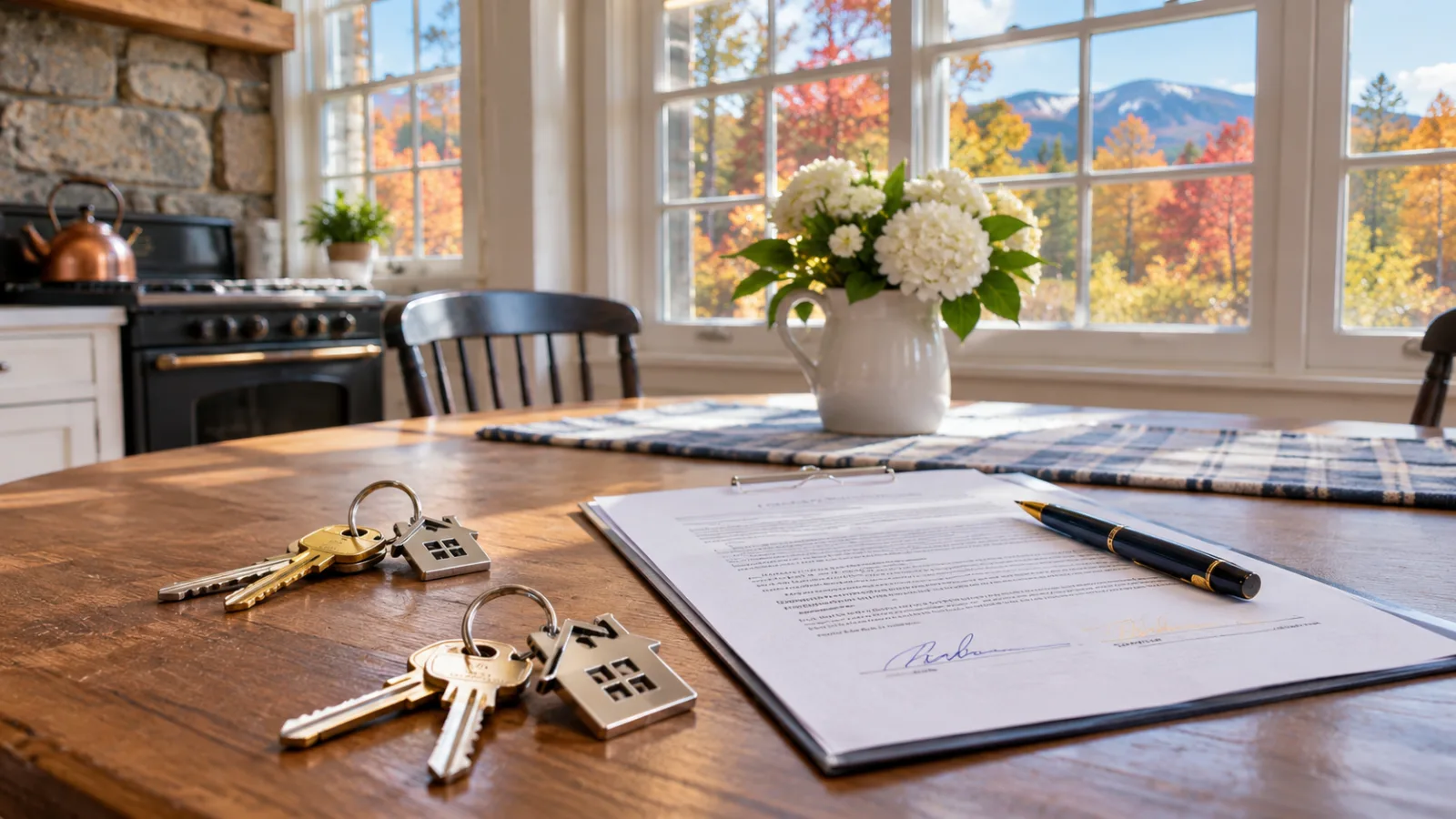

A kick-out clause is a term in a contingent purchase agreement that lets the seller keep marketing the home and, if a better offer arrives, give the first buyer a short deadline to remove their contingency or step aside. A backup offer is a signed offer that waits in second place and becomes the main contract only if the first one falls through. Both keep a house "Active Under Contract" instead of off the market.
Key takeaways
- A kick-out clause protects the seller when the first buyer's offer depends on selling another home. The seller keeps showing the house; the buyer keeps the right to match a better offer by dropping the contingency.
- A backup offer protects a second buyer. It's a full contract that moves into first place automatically if the primary deal ends, with no new negotiation.
- "Active Under Contract" means an offer has been accepted but the listing is still on the market, while "Pending" means it is off the market (RESO Data Dictionary definitions used by MLSs nationwide).
- The 72-hour notice window is a convention, not New Hampshire law. The deadline is whatever the contract says, and it is negotiable.
- New Hampshire requires a seller's agent to keep presenting offers even after the property is under contract, under RSA 331-A:25-b.
We negotiate these clauses on both sides from our offices in Plymouth and Campton. In a market where many buyers are selling a house in another state to buy a second home or a retirement home here, contingent offers, and the clauses that manage them, come up often.
In this guide
- What is a kick-out clause in real estate?
- How does a kick-out clause work, step by step?
- What is a backup offer in real estate?
- What does active under contract mean in real estate?
- Do New Hampshire sellers have to show backup offers?
- Why do contingent offers come up so often in our market?
- Should you use a kick-out clause or a backup offer? The seller's view
- Should you make a backup offer? The buyer's view
- Frequently asked questions
What is a kick-out clause in real estate?
A kick-out clause in real estate is a provision that lets a seller accept a contingent offer while reserving the right to "kick out" that buyer if a stronger offer comes along. It is usually attached to a home-sale contingency, where the buyer's purchase depends on selling their current house. Without the clause, the seller would be tied up for as long as the buyer's sale takes. With it, the seller keeps the house on the market and holds a deadline over the contingency.
The clause doesn't let a seller simply walk away. When a better offer arrives, the seller gives the first buyer written notice, and the first buyer then has a set time to decide:
- Remove the contingency and keep the house, committing to buy whether or not their own home has sold; or
- Release the contract, usually with their earnest money deposit returned, and let the seller move to the new offer.
You'll also see it written as a "kick out clause" or "kickout clause," an "escape clause," or a right of first refusal for the original buyer. The mechanics are the same. In New Hampshire the clause is negotiated, written into the purchase and sales agreement or an addendum to it, and the wording varies from deal to deal, so read the actual language rather than relying on a summary.
Who benefits from a kick-out clause?
A kick-out clause benefits both sides, which is why it exists. The seller gets a deal on paper without taking the house off the market. The buyer gets an accepted offer, and a seller willing to wait, without having to sell their own home first or carry two mortgages. The cost to the buyer is uncertainty: their accepted offer can be bumped. The cost to the seller is that some buyers won't make an offer on a house that is already under contract.
How does a kick-out clause work, step by step?
A kick-out clause works on a sequence of notice and response, and the order matters:
- The seller accepts a contingent offer with a kick-out addendum. The listing usually changes to Active Under Contract, and showings continue.
- A second buyer makes an offer, ideally one with no home-sale contingency, and the seller accepts it as a backup (or conditionally, subject to the first buyer's rights).
- The seller sends the first buyer written kick-out notice, the way the contract requires (to the address, email or agent named in it).
- The response clock starts. The first buyer has the agreed window, often 72 hours in common practice, to waive the contingency in writing.
- If the first buyer waives, they stay in the deal on the same terms, minus the home-sale contingency. They may also need to show they can close without the sale proceeds, such as an updated lender letter.
- If the first buyer doesn't waive in time, the first contract ends under its own terms, the deposit is handled as the agreement says, and the second offer becomes the primary contract.
Two details cause most of the arguments: when the clock actually starts (time of delivery, business days or calendar days, a weekend or holiday) and what counts as a valid waiver. Spell both out. We also suggest the first buyer's agent and lender plan for the kick-out notice from day one, rather than scrambling when it arrives.
Is a 72-hour kick-out window required by law?
No. New Hampshire law sets no kick-out deadline. Seventy-two hours is a common convention, and you'll see 24, 48 hours or five days too. The window is whatever the buyer and seller sign, so a buyer who needs more time to line up bridge financing should negotiate it at the start, not after the notice arrives.
What is a backup offer in real estate?
A backup offer in real estate is a complete, signed purchase offer that the seller accepts in second position, behind an existing contract. It becomes the primary contract only if the first one terminates. The backup buyer agrees to price, deposit, financing and dates up front, so if the first deal fails the house moves to them without a fresh negotiation or another round of bidding.
Backup offers in real estate and kick-out clauses are related but different. A kick-out clause sits in the first buyer's contract and gives the seller a way to force a decision. A backup offer is the second buyer's contract, waiting its turn. A seller can have either one, both or neither. A backup offer on a house with no kick-out clause waits until the first deal fails on its own, such as a financing, inspection or appraisal contingency that isn't met.
What does "accepting backups" mean?
"Accepting backups" means the seller has an accepted offer but is still willing to sign backup offers in second place. On a listing it signals that the first contract has contingencies still open, and that the seller wants a safety net. It does not mean the first deal is in trouble; many sellers accept backups on every contract until closing.
What does active under contract mean in real estate?
Active Under Contract in real estate means a seller has accepted an offer, but the listing stays on the market, so the property can still be shown and the seller can still take backup offers until the contract firms up or ends.
What does Active Under Contract mean on a house?
Active Under Contract on a house means the seller has accepted an offer, but the listing is still on the market, so showings and backup offers can continue until the deal firms up. That is the definition in the RESO Data Dictionary, the industry standard MLSs use: "An offer has been accepted but the listing is still on market."
Pending is the next step: an offer has been accepted and the listing is no longer on the market. On our own property search, New Hampshire listings show as Active, Coming Soon, Active Under Contract or Pending.
In practice, Active Under Contract tells a buyer two things: someone else is ahead of you, and the seller is still willing to hear offers. It is where most kick-out clause listings sit, and it is the status that invites backup offers.
When a realtor marks a listing Active Under Contract, the reason is almost always an open contingency, such as a home sale, financing, inspection or appraisal. Other MLSs use names like "active backup" or "active with contingency" for similar statuses, and the definitions vary, so ask the listing agent what a status means for that specific house.
How long can a house be active under contract?
A house can be active under contract for as long as the purchase agreement's contingencies run, and there is no fixed limit. The listing moves to Pending once the seller stops marketing it, typically when the contingencies are met or waived, and to Sold at closing. A home-sale contingency with a kick-out clause can keep a listing Active Under Contract for weeks or months, because it depends on the first buyer's own sale. If a status seems stale, the listing agent can tell you which contingency is still open.
Do New Hampshire sellers have to show backup offers?
Yes. A seller's agent in New Hampshire has to keep presenting offers after the house is under contract. RSA 331-A:25-b, which sets out a seller's agent's duties, requires presenting all offers and agreements to and from the seller in a timely manner "even if the real estate is subject to a contract of sale." A seller can decide not to act on a backup offer, but the agent can't decide for them.
Presenting offers is not the same as marketing for them. Once the house is under contract, the seller's agent generally isn't required to keep seeking other buyers unless the listing agreement says so. A seller who wants active marketing during a kick-out period should put that in writing with their agent.
That duty sits alongside the contract. Accepting a backup offer never overrides the first buyer's rights; the backup simply waits. Accepting a second primary offer while the first contract is still live could put the seller in breach. That is why backup agreements say, in one form or another, that they are subject to the existing contract and only become effective if it ends.
Why do contingent offers come up so often in our market?
Contingent offers come up often around Plymouth, Campton and the Lakes Region because many buyers here are moving equity from a house somewhere else. A buyer selling a primary home in another state to buy a second home in the White Mountains, or to retire here full time, often can't close without that sale. A kick-out clause is how a seller can say yes to that buyer without betting the season on someone else's market.
Timing makes it sharper. Lake houses and ski-area homes have a selling season, and a seller who agrees to wait 60 days on a contingent offer in May can lose the summer buyers if that offer fails in July. Our guide to the best time to sell a house in New Hampshire covers the seasonal pattern. Waterfront sales add their own items to the contingency calendar, such as the buyer-paid waterfront septic evaluation required since September 2024 (RSA 485-A:39), which is covered in our guide to selling a lake house or second home.
Should you use a kick-out clause or a backup offer? The seller's view
As a seller, a kick-out clause makes sense when the contingent offer is the best price you have and the buyer's own house looks saleable. It is a weaker choice if the buyer's home isn't listed yet, or if you need a certain closing date. Before you accept one, ask your agent to check:
- whether the buyer's current home is listed, at what price and how long it has been on the market;
- whether the buyer has a lender letter showing they can close once their house sells;
- how long the home-sale contingency runs, and what the kick-out notice period is.
Accepting backup offers on a house costs a seller very little and is usually worth doing. If the first deal fails on inspection, financing or appraisal, a signed backup can turn a lost week into a same-day replacement. Our guide to selling a house in New Hampshire covers the rest of the contract-to-closing timeline, and you can talk to our listing team about a specific offer.
Should you make a backup offer? The buyer's view
As a buyer, a real estate backup offer is worth making when you would genuinely buy the house on those terms and can stay flexible for a few weeks. Your position improves if the first contract fails, and you skip any bidding that would follow a relisting. The trade-offs are that your deposit may be held, your financing has to stay ready, and you may need to keep looking while you wait.
- Read the listing status and ask why. Ask the listing agent which contingencies are open on the first contract and whether there is a kick-out clause.
- Write the backup as a full offer, with price, deposit, financing and dates, and with a clause saying it becomes primary only if the existing contract ends.
- Keep your own exit. Include the right to withdraw the backup offer by written notice before it becomes primary, so you can buy another house.
- Agree on dates that run from promotion, so your inspection and financing deadlines start when you move into first place, not when you sign.
- Keep the lender ready. An expired pre-approval is the most common reason a backup buyer can't act when their turn comes.
If you are the first buyer facing a kick-out clause, the strongest move is preparation: get your own house listed early, keep in touch with your lender about bridge financing, and know before the notice arrives whether you would waive. Our buyer services page explains how we handle offers, and our guide to closing costs in New Hampshire shows what you'll need at the table.
Frequently asked questions
What is a kick-out clause in real estate?
A kick-out clause is a term in a contingent purchase agreement, usually one that depends on the buyer selling their own home, that lets the seller keep marketing the property. If the seller gets a better offer, the first buyer gets written notice and a set time to remove the contingency or release the contract.
What does accepting backups mean in real estate?
Accepting backups means the seller already has an accepted offer but will sign additional offers in second place. A backup offer becomes the primary contract only if the first one falls through.
What does Active Under Contract mean in real estate?
Active Under Contract means an offer has been accepted but the listing is still on the market, so showings and backup offers may continue. Pending means an offer has been accepted and the listing is off the market. Those are the RESO Data Dictionary definitions MLSs use.
Can a seller accept a backup offer on a house that is already under contract?
Yes. A seller can accept a backup offer while another contract is in place, as long as the backup is written to take effect only if the first contract ends. In New Hampshire the seller's agent must keep presenting offers even when the property is under contract (RSA 331-A:25-b).
How long does a buyer have to respond to a kick-out notice?
As long as the contract says. Seventy-two hours is a common convention, but New Hampshire law sets no standard, and windows of 24 hours to several days are also used. Check whether the period is counted in calendar or business days and when it starts.
Can a backup buyer back out?
Usually, yes, if the backup agreement gives them that right. Most backup offers let the buyer withdraw by written notice any time before the offer becomes the primary contract. After it becomes primary, the buyer is bound like any other buyer, subject to their own contingencies.
Does a backup offer have to be the same price as the first offer?
No. A backup offer can be higher, lower or the same as the first offer, on any terms the seller accepts. The seller ranks backups by price and certainty, so a lower offer with no home-sale contingency can beat a higher one that has one.