
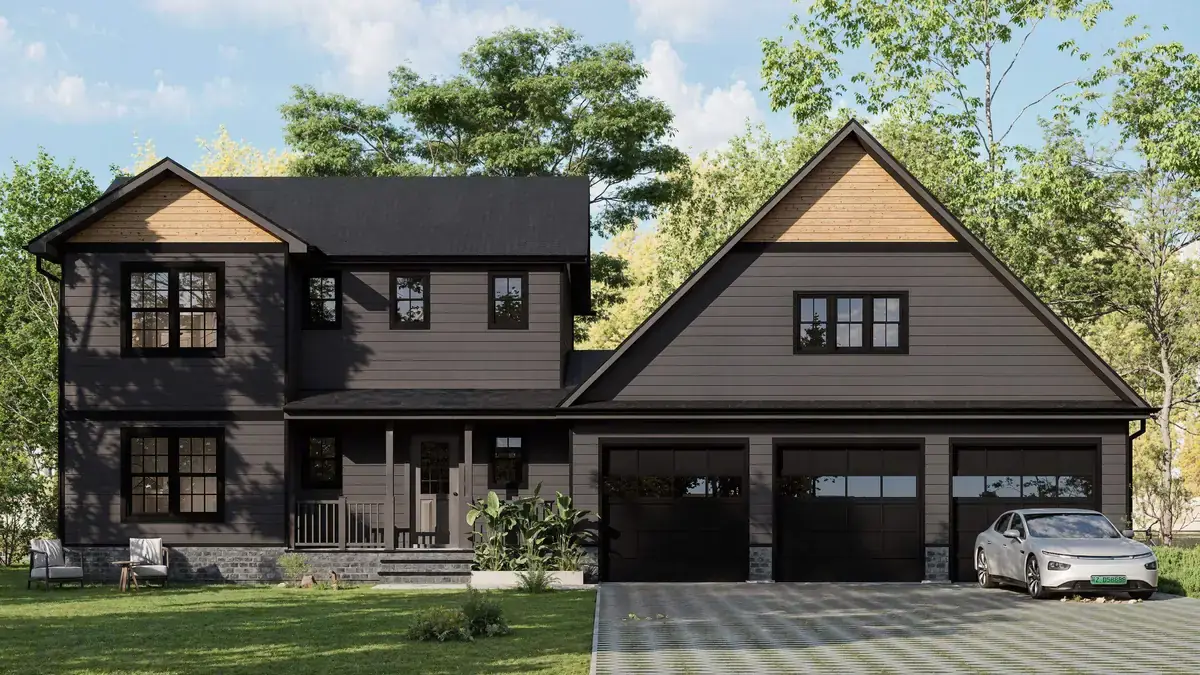

A lease purchase on a house is two agreements signed together: a lease, under which you rent the home for a set term, and a purchase contract that fixes the price and lets (or requires) you to buy it at the end. You usually pay an upfront option fee, part of your monthly rent may be credited toward the purchase, and at the end of the term you still need a mortgage to close.
That is the whole idea of lease purchase real estate: time. The tenant-buyer gets a year or two to repair credit, save a down payment or prove income, living in the house they intend to buy. The owner gets a committed tenant and a sale price agreed today. It can work well for both. It also fails in predictable ways, and almost every failure traces back to something the paperwork did not say.
This guide is general information, not legal advice. A lease purchase is a custom contract, and both sides should have their own New Hampshire real estate attorney review it before anyone signs.
How does a lease purchase work on a house?
Step by step, a typical arrangement runs like this:
- Agree on the terms. Price, term (often one to three years), monthly rent, the option fee, any rent credit, and who maintains what.
- Sign the lease and the purchase agreement. Sometimes they are one document, sometimes two. Either way, they have to agree with each other.
- Pay the option fee. The tenant-buyer pays it at signing. It buys the right to purchase at the agreed price and is usually credited toward the price at closing.
- Live in the house and pay rent. If the contract provides a rent credit, part of each payment is set aside toward the purchase.
- Get mortgage-ready. The tenant-buyer works with a lender throughout, not just in the final month.
- Exercise and close. The tenant-buyer gives notice to buy, the lender orders an appraisal, and the sale closes like any other, with title work, a closing attorney or title company, and New Hampshire's real estate transfer tax under RSA 78-B ($0.75 per $100 of price for each side, as our seller closing costs guide explains).
If the tenant-buyer does not or cannot buy, the lease ends on its terms, and what happens to the option fee and credits is whatever the contract says. Usually, they stay with the owner.
Lease-option vs lease-purchase
The two names are often used interchangeably. They are not the same thing.
| Lease-option | Lease-purchase | |
|---|---|---|
| Tenant's commitment | The right to buy, not the obligation | An obligation to buy, subject to the contract's conditions |
| If the tenant walks | Loses the option fee and credits; no further liability for the purchase | May be in breach of a purchase contract, with whatever remedies it gives the seller |
| Who it suits | A buyer who is not sure the house, the town or the job will last | A buyer who is sure and wants the price locked |
| Owner's position | Less certain sale | More certain sale, if the buyer can actually finance |
Many "rent to own homes in NH" that you see advertised are really lease-options. Read which one you are being offered, and ask your attorney what happens if financing falls through. A lease-purchase without a financing contingency can leave a tenant-buyer obligated on a house they cannot get a loan for.
The option fee
The option fee is the consideration that makes the option enforceable. It is negotiated, there is no standard amount, and it is usually non-refundable if the tenant-buyer does not buy. At closing, it is normally credited toward the price or the down payment.
One New Hampshire point to raise with your attorney: RSA 540-A:5 defines a security deposit broadly, as all funds beyond the monthly rent transferred from tenant to landlord for any purpose, and a covered landlord's deposit is capped at one month's rent or $100, whichever is greater. How the option fee is labelled, documented and held matters. Have the contract drafted so it is clearly the price of the option, not a disguised deposit. Our guide to renting in New Hampshire covers the deposit rules in full.
Rent credits, and how a lender counts them
A rent credit is the part of each monthly payment set aside toward the purchase. Buyers often assume every credited dollar becomes down payment at closing. A conventional lender will not necessarily see it that way.
Under Fannie Mae's Selling Guide B3-4.3-12, Rent-Related Credits, a rent credit for an option to purchase can count toward the down payment only up to the difference between the market rent, as the appraiser determines it, and the rent actually paid. The lender reviews the agreement (with an original term of at least 12 months) and wants evidence of each payment, such as canceled checks or bank statements.
In practice: if market rent is $2,200 and the tenant-buyer pays $2,500, the lender can credit up to $300 a month, whatever the contract calls the rest. Set the rent above market by the amount you want credited, document every payment, and talk to the lender before signing, not at the end. Other loan programs have their own rules.
Financing at the end
A lease purchase delays the mortgage; it does not replace it. At exercise, the tenant-buyer needs a loan approval, an appraisal and enough cash to close. The two classic failures:
- The credit or income did not get there. Start with a lender at the beginning of the lease and get a written plan for what needs to change.
- The appraisal comes in below the locked price. A price set two years ago can be above what the house appraises for. The lender lends on the appraisal, so the gap comes from the buyer's cash or a renegotiation.
Our buyer services team works with tenant-buyers on the purchase side, including connecting them with lenders who know the local market, and a home valuation helps both sides set a price that will hold up.
Risks for the tenant-buyer
- Losing the option fee and credits if you cannot or do not buy.
- The owner's financial problems. If the owner stops paying the mortgage or taxes, or a lien attaches, the house you plan to buy can be foreclosed or clouded. Ask your attorney about a title search at signing and whether to record notice of the option.
- The owner's mortgage. Federal law protects a lease of three years or less from a lender's due-on-sale clause only when the lease does not contain an option to purchase (12 U.S.C. § 1701j-3(d)). A lease with an option falls outside that protection, which is a question for the owner's lender and both attorneys.
- Condition and repairs. Some agreements shift maintenance to the tenant-buyer. Get a home inspection before signing, not just before closing.
- Condo rules. In a condominium, the association's declaration and rules under RSA 356-B govern leasing, and some limit or prohibit it.
Risks for the owner
- A tenant who never buys. The house is off the market for the term, and the sale you planned may not happen.
- A tenant who stops paying. During the lease, the tenant-buyer is a tenant. New Hampshire's eviction statute, RSA 540, applies, and self-help is prohibited. A purchase contract does not change that.
- A locked price in a rising market. The option fee and any above-market rent are the owner's compensation for that risk.
- Responsibility for the house. Insurance, taxes and major systems usually stay with the owner until closing. Write the rest down.
Owners who would rather not handle the tenancy themselves can hand it to a manager. Our property management service handles leases, rent collection, maintenance and the records a lender will ask for, and our town pages for Plymouth, Campton and Thornton cover the local rental rules. If you are weighing a lease purchase against simply selling, our listing team can set out both paths, and our guide to long-term rental properties covers what keeping the house as a rental involves.
Rent to own houses in NH: finding one
Rent to own houses in NH are rarely advertised as such. Most lease purchases here start with a conversation: a tenant asks their landlord, or a seller whose house has not sold is open to terms. If you are a buyer, look at what is for sale in towns like Campton and Thornton, and ask whether a lease-option would be considered on a listing that has been on the market a while. If you are an owner, a lease purchase can make sense for a house that suits a buyer who just needs time.
Frequently asked questions
What is the difference between a lease-option and a lease-purchase?
A lease-option gives the tenant the right, but not the obligation, to buy the house at an agreed price. A lease-purchase obligates the tenant to buy, subject to the contract's conditions. Many advertised rent-to-own deals are lease-options.
Is the option fee refundable?
Usually not. The option fee pays for the right to buy at a set price. If the tenant-buyer purchases, it is normally credited at closing; if not, it typically stays with the owner. The contract decides, so read that clause with your attorney.
Do rent credits count toward a down payment?
Only as far as the lender allows. Under Fannie Mae's guidelines, a rent credit counts up to the difference between the appraiser's market rent and the rent actually paid, with an agreement of at least 12 months and proof of each payment. Talk to the lender before you sign.
Can a lease-purchase tenant be evicted in New Hampshire?
Yes. During the lease the tenant-buyer is a tenant, and New Hampshire's eviction statute, RSA 540, governs. The landlord must use the court process, and self-help such as changing locks or shutting off utilities is prohibited under RSA 540-A:3.
Do I need an attorney for a lease purchase in NH?
You should have one. A lease purchase combines a lease and a purchase contract, touches the security deposit and eviction statutes, and raises title and mortgage questions. Each side should have its own New Hampshire real estate attorney review the documents before signing.