
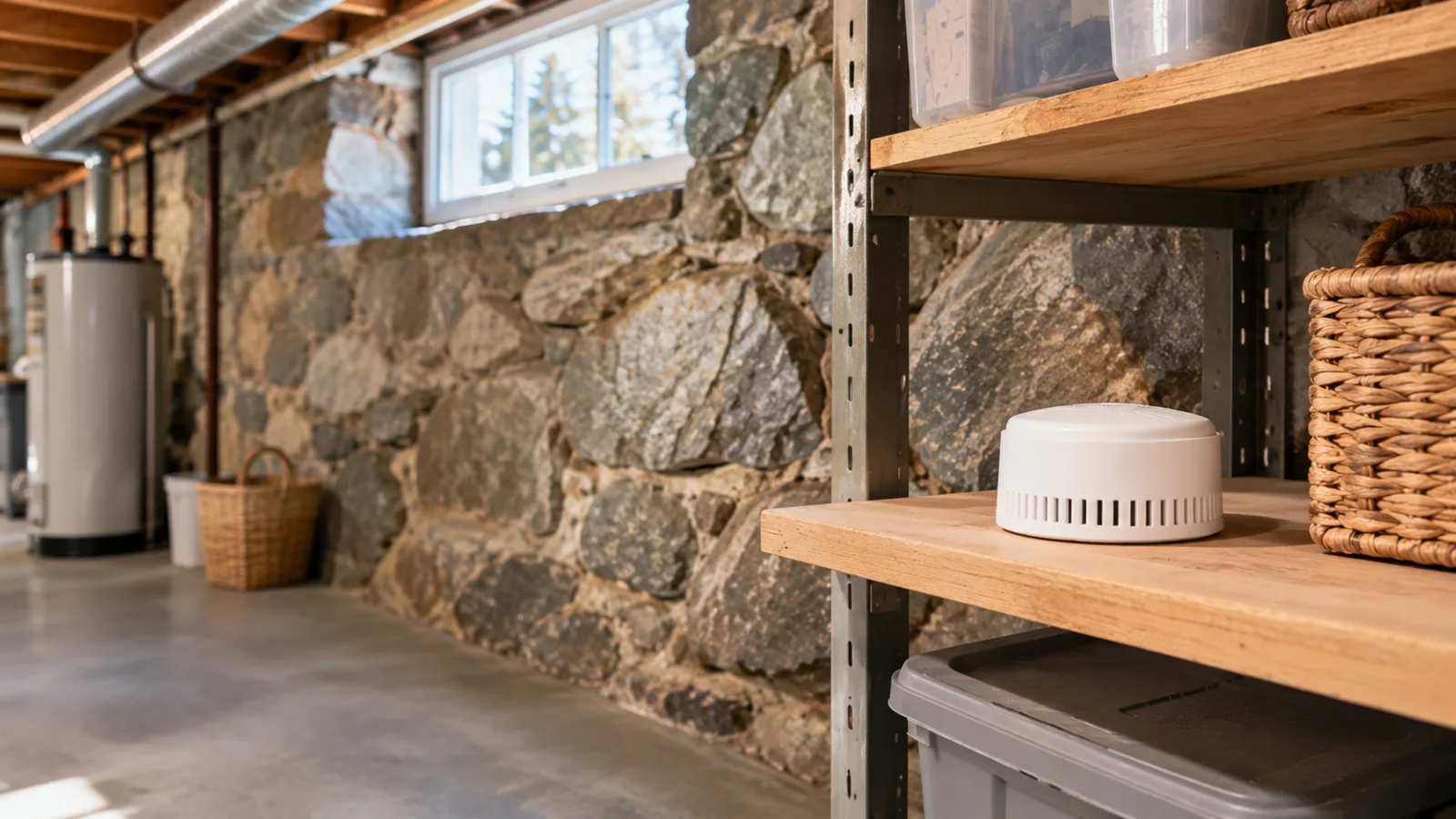

Radon testing for a real estate transaction in New Hampshire is a short-term test of at least 48 hours, run during the buyer's inspection period in the lowest regularly used level of the house, with windows and doors closed. The EPA says to fix the home at 4 pCi/L or more, and New Hampshire law requires no radon test before a sale.
The seller must give you the state's radon notice under RSA 477:4-a, but a notice is not a measurement, so the test is the buyer's job. Our New Hampshire home buyer guide explains where the test fits in the whole purchase.
On this page
- What is a radon test for a house?
- How do you test for radon in a house you're buying in NH?
- Where does radon in a house come from?
- Should you test the well water for radon too?
- Frequently asked questions
What is a radon test for a house?
A radon test for a house is a measurement of the radioactive gas radon in the indoor air, reported in picocuries per liter (pCi/L). A real estate radon test uses either passive kits sent to a lab or an active continuous monitor.
The EPA accepts three short-term options for real estate radon tests, each lasting at least 48 hours and each judged on the average against 4 pCi/L:
- Two passive tests side by side, run at the same time in the same spot.
- Two passive tests back to back, the second started as soon as the first ends.
- One continuous monitor, which logs readings hour by hour.
For a test shorter than four days, the EPA's Home Buyer's and Seller's Guide to Radon says to close the windows and outside doors at least 12 hours before the test starts and keep them closed throughout, except for normal entry and exit.
How do you test for radon in a house you're buying in NH?
You test for radon in a house you're buying by writing the test into the purchase and sales agreement as part of the inspection contingency, then hiring a qualified tester to run it inside that deadline. The P&S sets that deadline in days.
We usually suggest booking the radon test with the home inspection, so the monitor goes in on inspection day. The EPA guide warns about test interference in real estate deals, so a monitor with tamper detection and a non-interference agreement signed by the seller both protect the result.
If the radon result is 4 pCi/L or more, the usual fix is an active soil depressurization system: a sealed PVC vent pipe and a fan that draw air from under the slab and vent it above the roof. The EPA recommends retesting after it is installed. Our Plymouth homes for sale guide covers how radon fits with the well and septic contingencies.
Where does radon in a house come from?
Radon in a house comes from uranium breaking down in the soil and granite bedrock beneath it, and the gas gets in through foundation openings and sometimes through well water. Our answer on where radon in a house comes from explains the geology and why a neighbor's result tells you little.
Should you test the well water for radon too?
Yes, a house on a private well should also have its water tested for radon, because a drilled well in New Hampshire bedrock can carry the gas into the house. The EPA says most of the risk from radon in water comes from radon released into the air during showering and other household use, and that radon coming up from the soil is a much larger risk than radon from water.
A radon-in-water test uses a different kit and lab procedure from an air test, so order it with the well's water-quality panel. The NHDES radon fact sheet (2019) recommends treating private well water at or above 10,000 pCi/L, together with mitigating the indoor air. Between 2,000 and 10,000 pCi/L, NHDES says water treatment may be advisable if the indoor air is above 4 pCi/L.
Frequently asked questions
Is a radon test required to sell a house in New Hampshire?
No. New Hampshire does not require a radon test to sell a house. The seller has to give the buyer the radon notice in RSA 477:4-a, and any test is up to the buyer. Our NH seller disclosure guide lists every notice.
How long does a real estate radon test take?
A real estate radon test runs for at least 48 hours, and some devices need longer. Passive kits then need lab time, while a continuous monitor reports as soon as it is picked up.
What radon level is safe when buying a house?
The EPA recommends fixing a house at 4 pCi/L or more, and suggests considering a fix between 2 and 4 pCi/L. The EPA also says no radon level is completely safe, so a lower result is always better.
Who pays for radon mitigation in a New Hampshire sale?
Who pays for radon mitigation in a New Hampshire sale is negotiated in the contract. No state rule assigns it. Buyers usually ask for a credit or a seller-installed system plus a retest. Contact us if you want help working that into an offer.