
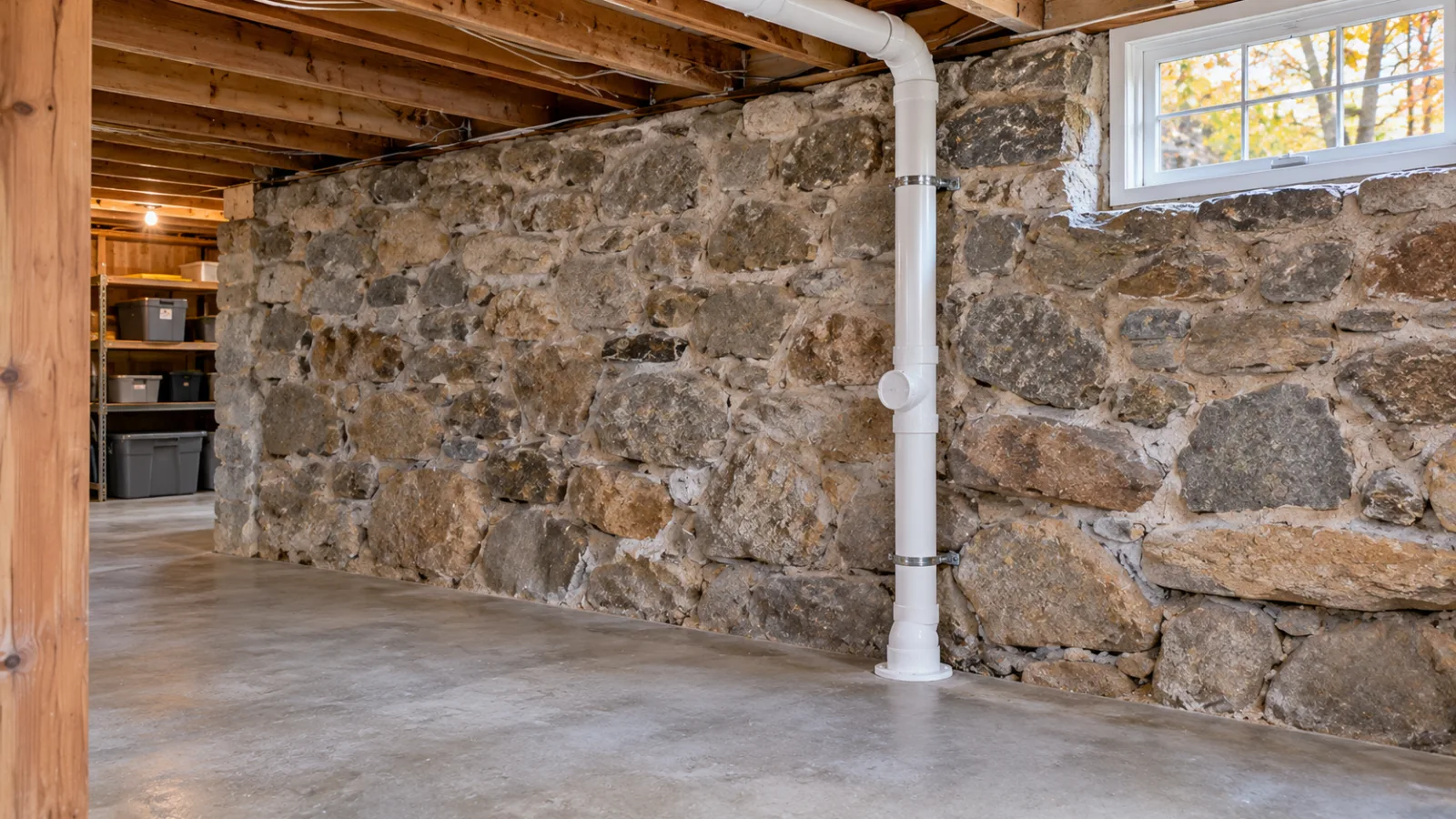

Radon in a house comes from the natural radioactive decay of uranium in the soil and bedrock beneath it. According to the EPA, the gas moves up through the ground and into a house through cracks and other openings in the foundation, and sometimes through well water. In New Hampshire, granite bedrock makes radon common, and the EPA recommends fixing a home at 4 pCi/L or more.
Knowing the source explains the test. Our answer on how to test for radon when buying a house in NH covers the inspection-period test, the mitigation fix and who pays for it.
On this page
- How does radon get into a house?
- Why is radon so common in New Hampshire houses?
- Can radon come from well water or building materials?
- Frequently asked questions
How does radon get into a house?
Radon gets into a house mainly as soil gas, drawn up through the ground and in through any opening between the soil and the living space; the house then traps it. The EPA's Citizen's Guide to Radon names the usual entry points:
- cracks in solid floors;
- construction joints;
- cracks in walls;
- gaps in suspended floors;
- gaps around service pipes;
- cavities inside walls;
- the water supply.
Because the source is the ground, the EPA says any kind of house can have a radon problem: new or old, well sealed or drafty, with or without a basement. The EPA estimates that nearly one in 15 U.S. homes has an elevated radon level. A slab-on-grade ranch, a fieldstone-cellar farmhouse in Campton and a new build in Plymouth can all test high.
Why is radon so common in New Hampshire houses?
Radon is common in New Hampshire houses because much of the state sits on granite and similar bedrock that carries uranium, and the uranium keeps producing radon as it decays. The decay chain runs from uranium to radium to radon, and radon's half-life is about 3.8 days, so the ground keeps producing fresh gas rather than running out of it.
The NH DHHS radon data brief, based on home tests from 2007 to 2021, reports readings above 100 pCi/L in every county, Grafton included. Bedrock varies over short distances, so two houses on one road can test very differently, and a neighbor's result tells you little about the house you are buying.
The state treats radon as a disclosure item: a New Hampshire seller must give the buyer the radon notice in RSA 477:4-a. A notice is not a measurement. Our NH seller disclosure guide lists that notice, which also covers arsenic, lead, PFAS and flood risk.
Can radon come from well water or building materials?
Radon can come from well water, and in a small number of houses from building materials, but the EPA says radon from soil gas is the main cause of radon problems. Water matters when the house draws from groundwater, which describes most homes outside village water systems in our area.
A drilled bedrock well in New Hampshire can carry dissolved radon into the house, where showering and other household use release it into the air. The NHDES radon fact sheet (2019) recommends treating private well water at or above 10,000 pCi/L, together with mitigating the indoor air. Between 2,000 and 10,000 pCi/L, NHDES says water treatment may be advisable if the indoor air is above 4 pCi/L.
Building materials are a minor source: the EPA says they rarely cause radon problems by themselves. When we see a high result in a house, the fix is almost always aimed at the soil gas, with a vent pipe and fan that draw air from under the slab. Buyers drilling a new well on a lot should also read our guide to buying land in New Hampshire, which covers well siting and water testing.
Frequently asked questions
Where does radon in homes come from in New Hampshire?
Radon in New Hampshire homes comes from uranium in the state's granite and other bedrock and in the soil above it. The gas enters through the foundation and, in homes on private wells, through the water. Every county in the state has recorded high readings, so every house needs its own test.
Can a new house have radon?
A new house can have radon, because the gas comes from the ground under the house, not from its age. The EPA says new and old homes, with or without basements, can all have elevated levels.
Is radon from water or from the ground worse?
Radon from the ground is the larger risk. The EPA says most radon problems come from soil gas, and that radon released from water during showering and household use is a smaller share. A house on a private well should still have its water tested.
Does granite in a house cause radon?
Granite countertops and other building materials rarely cause radon problems on their own, according to the EPA. The granite that matters is the bedrock under the house, which is why our NH home buyer guide covers the radon test with the other inspections.