
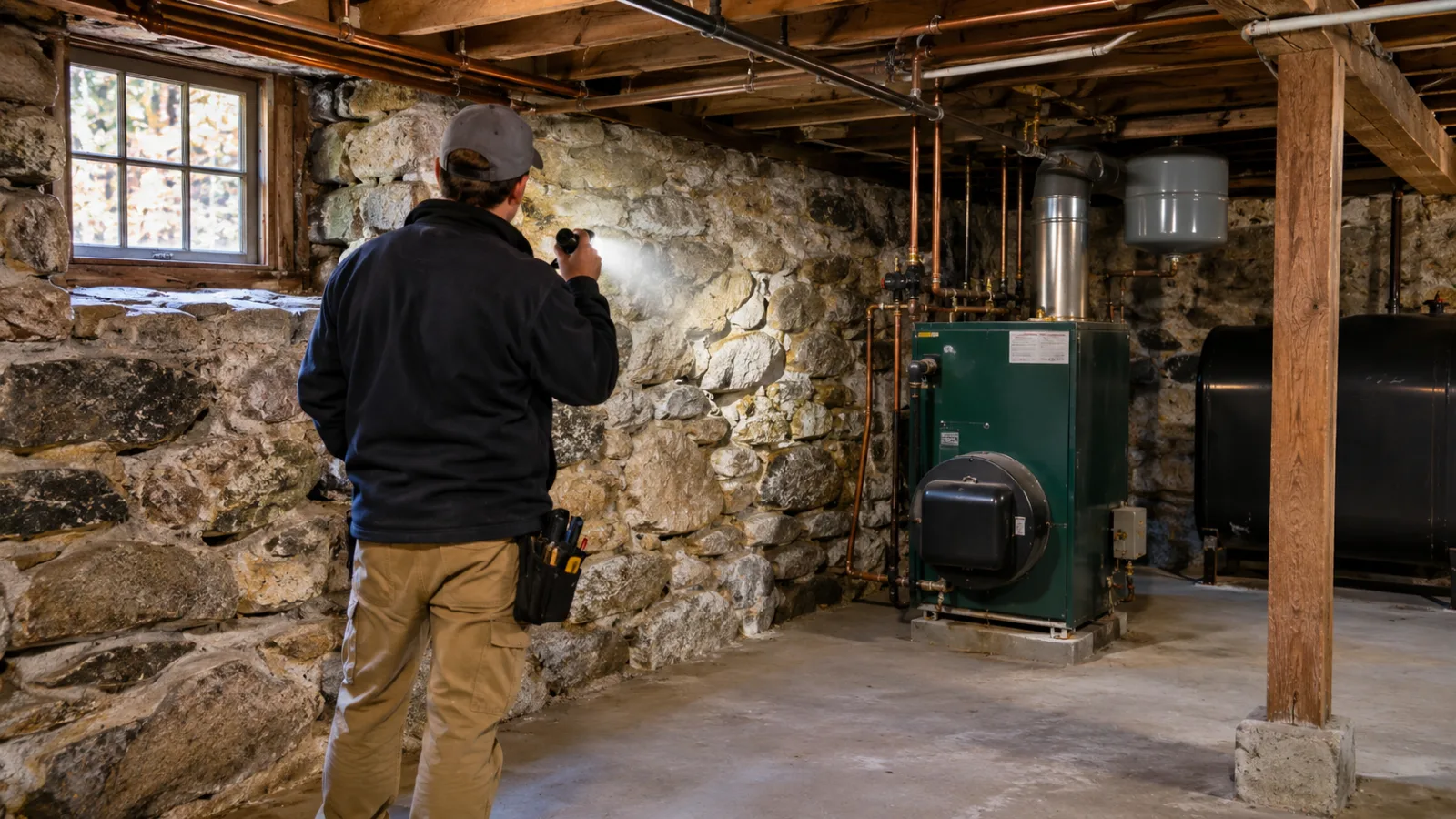

A home inspection in New Hampshire is a visual, non-invasive check of a house's structure and major systems (roof, foundation, framing, heating, plumbing, electrical) by an inspector who, since January 1, 2010, must hold a state license under RSA 310-A:189. On rural homes, the well water test, septic inspection and radon test are usually ordered as separate add-ons.
The inspection is a contingency in the purchase and sales agreement, and it is one of the first deadlines a buyer meets after signing. Our New Hampshire home buyer guide shows where it falls in the whole process, and our answer on what a P&S is explains how the contingency deadlines work.
On this page
- What does a standard home inspection in NH include?
- Which inspections are separate from a home inspection in New Hampshire?
- How do you check a home inspector's license in NH?
- Frequently asked questions
What does a standard home inspection in NH include?
A standard home inspection in NH covers the parts of the house an inspector can see and operate safely on the day: the roof surface, attic, foundation and basement, framing, windows and doors, the heating and cooling equipment, the water heater, visible plumbing and the electrical panel and a sample of outlets. The written report flags what is defective, worn out or unsafe.
The inspector's duties are set by the state. New Hampshire's Board of Home Inspectors, part of the Office of Professional Licensure and Certification (OPLC), works under the home-inspector sections of RSA 310-A (310-A:182 to 310-A:201) and adopts the standards of practice that every home inspection NH inspectors perform must follow. The inspection is visual: an inspector won't open walls, move a seller's furniture or dismantle a furnace, so a stain on a ceiling becomes "further evaluation recommended", not a diagnosis.
On the older housing stock we show around Plymouth and Campton, the findings that change negotiations are predictable: fieldstone and rubble foundations with seasonal water, old heating plants, knob-and-tube wiring in village houses, ice-dam damage on low-pitch roofs, and lead paint on anything built before 1978. Our Plymouth buyer's guide to offers and inspections goes through each one.
Which inspections are separate from a home inspection in New Hampshire?
The tests that are usually separate from a New Hampshire home inspection are the private well water test, the septic inspection, the radon test, and checks for an underground oil tank, wood-destroying insects or a chimney. Each needs its own equipment, a lab or a specialist, so it is quoted and scheduled separately, often by the same inspection company.
Away from the village water and sewer districts these add-ons matter more than the main report. Most houses in rural Campton, Thornton, Rumney and the hill roads around the Lakes Region sit on a private well and a septic system, and the purchase and sales agreement can make each one its own contingency. Our answer on testing for radon when buying a house in NH covers the air and water radon tests.
Waterfront homes add one more step required by law. Since September 1, 2024, RSA 485-A:39 requires the buyer of developed waterfront property to have the septic system evaluated by a licensed evaluator if any part of it is within 250 feet of the water. That evaluation is the buyer's cost and is not part of a home inspection.
How do you check a home inspector's license in NH?
You check a home inspector's license in NH through the OPLC's online license lookup, searching under the Board of Home Inspectors by the inspector's name or license number. Ask for the license number when you book and confirm it is active.
The home inspection New Hampshire buyers get is only as good as the inspector, and a license sets a floor, not a ceiling. When we help buyers choose, the questions that separate inspectors are practical ones: how many older New England houses they inspect, whether they test wells and septic systems themselves or subcontract them, how soon the report arrives (the contingency clock is running), and whether they carry errors-and-omissions insurance. The seller's written disclosures are a useful checklist to hand the inspector; our guide to NH seller disclosure requirements lists them.
Frequently asked questions
Is a home inspection required in New Hampshire?
A home inspection is not required by New Hampshire law, and lenders generally don't require one either. It is a buyer's choice, written into the purchase and sales agreement as a contingency with a deadline. Skipping it means taking the house as it is.
Who pays for a home inspection in NH?
The buyer pays for the home inspection in NH and chooses the inspector. The add-on tests (water, septic, radon) are the buyer's cost too, and so is the waterfront septic evaluation under RSA 485-A:39. Get a written quote, since price depends on the house and the add-ons.
Do home inspectors need a license in New Hampshire?
Home inspectors need a license in New Hampshire: since January 1, 2010, RSA 310-A:189 bars anyone from conducting home inspections in the state without a license from the Board of Home Inspectors. The license is renewed periodically and can be checked online through the OPLC.
What happens if the home inspection finds problems?
If the home inspection finds problems, the buyer can ask the seller to repair them, ask for a price reduction or credit, accept the house as is, or cancel within the contingency deadline as the agreement allows. Talk it through with our team on the buyers page before the deadline passes.