
There is no single NH fishing season. Under the 2026 rules, most New Hampshire lakes and ponds are open all year, rivers and streams are open January 1 through October 15, the big lake trout and salmon lakes open to open-water fishing on April 1, and designated trout ponds open on the fourth Saturday in April (April 25 in 2026) and close October 15 (NH Fish and Game, Fishing Seasons in NH). Anyone 16 or older needs a license: $45 for a New Hampshire resident and $63 for a nonresident season license in 2026 (2026 NH Freshwater Fishing Digest, fees).
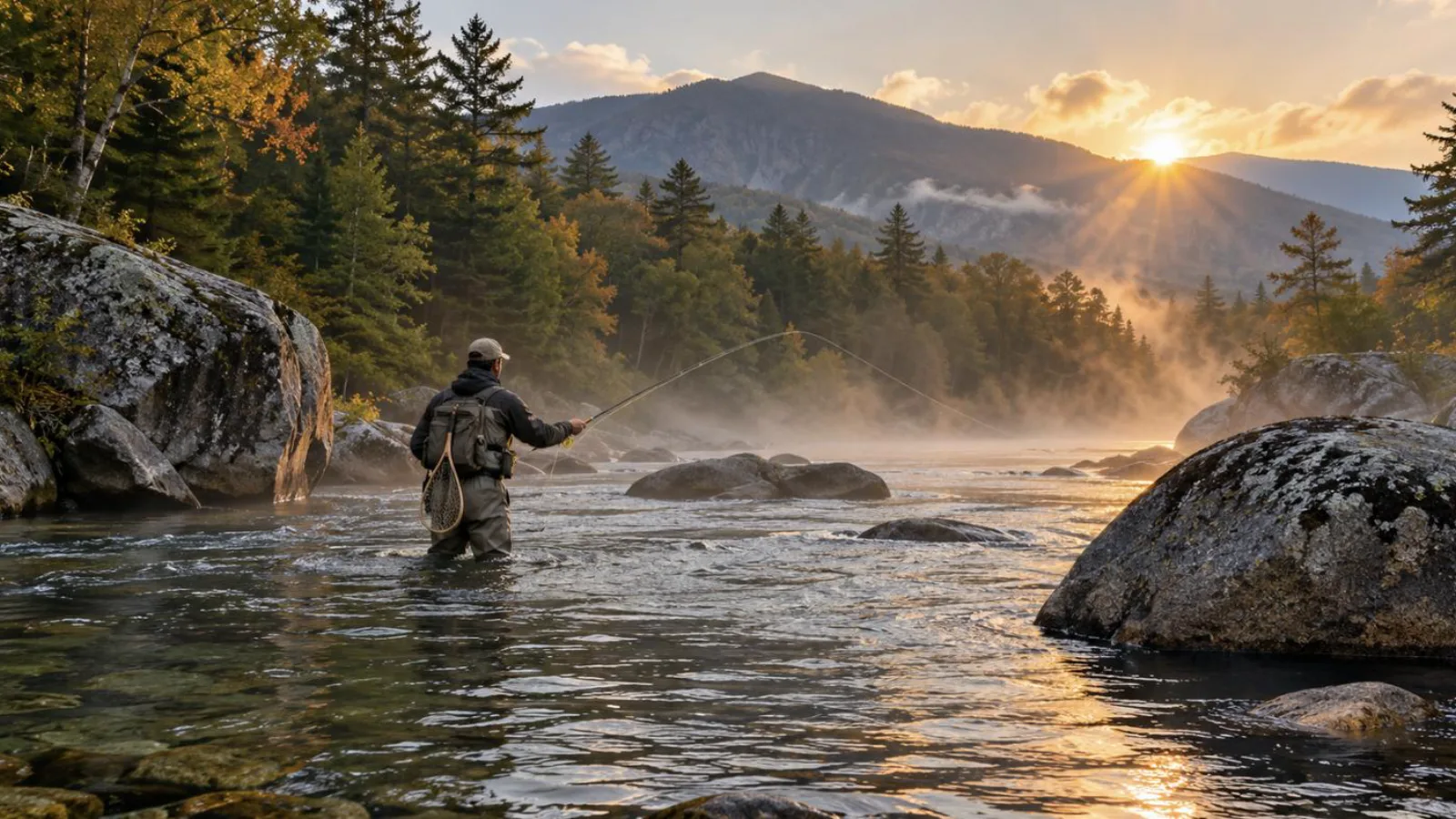
This guide puts the 2026 New Hampshire fishing regulations in tables you can actually use, then covers where to fish, with the most detail on the water we know best: Squam Lake, Newfound Lake, the Pemigewasset, Baker and Mad rivers, and Lake Winnipesaukee. Our office is in the Plymouth and Campton area, so a lot of what follows is our own backyard.
These are the 2026 rules, checked in October 2026. Fish and Game publishes a new digest each year and amends rules mid-season, so before you fish, check the current NH Freshwater Fishing Digest and, for the coast, the NH Saltwater Fishing Digest.
NH fishing licenses and 2026 fees
Fishing licenses are required for everyone 16 and older, and they run January 1 to December 31 (digest, license information). Kids under 16 fish free. Resident prices require a New Hampshire driver's license or state photo ID.
| 2026 license | Resident | Nonresident |
|---|---|---|
| Freshwater fishing, season | $45 | $63 |
| Freshwater fishing, 1 day | $10 | $15 |
| Freshwater fishing, 3 consecutive days | — | $28 |
| Freshwater fishing, 7 consecutive days | — | $35 |
| Hunting and freshwater fishing combination | $56 | $151 |
| Recreational saltwater fishing | $11 | $11 |
| Senior freshwater fishing (age 68+) | $7 | — |
Source: 2026 NH Freshwater Fishing Digest, Licenses: Fees & Requirements. Every price already includes a $1 agent fee and a $1 Fisheries Habitat Fee, and a transaction fee of $2 per license form ($2.75 online) is added at checkout. Residents born in 1947 or earlier qualify for a free permanent Milestone license.
You have to carry the license while you fish. A picture of it on your phone counts, as long as a conservation officer can read it and you can show photo ID.
Free fishing days
New Hampshire has two free fishing days a year, set under RSA 214:1-e: the third Saturday in January and the first Saturday in June. In 2026 they were January 17 and June 6 (Rochester Post, Fish and Game release; NH Fish and Game, June 6). Under the same pattern, the next one falls on Saturday, January 16, 2027. Residents and nonresidents can fish without a license that day, but seasons and limits still apply, and anyone in a tournament still needs a license.
Where to buy a fishing license in NH
Buy online at fishnh.com, from one of more than 150 license agents around the state (saltwater digest), usually bait shops and sporting-goods stores, at Fish and Game headquarters at 11 Hazen Drive in Concord, at the Region 1, 2 and 4 offices, or from some town and city clerks (digest). If you lose one, the original agent or headquarters can reprint it for free.
When does fishing season start in NH?
The fishing season in New Hampshire depends on the type of water, and the type matters more than the species. These are the 2026 season dates from NH Fish and Game:
| Water type | Brook, rainbow and brown trout | Lake trout | Landlocked salmon | Bass and other species |
|---|---|---|---|---|
| Rivers and streams | Jan 1 – Oct 15 | Jan 1 – Sept 30 | Apr 1 – Sept 30 | Jan 1 – Oct 15 |
| Wild trout streams | Jan 1 – Labor Day | — | — | — |
| Designated trout ponds | 4th Sat. in April – Oct 15 | — | Closes Oct 1 | 4th Sat. in April – Oct 15 |
| Wild trout ponds | 4th Sat. in April – Labor Day (catch and release) | — | — | — |
| Lake trout and/or salmon lakes | Jan 1 – Sept 30 (ice fishing only Jan 1 – Mar 31) | Jan 1 – Sept 30 (ice only Jan 1 – Mar 31) | Apr 1 – Sept 30 | No closed season (ice only Jan 1 – Mar 31) |
| All other lakes and ponds | No closed season | — | — | No closed season |
Four dates do most of the work:
- January 1. Rivers and streams open, and the lake trout lakes open for ice fishing.
- April 1. Open-water season starts on the big salmon and lake trout lakes, which locals treat as opening day. Salmon season opens statewide.
- The fourth Saturday in April. Designated trout ponds open: April 25, 2026, and April 24, 2027.
- October 1 and October 16. Salmon and lake trout close after September 30. Rivers, streams and trout ponds close after October 15.
Rivers and streams are closed to all fishing from October 16 through December 31 unless the digest lists a special rule for that stretch (digest, Rivers & Streams). Fish and Game keeps a list of stocked rivers that stay open all year. Near us, that includes the Pemigewasset from the Route 104 bridge in Bristol and New Hampton down through Franklin.
The bass catch-and-release season
From May 15 through June 15, every bass caught in New Hampshire has to be released, and you can use only artificial lures and flies. Bass are on their spawning beds then. The rule covers lakes, ponds, rivers and trout ponds (digest, Lakes & Ponds).
NH fishing regulations: daily limits and minimum lengths
These are the general 2026 limits for lakes and ponds (digest, Lakes & Ponds: General Rules). Rivers use the same numbers, except that seasons end October 15 (digest, Rivers & Streams).
| Species | Daily limit | Minimum length |
|---|---|---|
| Brook, rainbow and brown trout (open water, general waters) | 5 fish or 5 pounds, whichever comes first | None |
| Trout through the ice (general waters) | 2 fish | None |
| Trout on lake trout and salmon lakes | 2 fish combined | 15 inches |
| Lake trout | 2 fish | 15 inches |
| Landlocked salmon | 2 fish | 15 inches |
| Smallmouth and largemouth bass, Jan 1 – May 14 | 2 fish | — |
| Bass, May 15 – June 15 | Catch and release only; artificial lures and flies only | — |
| Bass, June 16 – Dec 31 (rivers to Oct 15) | 5 fish | — |
| Chain pickerel | 10 fish | None |
| Northern pike | 1 fish | 28 inches |
| Walleye | 2 fish | 18 inches |
| Yellow and white perch, crappie, sunfish, horned pout | 25 of each, 50 combined | None |
| Lake whitefish (Jan 1 – Sept 30) | 2 fish | None |
| Rock bass, carp, cusk | No limit | None |
On the lake trout and salmon lakes, trout, lake trout and salmon must keep their heads and tails on while you're on the water or leaving it, so a warden can measure them. Every individual lake and river with its own rules is listed in the digest's Lakes & Ponds with Special Rules and Rivers & Streams with Special Rules tables. Look up your water there before you keep a fish.
NH fishing laws on tackle, bait and lines
The rules below catch out visitors most often (digest, Important Laws & Rules):
- No lead sinkers or jigs of 1 ounce or less. They're banned in all fresh water in New Hampshire, whatever their length, and stores can't sell them. Lead tackle kills loons, and the Loon Preservation Committee's Squam study is part of how that became clear. Use tungsten, steel, tin or bismuth.
- Two lines in open water. Each line can carry two hooks for bait: one single-point hook and one with no more than three points. Some lake trout and salmon lakes allow only one hook with one point when trolling. On Big and Little Squam, the limit is one lure, one fly, one tandem fly or one bait per rod (digest, special rules).
- Approved baitfish only. You can possess and use only the species on the state's approved list, with a 2-quart daily limit on baitfish other than white suckers. Live fish can't be used as bait on designated trout ponds, though salmon eggs are allowed.
- Smelt. On the lake trout and salmon lakes, you can't take smelt from March 15 to June 15.
- Fly-fishing-only and wild trout ponds. Fly-fishing-only waters require a fly rod, fly reel, fly line and an artificial fly. On wild trout ponds, every fish goes back and only single barbless lures and flies are allowed.
- No culling, snagging or jug fishing. You also can't sell freshwater fish unless you're a licensed bait dealer.
Ice fishing has its own rules: most waters allow up to six tip-ups or jig lines but the lake trout lakes allow two, and bob houses have to be off the ice by the end of the day on April 1. Our New Hampshire winter activities guide covers ice fishing and the Meredith derby in detail.
Do lakefront owners need a fishing license on their own water?
Often not, but only if they're New Hampshire residents. RSA 214:2 says the license requirement does not apply to resident landowners while upon their own land, or to the owner's children under 16 when they are with the owner or another licensed adult on that land. In practice:
- A resident casting from their own dock or shoreline doesn't need a license.
- A second-home owner who is a resident of another state does need one. This exemption covers residents only, so a Massachusetts owner of a Squam camp still buys the $63 nonresident license, or a 3- or 7-day license for a short stay.
- Guests 16 and older need their own licenses, even on your dock.
- Seasons, limits, length minimums and the lead ban all still apply. The exemption covers the license only, because the lake is public water.
The statute ties the exemption to being on your own land. If you plan to fish from a boat away from your shoreline, buy the license or ask a Fish and Game conservation officer how the rule applies.
Best fishing spots in New Hampshire, starting with our area
Squam Lake (Holderness, Sandwich, Moultonborough, Center Harbor)
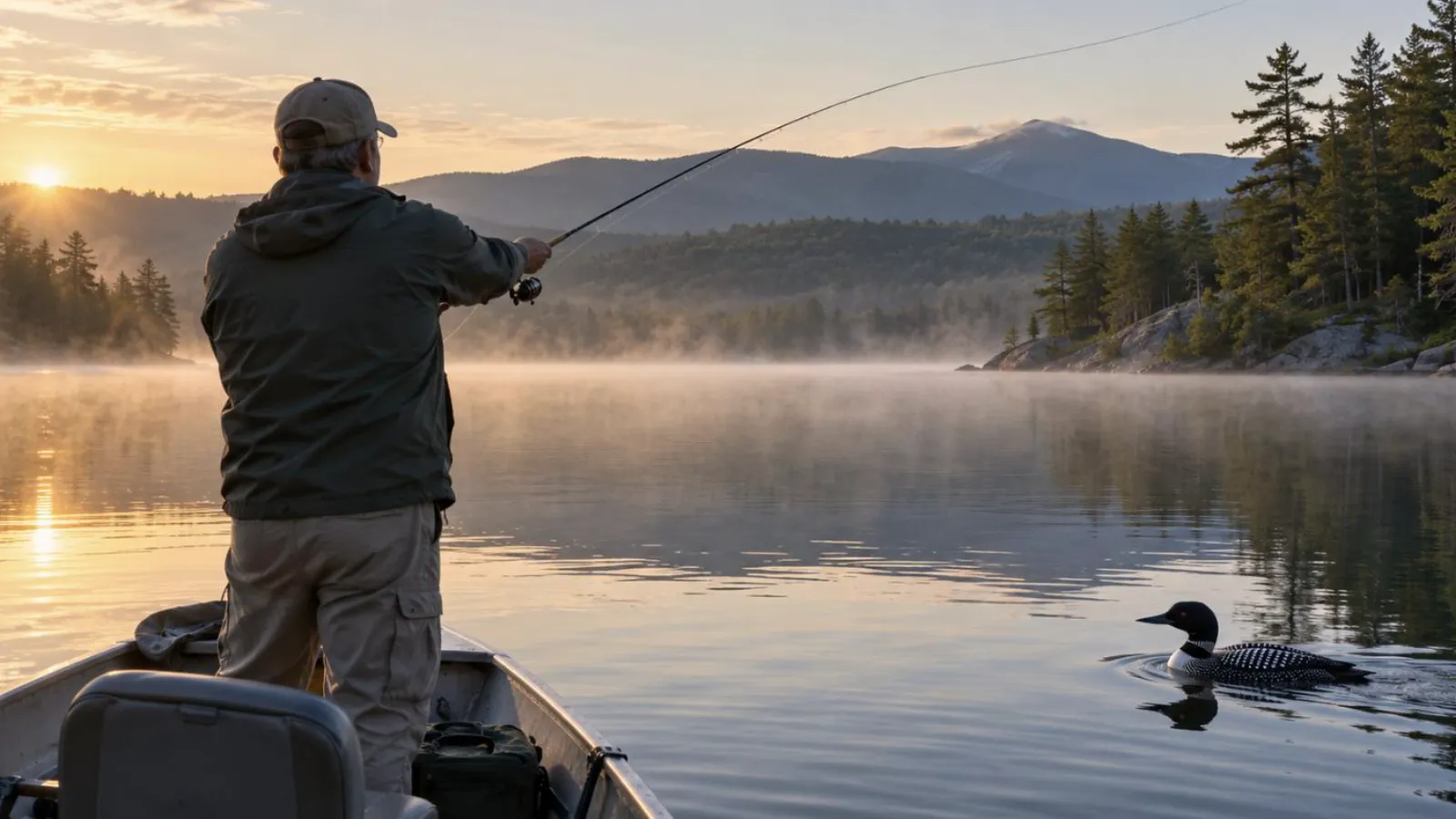
Squam is a coldwater and warmwater lake of about 6,791 acres, up to 99 feet deep. Its fish include landlocked salmon, lake trout, rainbow trout, lake whitefish, smallmouth and largemouth bass, chain pickerel, horned pout and white perch (Wikipedia). Big and Little Squam are both designated lake trout and salmon lakes, so the 2-fish, 15-inch rules and the single-hook trolling rule apply. The water within 500 feet of Barville Brook closes October 16 through December 31.
For Squam Lake NH fishing, troll for salmon and lake trout from ice-out into June, then fish smallmouth on the rocky points and island shoals through summer. Public access is the main constraint, because almost the whole shore is private. The NH Fish and Game ramp on the Route 3 channel in Holderness is free, but its lot is small. Our Squam Lake guide covers access, the loons and what the shoreline looks like for buyers.
Newfound Lake (Bristol, Bridgewater, Hebron, Alexandria)
Newfound is deep, cold and clear, and is managed as a lake trout and salmon lake with a 15-inch minimum on lake trout and on brook, rainbow and brown trout (digest). Twenty-two fish species live in its watershed. The lake is stocked each year between mid-March and early July, including landlocked salmon and rainbow trout (Wikipedia). The Fish and Game ramp beside Wellington State Park is free and open around the clock.
The Newfound River in Bristol, from West Shore Road down to the old dam site by Crescent Street, is fly-fishing only, with its own season running January 1 to October 31 and separate catch-and-release periods (digest). See our Newfound Lake guide for the beaches, the towns and the real estate.
Pemigewasset River (Lincoln to Franklin)
The Pemi runs 65 miles from Profile Lake in Franconia Notch to Franklin, where it meets the Winnipesaukee River to form the Merrimack (Wikipedia). From Lincoln down through Campton, Plymouth and Ashland, it runs over gravel bars and riffles that hold trout and smallmouth bass. That stretch is under the general river rules: open January 1 to October 15, with a 5-trout limit.
Below the Route 104 bridge in Bristol and New Hampton, the river is open all year for all species except salmon, with a 2-trout limit through the ice (digest). The water within 300 feet below Ayers Island Dam is closed to all fishing. The Pemi is also a good float for canoes and kayaks; our things to do in Plymouth NH guide lists the put-ins and Livermore Falls.
Baker River (Warren, Wentworth, Rumney, Plymouth)
The Baker runs 36 miles from the south side of Mount Moosilauke to the Pemigewasset in Plymouth (Wikipedia). A large fish hatchery sits in its upper valley, in Warren. It's smaller and warmer than the Pemi, with easy access along Route 25 in Rumney and Wentworth, and it falls under the general river rules.
Mad River (Waterville Valley, Thornton, Campton)
The Mad River drops 17.9 miles from Greeley Ponds in Mad River Notch through Waterville Valley and Thornton to the Pemi in Campton, by way of Campton Pond (Wikipedia). It's a pocket-water trout stream close to home for anyone in Waterville Valley or Campton. General river rules apply, and Fish and Game's interactive map shows whether a stretch has been stocked this year (see the stocking section below).
Lake Winnipesaukee: salmon and lake trout
At 44,424 acres, Winnipesaukee is the state's largest lake and one of its designated lake trout and salmon waters (digest). The salmon fishery has had a hard decade. Fish and Game and the organizers cancelled the May "Winni Derby" for 2024 because of declining salmon numbers and poor age-class structure among stocked salmon. It is now stocking larger yearlings, and in 2023 it reported that smelt, the salmon's main forage, were plentiful (NH Fish and Game, May 2023). The derby wasn't held in 2025 either, and its 2026 status was listed as unknown (WeirsBeach.com).
Lake trout and smallmouth bass carry the lake in the meantime. Two closures matter here: Paugus Bay and the Weirs Channel close October 1 through March 31, and several river and brook mouths close October 16 through December 31.
Salmon fishing in NH beyond Winnipesaukee
Fish and Game manages a short list of lakes for lake trout and salmon. Besides Squam, Newfound, Winnipesaukee and Winnisquam, the list includes the First, Second and Third Connecticut Lakes, Lake Francis, Big Dan Hole Pond, Conway Lake, Merrymeeting Lake, Ossipee Lake, Sunapee Lake, Granite Lake, Nubanusit Lake, Big Diamond Pond and both Silver Lakes (digest). Salmon season on all of them runs April 1 through September 30. The one exception is Pleasant Lake in New London, which opens on the fourth Saturday in April.
Androscoggin River and the North Country
The Androscoggin starts at Errol, and the stretch from Errol Dam to the markers at Bragg Bay is fly-fishing only (NH Fish and Game, fly-fishing-only waters). Two stocked sections stay open all year: Dummer–Cambridge to Pontook Dam, and Saw Mill Dam in Berlin to the Maine line (Fish and Game list).
Farther north, Pittsburg's Connecticut River sections between the lakes are fly-fishing only, and the Connecticut Lakes and Lake Francis are all lake trout and salmon waters.
Fly-fishing-only waters near the White Mountains
Fish and Game's fly-fishing-only list includes these waters within an hour of Plymouth:
| Water | Town | Notes |
|---|---|---|
| Profile Lake | Franconia | Source of the Pemi, under Cannon Mountain |
| Newfound River | Bristol | West Shore Road to the old dam site |
| Sky Pond | New Hampton | Small pond |
| Upper Hall Pond | Sandwich | Small pond |
| Ellis River | Jackson | Covered bridge to the Iron Bridge in Glen |
| Saco River | North Conway | Lucy Brook to Mill Brook (signed) |
| Swift River | Tamworth | Route 113A bridge to Route 113 bridge |
Saltwater fishing in NH
New Hampshire's coastline is short, but the fishing is good: striped bass, mackerel and bluefish from the jetties, plus groundfish offshore. Anyone 16 or older who keeps finfish needs the $11 recreational saltwater license, and there is no senior exemption. That license also satisfies the federal National Saltwater Angler Registry. You don't need one if you fish from a licensed charter or party boat, and Maine and Massachusetts saltwater licenses are honored in New Hampshire (saltwater digest, licenses).
| Saltwater species (2026) | Size | Daily limit |
|---|---|---|
| Striped bass | 28 to less than 31 inches | 1 |
| Atlantic mackerel | None | 25 |
| Bluefish | None | 5 |
| Winter flounder | 12 inches | 8 |
Source: 2026 NH Saltwater Digest. Cod, haddock and other groundfish have seasons that change with federal rules, so check the digest for those. For shore fishing, the state lists jetty access at Hampton Harbor State Park, Rye Harbor State Park and Fort Stark in New Castle, along with Prescott Park piers in Portsmouth and the Great Bay ramps (coastal access sites).
New Hampshire fish species guide
| Species | Where to find it | Best time |
|---|---|---|
| Brook trout | Cold streams, mountain brooks, remote ponds; stocked rivers | Spring and early summer; fall before Oct 15 |
| Rainbow and brown trout | Stocked rivers and trout ponds; the bigger lakes | Spring after stocking; fall |
| Landlocked salmon | The designated salmon lakes (Squam, Newfound, Winnipesaukee, Sunapee, the Connecticut Lakes) | April ice-out through June, trolling near the surface |
| Lake trout | Deep, cold lakes such as Newfound, Squam and Winnipesaukee | Ice season (Jan–Mar) and deep trolling in summer |
| Smallmouth bass | Rocky lakes and the larger rivers | Mid-June through September |
| Largemouth bass | Weedy coves, warmer ponds | Summer |
| Chain pickerel, perch, sunfish, horned pout | Almost every warmwater lake and pond | All year, including through the ice |
| Striped bass | Seacoast, Great Bay and the tidal rivers | Late spring through early fall |
Bass fishing in NH
Bass fishing in NH is mostly about smallmouth. Squam, Newfound and Winnipesaukee all have rocky structure, and the Pemi and the lower Merrimack hold river fish. The calendar is simple:
- Through May 14: keep 2.
- May 15 to June 15: release every fish, using only artificial lures and flies.
- June 16 onward: keep 5. River seasons end October 15.
If you're organizing a bass tournament, start with Fish and Game's tournaments page for the permit rules.
New Hampshire trout fishing and the stocking report
Trout fishing in New Hampshire depends heavily on stocking. Fish and Game stocks nearly a million catchable trout a year, and its stocking report has an interactive map that shows what has been stocked where, along with a table you can download. It also links the state's lists of designated trout ponds, fly-fishing-only waters, stocked waters open all year, and wild and remote trout fisheries. Check the map the week you plan to go. Stocked rivers fish best for a week or two after a truck visits.
Fishing access sites and boat launches
There are more than 400 public federal and state launch sites in New Hampshire, plus town ramps (NH Fish and Game, Boating and Access). The Fish and Game ramps on Squam, Newfound, Winnisquam and at Downing's Landing on Winnipesaukee are free. Town ramps often charge nonresidents. Our guide to boat launches in New Hampshire compares the main ramps lake by lake, with parking and fees. The same Fish and Game page links the state's lake depth maps, which make it much easier to find lake trout and salmon water.
Owning a home near good fishing
Most of our buyers who fish want one of three things: a dock on a salmon lake, a short drive to a trout river, or a mix of both. Plymouth and Campton cover the river side well. The Pemi, the Baker and the Mad all meet within a few miles of each other, and Squam and Newfound are both within about 20 minutes. Homes in Campton and Plymouth put you on moving water without lake prices.
Frontage is the expensive way to do it. A shoreline lot on Squam or Newfound gives you your own launch and morning water before the ramps fill up. It also comes with shoreland permitting and septic rules, and, if you're not a New Hampshire resident, a fishing license the rest of the family still has to buy. Browse current lakefront homes for sale in New Hampshire, or look at Bristol for Newfound and Holderness for Squam.
Frequently asked questions
When does fishing season start in NH?
It depends on the water. Most lakes and ponds never close. Rivers and streams open January 1. The big lake trout and salmon lakes open to open-water fishing on April 1, which is when salmon season starts. Designated trout ponds open on the fourth Saturday in April, which was April 25 in 2026 and will be April 24 in 2027.
How much is a New Hampshire fishing license in 2026?
A resident freshwater season license costs $45 and a nonresident one costs $63. Day licenses are $10 for residents and $15 for nonresidents, and nonresidents can also buy 3-day ($28) and 7-day ($35) licenses. The saltwater license is $11 for everyone. Residents 68 and older pay $7, and anglers under 16 don't need a license. Prices come from the 2026 Freshwater Fishing Digest.
What are the daily limits for trout in NH?
On most waters in open-water season, the limit is 5 trout or 5 pounds, whichever comes first, with no length minimum. Through the ice it's 2. On the designated lake trout and salmon lakes, such as Squam, Newfound and Winnipesaukee, the limit is 2 trout combined, each at least 15 inches. Lake trout and landlocked salmon are 2 fish at 15 inches statewide.
Is there a catch-and-release season for bass in New Hampshire?
Yes. From May 15 through June 15, all bass must be released, and only artificial lures and flies are allowed. Before that you can keep 2 a day, and from June 16 you can keep 5.
Do I need a fishing license to fish from my own dock in NH?
Not if you're a New Hampshire resident fishing on your own land. RSA 214:2 exempts resident landowners on their own land, along with their children under 16 when a licensed adult is with them. Nonresident owners and guests 16 and older need a license, and every season, limit and tackle rule still applies.
Is lead fishing tackle legal in New Hampshire?
Lead sinkers and jigs weighing 1 ounce or less are banned in all New Hampshire fresh water, whatever their length, and stores can't sell them. Use tungsten, steel, tin or bismuth instead.
When is free fishing day in NH?
New Hampshire has two free fishing days each year: the third Saturday in January and the first Saturday in June. In 2026 they were January 17 and June 6, and the next one is January 16, 2027. You don't need a license on those days, but every other rule applies.
Do I need a license for saltwater fishing in NH?
Yes, if you're 16 or older and keep finfish. The recreational saltwater license costs $11 for residents and nonresidents alike and covers the federal angler registry. You don't need one when fishing from a licensed charter or party boat, and valid Maine and Massachusetts saltwater licenses are honored.