Sell With Us
Sell Your Home in Holderness New Hampshire
The town that holds Squam's channel, its village and its most coveted frontage — we bring generational waterfront, quiet sales and village homes to buyers who have waited years for them.
What's Your Holderness Home Worth?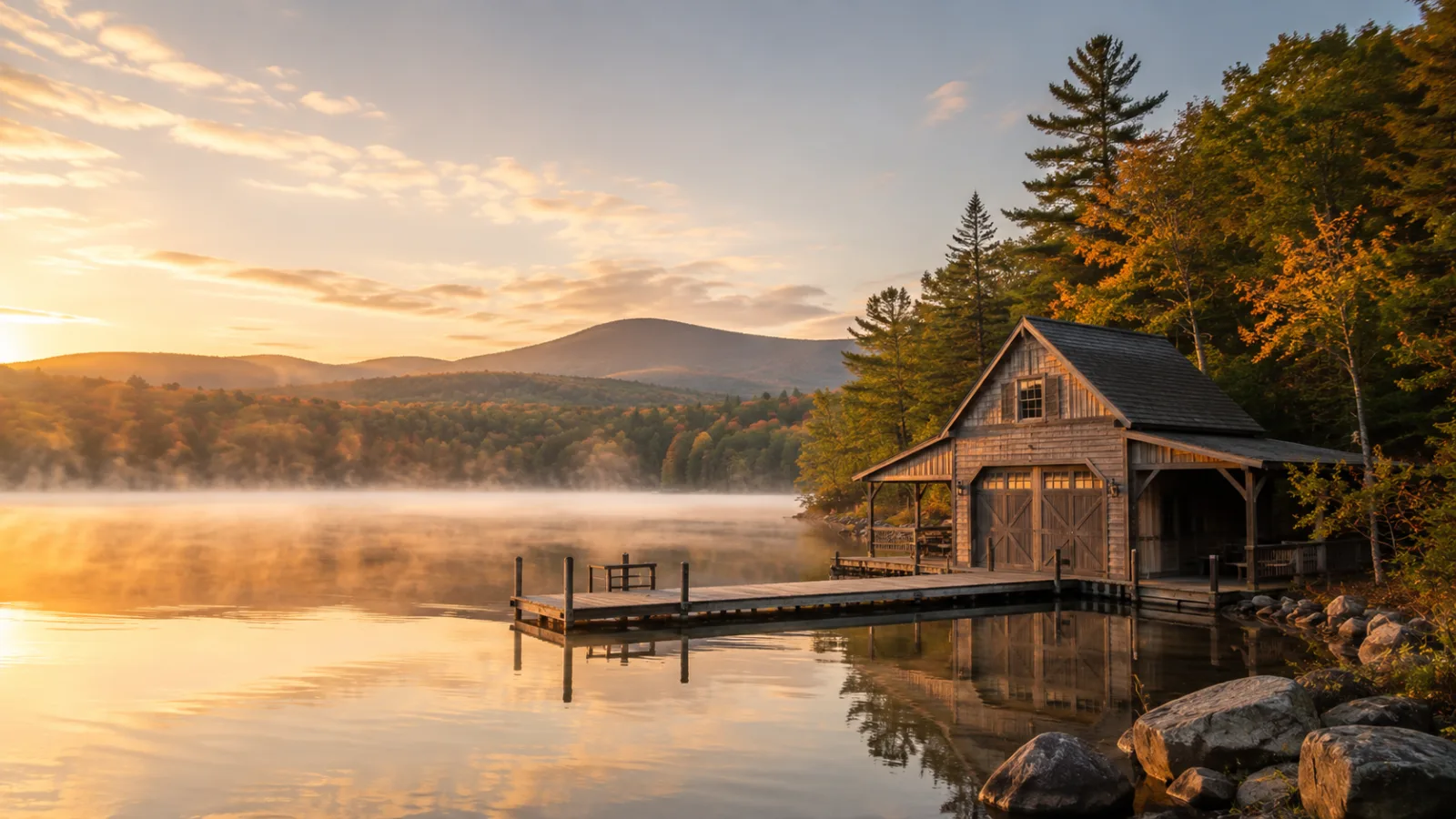
Selling in Holderness
The Village Between Big Squam and Little Squam
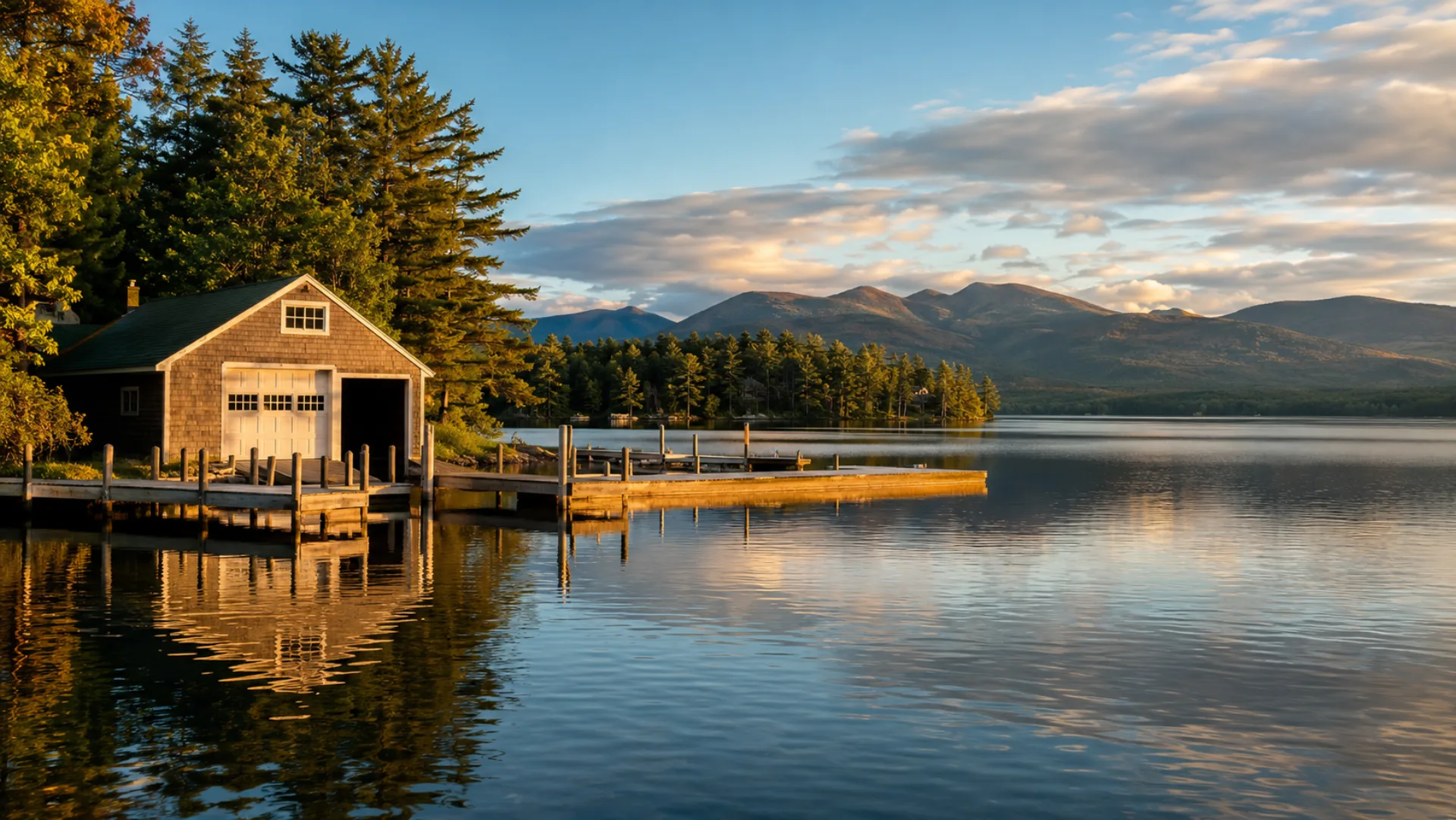
Holderness holds the channel — the short stretch of water where Big Squam narrows into Little Squam, with the Science Center on one bank and the boat livery that has served the lake for generations nearby. I drive down Route 175 from our Campton office in about twenty-five minutes, and of the five towns that share Squam's shoreline, this is the one where the lake's identity concentrates: the village, the institutions, and the frontage people mean when they say Squam.
Most Holderness owners are not sellers in the ordinary sense. Property here tends to be held for decades — often across generations, often inside a trust — and when a family finally decides to let a place go, the question is rarely whether a buyer exists. Households searching Squam Lake homes for sale outnumber the listings every single year. The real questions are what the property is honestly worth in a market with almost no comparables, and how publicly the family wants the sale to happen.
Both of those questions have good answers, and this page walks through them — the live Holderness numbers further down, the closings we handle around the watershed, and the situations Holderness families actually put in front of us, from a camp owned by five siblings to a boathouse older than every rule on the books.
Live Market Data
The Holderness Market Right Now
For Sale in Holderness — Live From the MLS
For-sale figures read the live MLS feed and change as homes come on and go under contract; sold figures are Owl's Nest Real Estate closings in Holderness over the last 12 months.
Holderness Local Knowledge
The Channel, the Village and the Science Center
Whatever a buyer loves about Squam, Holderness is usually where they found it. The Squam Lakes Natural Science Center occupies a 200-acre campus at the channel, with its live-animal exhibit trail and lake cruises running May through October — and I tell buyers a cruise with a naturalist is worth more than any brochure. Squam Boat Livery has rented and serviced boats here for generations. Rockywold-Deephaven Camps has kept its long reach of shoreline since 1897, still cutting some 200 tons of lake ice every January for the cottage iceboxes. Church Island's summer services are reached by boat, the Rattlesnakes rise straight off the northern shore, and the whole arrangement looks remarkably like it did in 1980, when On Golden Pond was filmed at a camp along the shore Holderness shares with Center Harbor and carried this lake to three Academy Awards.
Forty-five years on, that film still sends people to their search bars, and the town still refuses to become a resort. There is no strip of shops, no dock-to-dock development, no hotel row — the modest marina-and-general-store commerce sits over on Little Squam, and the big lake stays quiet on purpose. For a seller, this is the entire foundation of value: Holderness delivers an experience that cannot be replicated anywhere else in New Hampshire, attached to a supply of homes that essentially never grows. Demand compounds; inventory doesn't.
Holderness Local Knowledge
Holderness NH Real Estate Is Held, Not Traded
Understand how the shoreline came to be owned and you understand the market. Squam frontage was assembled long ago into big family parcels — hundreds of shoreline feet at a time, held inside trusts and family LLCs and passed to the next generation instead of the market. Around those families sits a century of deliberate protection: the Squam Lakes Association has stewarded the water since 1904, the Squam Lakes Conservation Society has been easing land permanently since 1960, and the Beebe River project alone put 6,395 acres of the watershed's forest beyond development in 2022. Add the institutional shore — the camps, the Science Center, Church Island — and the fraction of Holderness waterfront that could ever appear on the market is small and shrinking.
The consequence is a market that ignores the usual signals. Owners here rarely carry debt that forces a sale, so supply pays no attention to mortgage rates — it answers to estates, aging knees and family decisions, and a season's worth of genuine frontage closings rarely fills one hand. Squam waterfront commands a clear premium over comparable Winnipesaukee frontage and holds its value through cycles for exactly this reason. But scarcity only converts to price when the sale is handled with the craft it deserves: a comp set this thin means every adjustment is an argument, and we build that argument from the live market, the specific frontage and the property's documented history — never from a town-wide average that has nothing in common with your shoreline.
Holderness Local Knowledge
The Quiet Sale Is a Holderness Specialty
A real fraction of Squam's ownership changes happen without the public ever seeing them — an estate settled between families who have shared a cove for fifty years, an owner willing to sell but unwilling to watch strangers photograph the camp, a deal done on a handshake and papered by attorneys. This is not a failure of the market; on this lake it is the market, and it is among the strongest reasons to work with a broker who is embedded in it. We keep a running book of specific, qualified buyer briefs — the winterized-west-facing-with-dock-rights kind, not vague curiosity — from households that have waited years for a Holderness property and can move the week one exists.
So when you're ready, there are two honest paths. Full marketing puts the property in front of the widest possible audience and lets competition discover the ceiling — the right call more often than sellers here expect. The quiet path shows the property, by invitation, to the short list it actually fits: no sign, no syndication, no open house, your name and your driveway kept off the internet. The tradeoff is real — privacy narrows the auction — and we'll tell you plainly what we think the open market would add. Many of our Squam sales split the difference: the brief-holders see it first, and the listing goes wide only if the fit isn't there. Which path is right depends on the property, the family and the timeline, and it's a decision we make with you before anything else happens.
Holderness Local Knowledge
The Other Holderness Market Along Route 175
Not every Holderness sale is a point of frontage. The town's year-round life runs through the village and along Route 175 toward Plymouth — homes with the lake nearby rather than underfoot, water-access properties whose deeds carry rights to a common beach or path, and hillside houses that trade on views, acreage and a ten-minute run to a hospital and a university. These homes sell into one of the most reliable demand streams we see anywhere: buyers who came for waterfront, met the numbers, and refused to leave the watershed. For them, a village home an easy walk from the water is not a fallback — it's the version of this life they can actually own.
Water-access listings carry one obligation we take seriously: the rights are the product, so we verify them before we advertise them. Deeded access ranges from a wide association beach with moorings to a narrow path that fits a kayak and nothing else, and the buyer's attorney reads the recorded language no matter what the listing claimed. We read the deed and gather the association records first, then market exactly what conveys. And because Squam's rental tradition is the weekly summer stay — the same families rebooking the same camps year after year — a Holderness home with a rental history has evidence worth presenting, and one without can borrow ours: our team runs rental homes throughout this corridor and will model honestly what the property could earn.
The Buyer Pool
Four Kinds of Patience Wait on Holderness
Legacy-lake families come first — households already tied to Squam by a generation of summers, looking to add frontage nearby, buy back in after a family place was sold, or secure a foothold for children who grew up on this water. They know exactly what they're looking at, and they're usually our first quiet call. The second pool is privacy-led second-home households: people who shopped the busier lakes, decided the wake-boat scene wasn't the point, and want the protected quiet Squam has spent a century building — they measure ownership in decades, not summers. Third are the families the village itself draws, year-round and seasonal, for whom the Science Center, the school-morning scale of the town and the channel at its heart are the amenity. And fourth are the recalibrated dreamers — buyers who arrived wanting frontage, learned the market, and now hunt the village, Route 175 and the water-access lanes with real intent.
A frontage estate, a deeded-access cape and a village house are three different sales to three different pools, and the preparation differs accordingly — the estate sale runs on discretion and documentation, the access sale runs on the recorded rights, and the village sale runs on the everyday town that most lake buyers never notice. Sorting your property into the right sale, honestly, is the first thing we do. And a village address carrying deeded lake rights is not a consolation prize — it's the attainable version of the exact life the frontage market sells.
What Is Your Holderness Home Worth
Test an instant number against the MLS sales recorded around Holderness — then have a broker who works Squam year-round hand-check it against the sales this lake actually produces.
Selling a Holderness home that earns rental income?
Our experience operating vacation rentals gives us a different perspective when evaluating potential rental properties.
Selling in Holderness — Your Questions, Answered
Our Squam camp is owned by a family trust and five of us have a say. Where do we even start?
Start with the family, months before any listing. Establish who actually holds authority to sign — typically the trustee or the managers of the LLC, as the trust documents direct — and have the trust's attorney confirm it, because we're brokers, not lawyers, and signature authority is a legal question. Then get the family aligned on three things: a decision-maker (or a voting rule), a price expectation grounded in evidence rather than memory, and a shared answer on how public the sale should be. What we contribute is the machinery that keeps five opinions from becoming five vetoes — one point of contact, a valuation whose basis everyone can inspect, and a written plan agreed before anything is visible. In a market as small as Squam's, a listing that appears and then gets pulled while a family argues is remembered; we make sure yours only appears once, ready.
The lawn runs to the water and the boathouse is older than the rules. Do they help or hurt the sale?
Handled correctly, they're among the most valuable things you own. Under RSA 483-B nothing like them could be created today — new structures sit back 50 feet from the water, the first band of shoreline must stay a vegetated buffer, and clearing and impervious surface are capped — so a lawful pre-existing lawn, deck or boathouse at the water's edge is a feature no competing property can ever add. The obligation is proof: assemble the old permits, approvals, photographs and tax-card history establishing that these features were there before the modern rules, because the buyer's side will ask — and will also ask what happens if the boathouse ever needs rebuilding. Grandfathered status has real limits on expansion and reconstruction, so we present what the record supports and never promise what a permit might not allow. Scarcity you can document is exactly what this lake pays for.
Does the transfer tax take a bigger bite on a seven-figure waterfront sale?
The rate never climbs, but the check grows with the price — RSA 78-B charges $1.50 per hundred dollars of consideration with no cap and no graduated brackets, half from each side of the table. Sell at $1.5 million and the seller's half is $11,250; at $3 million it's $22,500, deducted from proceeds when the deed records. Holderness adds no town-level layer. One wrinkle specific to properties like these: New Hampshire can apply the transfer tax to certain transfers of interests in entities that hold real estate, which occasionally surprises families restructuring a trust or LLC around a sale — a question to put to the closing attorney early, and one more reason entity-held Squam property rewards a head start on the paperwork.
I don't want my home marketed on the internet at all. Can you still sell it?
Yes. Squam has a long tradition of ownership changing hands with no public footprint, and we're set up for it: a private exclusive, documented with your written instruction to keep the listing out of the MLS and off the portals, shown by invitation to buyers we have already qualified. No sign out by the road, no photo tour of the family camp circulating online, no record of the interior anywhere you didn't choose. What we ask in return is an honest conversation about the cost: a curated audience can't generate the competitive pressure a public launch can, so we'll estimate what discretion may leave behind and let you decide whether the privacy is worth it. Often we sequence it — the quiet round first, the public market only if the right buyer doesn't surface within the window we agree on.
Nobody in the family remembers the septic ever being touched. What should we do before listing?
Find out what's in the ground before a buyer does. Have the tank pumped and the system located, and search for an approved design — state septic rules want a leach field at least 75 feet from the shore and size every system by bedroom count, and plenty of original camp systems predate every one of those requirements. On a small shorefront lot, a failed system means an engineered replacement designed inside the shoreland setbacks, and buyers who can't measure that risk will price it savagely; buyers handed an inspection report, a locate sketch and a quote can simply do math. The same principle covers the water supply on an older camp — know what serves the house and say so plainly, since RSA 477:4-c obliges a written statement covering everything you actually know about the well and the septic either way. Facts cost a few hundred dollars; fear costs real money.
Squam properties seem to sell whenever they sell. Does timing my listing even matter?
Less than anywhere else we work — and still more than most families expect. The buyers waiting on true frontage don't take seasons off, and estate and trust timelines rarely cooperate with a market calendar anyway, so a Holderness waterfront sale succeeds in any month it's genuinely ready. That said, when you can choose, let the lake perform: between late spring and peak foliage the docks are in, the cruises are running and the water makes its own argument in a way February ice cannot. Village and Route 175 homes follow the conventional spring rhythm, and a quiet sale can begin whenever the phone rings, because it starts with a conversation rather than a launch. If probate, a family vote or a trustee's schedule sets your date, we build the plan around the date you have — readiness beats seasonality on this lake every time.
Keep Exploring Holderness
Holderness for Buyers
Inside the Squam Market
Plan Your Sale
Ready-to-Sell Program
Preparing to Sell?
For qualifying listings, we help prepare your property for market — with a complimentary pre-listing home inspection and up to $2,500 in approved preparation expenses advanced upfront and reimbursed from your sale proceeds at closing.