
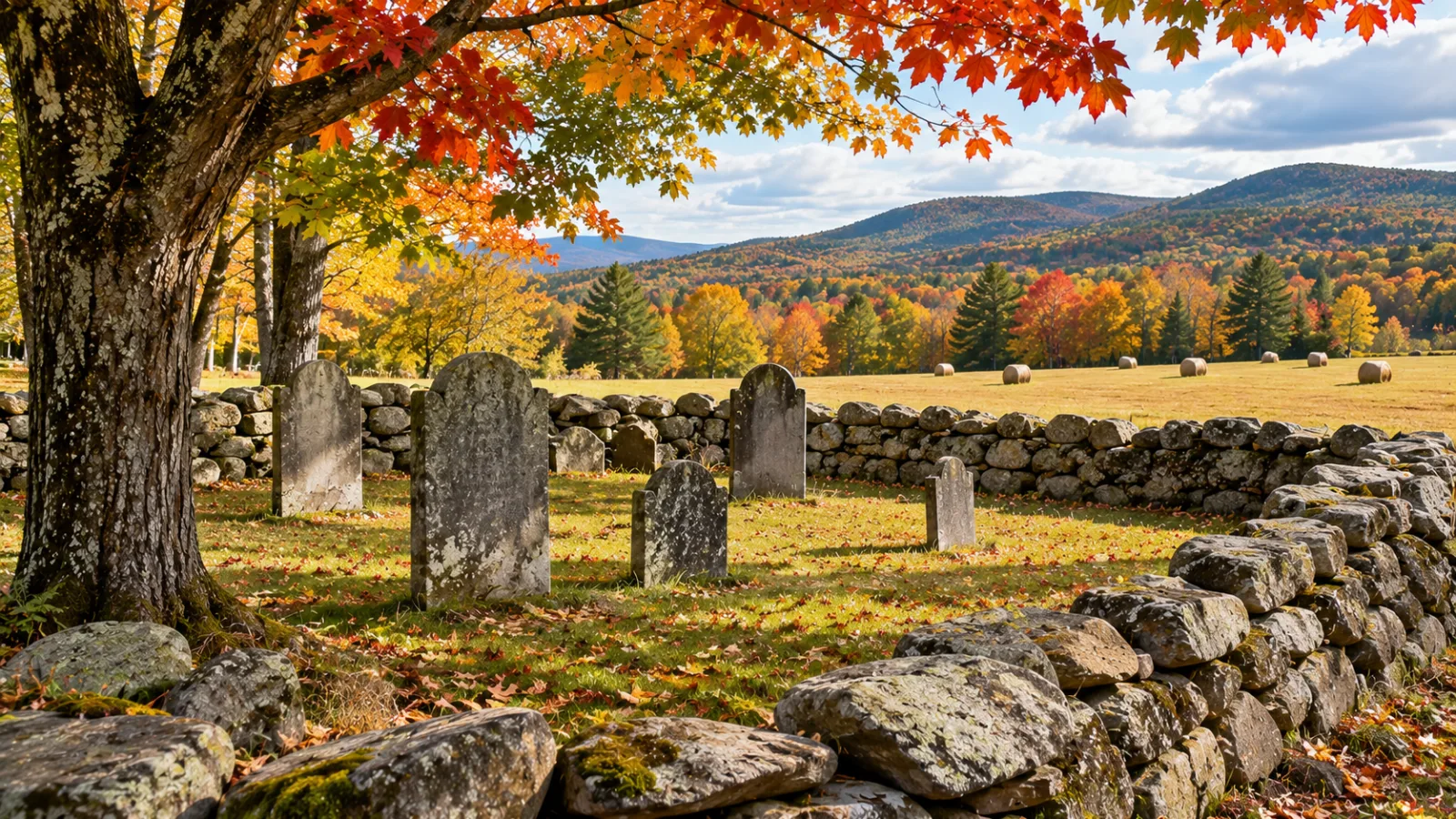

Yes, you can have a family cemetery on your property in New Hampshire. Under RSA 289:3 (as of 2026), a burial on private land outside an established burial ground must comply with local zoning, and the site's location must be recorded in the deed when the property changes hands. Where a town has no such rules, state setbacks apply: 100 feet from a dwelling, 50 feet from a known water source.
General information, not legal advice: ask the town and a New Hampshire attorney before a burial or a purchase.
On this page
- Can you have a cemetery on your property, and what rules apply?
- Is a cemetery private property or public property?
- What happens when you buy land with an old family cemetery on it?
- Can a family cemetery be moved?
- Frequently asked questions
Can you have a cemetery on your property, and what rules apply?
You can have a cemetery on your property in New Hampshire, but the town's zoning comes first under RSA 289:3. Ask the planning or zoning office whether private burials are permitted in your district and on what conditions before anything else.
If a town has no zoning provision on private burials, the setbacks in RSA 289:3, I apply. No burial ground may be laid out within 100 feet of a dwelling house, school or place of business without the owner's consent, or within 50 feet of a known source of water or a state highway right of way.
On a rural lot in Campton or Thornton with a private well, the 50-foot water setback often decides where a plot can go.
Is a cemetery private property or public property?
A cemetery in New Hampshire can be either private or public property, depending on who owns it. RSA 289:1 defines a "burial ground" as a private family or religious institution's cemetery on private property. A "cemetery" in the same statute means one owned, managed or controlled by a municipality, such as a town cemetery run by its cemetery trustees.
A family plot on your land is private property, but not property you can do anything with. Under RSA 635:6, purposely or knowingly disturbing a grave or removing a gravestone or marker without written authorization is a crime, and RSA 635:8 makes it a class B felony with restitution.
A town's governing body also may not approve removing or disturbing a marker without first giving 30 days' notice to the NH Division of Historical Resources, under RSA 635:6.
What happens when you buy land with an old family cemetery on it?
Buying land with an existing family cemetery means accepting three limits: a no-build buffer, access rights for others, and the record in the deed. Small stone-walled family plots turn up on former hill farms in Grafton and Belknap counties, so the question comes up most on farm and woodland purchases.
Where a town has no rules of its own, RSA 289:3, III bars new construction, excavation or building within 25 feet of a known burial site or an established burial ground's boundary, with a narrow exception for approved essential services. Plan a driveway, house site or septic field around that buffer.
Relatives and volunteers can reach the plot even without a deeded right of way. Under RSA 289:14 a person can apply in writing to the selectmen (or the mayor in a city) for a temporary right of entry over private land to a private burial ground. The selectmen, after consulting the cemetery trustees, can issue a permit.
Volunteers have a second route. RSA 289:14-a lets a person or group petition to clean and maintain a neglected burial ground at their own expense, after public notice, and limits the landowner's liability for that volunteer work.
In a purchase, ask for the plot's location on the survey and in the deed, and ask the closing attorney about rights of way. Our page on getting a copy of your deed in NH shows how to pull the recorded deed.
Our guide to buying land in New Hampshire covers the rest of the due diligence. The farms and farmland guide covers the older properties where these plots usually turn up.
Can a family cemetery be moved?
A family cemetery can be moved in New Hampshire only with a state disinterment permit under RSA 290:5, countersigned by the local health officer. Before the permit issues, the surviving spouse, parents and adult children must get written notice by certified mail and have 10 days to object.
Sellers of land with a burial site should disclose it and make sure the deed records its location, as RSA 289:3 requires. Our guide to selling land in New Hampshire covers what buyers' attorneys will ask for.
Frequently asked questions
Are cemeteries private property in New Hampshire?
Family and religious burial grounds on private land are private property under RSA 289:1, while town-owned cemeteries are not. Owning the land does not give an owner the right to disturb graves or markers, which is a class B felony under RSA 635:6 and 635:8.
Is a cemetery public property if it is owned by the town?
Yes. A municipal cemetery is public property managed by the town's cemetery trustees. A private burial ground declared abandoned also becomes a municipal cemetery for management purposes under RSA 289:21.
Do I have to let people visit a cemetery on my land?
Visitors to a cemetery on your land do not have open access, but a person can apply to the selectmen for a temporary right of entry under RSA 289:14. The selectmen, after consulting the cemetery trustees, decide whether to issue a permit. Talk to the town and your attorney if you receive a request.