
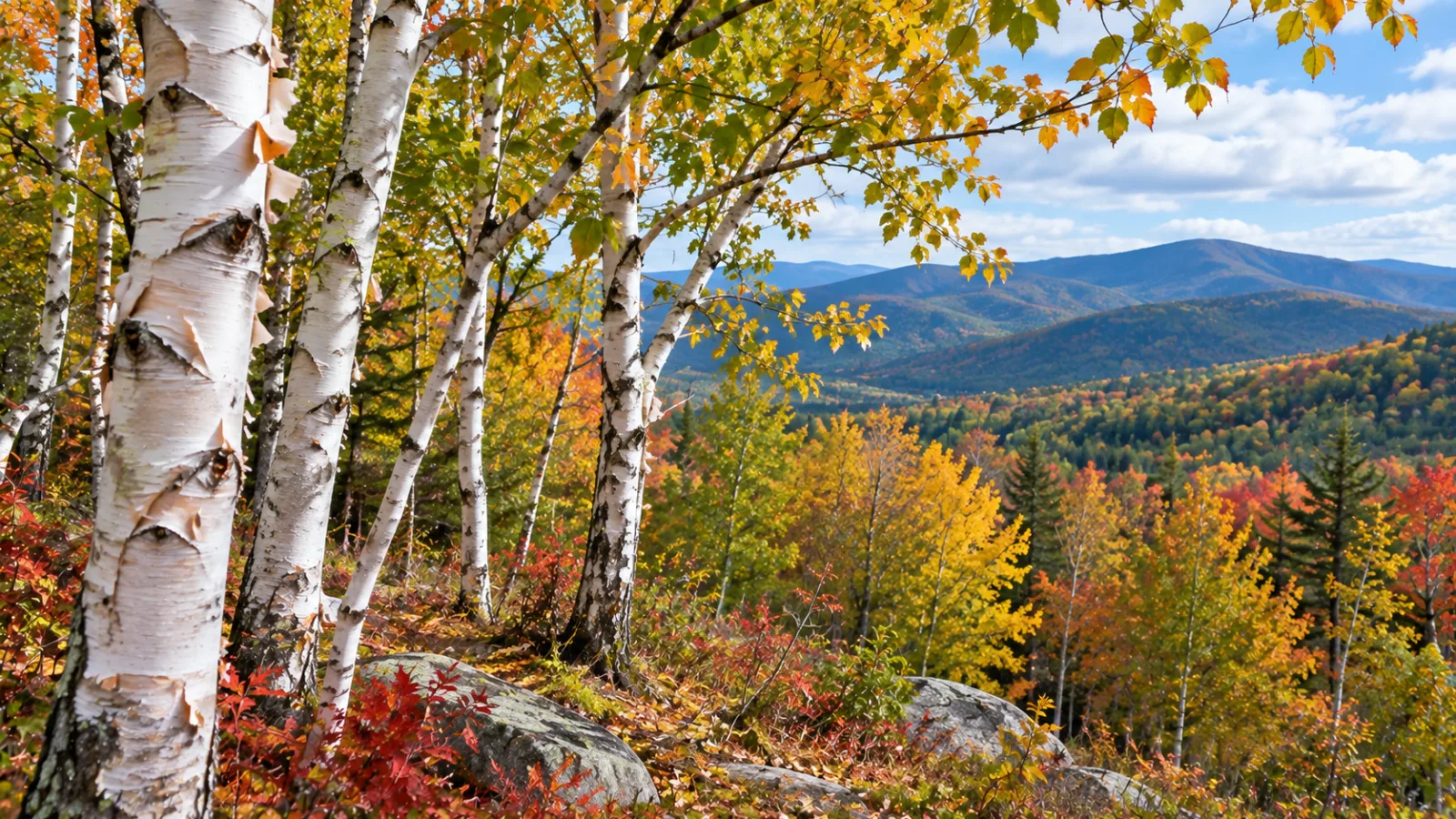

The state tree of New Hampshire is the white birch, Betula papyrifera, also known as paper birch or canoe birch. The legislature made the white birch official in 1947 under RSA 3:6, enacted by 1947 chapter 158 and effective May 22, 1947 (NH RSA 3:6).
The white birch is one state symbol you can see without trying: its chalk-white trunks stand out against the darker woods across the White Mountains. For the wider picture of life here, see our moving to New Hampshire guide.
On this page
- What does RSA 3:6 say about the state tree?
- How do you recognize a white birch?
- Why do white birches grow where they do in New Hampshire?
- Frequently asked questions
What does RSA 3:6 say about the state tree?
RSA 3:6 says, in one sentence, that "the white birch tree, Betula papyrifera, is the state tree of New Hampshire." Naming the species in Latin removes any doubt about which birch the law means: paper birch specifically.
The state tree joined the emblems in RSA chapter 3 two years after the 1945 motto and emblem and a decade before the 1957 state bird. Our answer on the New Hampshire state motto has a table of the state symbols with their adoption years and statute sections.
How do you recognize a white birch?
A white birch is recognized by its thin white bark that peels in papery layers, which is where the names paper birch and canoe birch come from. Wabanaki and other Indigenous peoples used birchbark for canoes, containers and wigwams (Wikipedia). Paper birch typically grows to about 66 feet (20 m) tall.
Paper birch is a northern tree whose range covers most of Canada and the far northern United States, with only isolated patches as far south as New York and Pennsylvania. Central and northern New Hampshire sit well inside that home ground.
Why do white birches grow where they do in New Hampshire?
White birches grow where a forest has been opened up, because paper birch is a pioneer species that colonizes ground after wildfire, avalanche or windthrow. As the woods mature, more shade-tolerant trees overtake the birch, so a stand of white birch usually marks land that was disturbed decades ago.
Paper birch is short-lived for a hardwood: in warmer climates it may live only about 30 years, though in colder regions it can pass 100 (Wikipedia).
On a wooded house lot, a short-lived tree matters before you count on a big birch for shade near the house. Ask an arborist to look at mature birches during your inspection period.
For seeing birch at its best, our fall foliage guide covers the timing and drives through the White Mountains, and the White Mountains area page covers the towns, from Campton north.
Frequently asked questions
What is the state tree of New Hampshire called in Latin?
The state tree of New Hampshire is Betula papyrifera, the white or paper birch. RSA 3:6 names the species in Latin so it is clear which birch the law means.
When did New Hampshire adopt its state tree?
New Hampshire adopted the white birch as its state tree in 1947. The act, 1947 chapter 158, took effect on May 22, 1947.
Is the white birch the same as the paper birch?
Yes, white birch, paper birch and canoe birch are common names for the same tree, Betula papyrifera. New Hampshire's law uses "white birch."
Is the white birch a symbol anywhere else?
Yes, the white birch is also a symbol in Canada: besides being the state tree of New Hampshire, the paper birch is the provincial tree of Saskatchewan in Canada. New Hampshire adopted it in 1947 under RSA 3:6.