
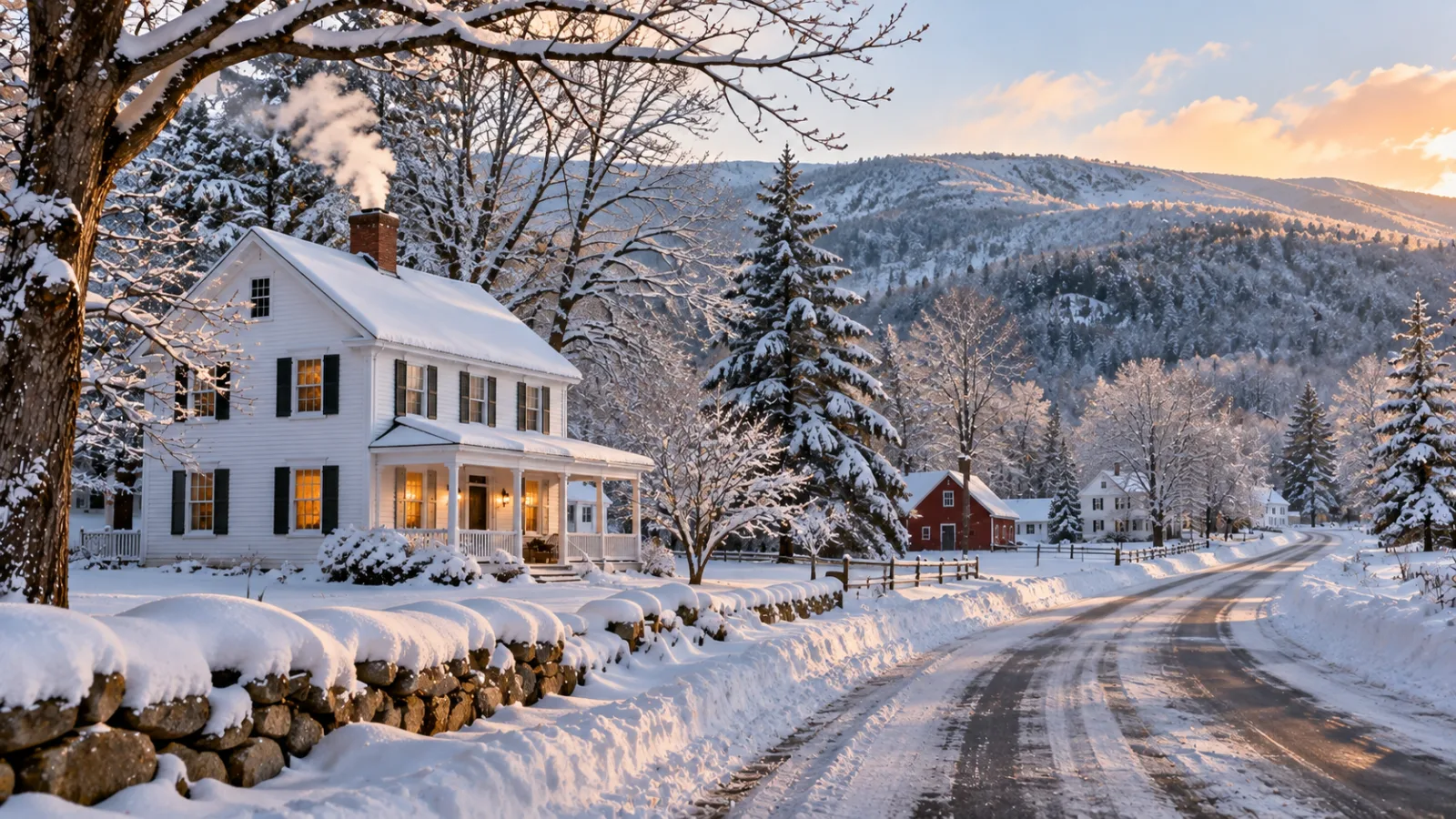

Winter in New Hampshire is cold and snowy, with steady snow cover from about December through March in the central and northern part of the state. Plymouth averages 68.3 inches of snow a year, with January highs near 29°F and lows near 7°F, and the summit of Mount Washington averages 281.8 inches (1991–2020 normals, via Wikipedia).
How hard a New Hampshire winter feels depends mostly on elevation and latitude: the coast and southern cities are milder, while the Lakes Region, Plymouth and the White Mountains get more snow and colder nights. For the bigger picture of moving here, see our moving to New Hampshire guide.
On this page
- How cold does it get in New Hampshire in winter?
- How much snow does New Hampshire get?
- What is winter in the White Mountains like?
- What does owning a home in a New Hampshire winter involve?
- Frequently asked questions
How cold does it get in New Hampshire in winter?
New Hampshire's January averages run from about 30°F by day to the single digits or low teens at night in most towns, and colder in the mountains. The table compares 1991–2020 January normals for three places.
| Place | Average January high | Average January low |
|---|---|---|
| Concord | 31.6°F | 12.9°F |
| Plymouth | 28.8°F | 7.4°F |
| Mount Washington summit | 14.9°F | −3.2°F |
Sources: NOAA 1991–2020 normals as tabled on Wikipedia for Concord, Plymouth and Mount Washington, checked November 2026.
Cold snaps go well below the averages. Plymouth's record low is −38°F, set on February 3, 1898, and Mount Washington's summit reached −47°F in January 1934 and again on February 4, 2023 (Wikipedia).
How much snow does New Hampshire get?
New Hampshire snowfall ranges from moderate totals near the coast to far more in the mountains, and Plymouth's 68.3 inches a year (1991–2020) is typical of the central part of the state.
Snow totals climb fast with elevation. The summit of Mount Washington averages 281.8 inches a year, with 41 to 48 inches in each month from December through March. Most of New Hampshire's snow arrives in two kinds of storms: nor'easters, which can drop a foot or more in a day or two, and fast-moving Alberta clippers that bring a few inches at a time.
What is winter in the White Mountains like?
Winter in the White Mountains is colder and snowier than in the valleys below, and it's the busiest time of year in ski towns like Lincoln, Waterville Valley and Bretton Woods. Our guide to New Hampshire ski resorts covers the mountains, and our winter activities guide covers snowmobiling, snowshoeing, ice fishing and tubing.
Some mountain roads and attractions change for winter. The Kancamagus Highway between Lincoln and Conway stays open all winter, apart from brief closures to clear heavy snow, but Bear Notch Road is closed for the season (Wikipedia). The Mount Washington Auto Road closes to cars and runs SnowCoach tours instead (Mt. Washington Auto Road), and for winter 2026–27 (November 2 to April 29) the Cog Railway runs only as far as Waumbek Station (Cog Railway). Mount Washington's summit recorded a 231 mph gust on April 12, 1934, so winter hiking above treeline is for the prepared only.
What does owning a home in a New Hampshire winter involve?
Owning a home through a New Hampshire winter means planning for snow removal, heat and ice before the first storm: line up a plow contract in early fall, budget for heating fuel, and know where the water shutoff is.
Heavy snow and freeze-thaw cycles cause ice dams on roofs without good insulation and ventilation, and a vacant second home with no heat monitoring can freeze its pipes. For seasonal owners of Campton and Waterville Valley condos and camps, a caretaker or a remote temperature alarm is worth considering. On a home inspection here, the roof, the attic and the heating system deserve attention.
Road access matters too. Steep private roads and long driveways are harder to keep open, and dirt roads turn to mud when the frost goes out in spring, which is why we suggest driving any dirt-road property in April. Our Waterville Valley four seasons guide shows how one mountain town runs through the year.
Frequently asked questions
When does winter start and end in New Hampshire?
Snow can fall in November in central and northern New Hampshire, but steady snow cover usually builds in December and lasts into March, longer in the mountains. Spring melt brings mud season, roughly late March through April, before the leaves come out in May.
Is winter in New Hampshire worse than in Massachusetts?
New Hampshire winters are generally colder and snowier than winters in eastern Massachusetts, especially away from the coast. Concord's normal January low is 12.9°F and Plymouth's is 7.4°F, and Plymouth averages 68.3 inches of snow a year. Southern New Hampshire near the Massachusetts line is closer to Massachusetts conditions.
Which part of New Hampshire gets the most snow?
The White Mountains and the far north get the most snow in New Hampshire, and Mount Washington's summit gets the most of all, at 281.8 inches a year on average. Ski towns at higher elevations, such as Waterville Valley and Bretton Woods, also get more snow than the valley towns below them.