
Moving to New Hampshire means trading no income tax and no sales tax for high property taxes, long winters and a tight housing market with a $569,900 single-family median (August 2026). New residents have 60 days to get an NH license and register vehicles. Planned for, it is one of the Northeast's best moves.
The upside is real: top-five public schools nationally, perennial top-three safety rankings, and mountains, lakes or ocean within an hour of nearly everywhere. Nearly 44 percent of migrants to the state in 2021 and 2022 came from Massachusetts — the people closest to New Hampshire have run the numbers. This guide runs them honestly: the real tax picture, the real cost of living, the regions in brief, a first-60-days checklist, and the parts of the move nobody puts in the brochure. For which town to choose, our companion list of the best towns to live in New Hampshire goes town by town.
The short answer
Is New Hampshire a good place to live? For the right person, yes — emphatically. You'll keep more of your paycheck than in any neighboring state, the kids go to some of the best public schools in the country, and most addresses put mountains, lakes, or ocean within an hour.
The honest caveats: property taxes are genuinely high, winter is five months long and means it, housing inventory is tight, and the rural half of the state trades conveniences for space. None of that is disqualifying. All of it belongs in the decision before anyone calls a mover.
The tax picture, explained honestly
The tax story is the reason half of all relocation calls happen, so here it is exactly right — because most articles get it half right.
No tax on wages. New Hampshire has never taxed earned income. Paychecks are not taxed by the state, period.
No sales tax. Nothing at the register, on the car, on the furniture for the new house. Retiring couples furnishing a home notice this immediately; so does anyone who's been paying 6.25 percent in Massachusetts.
The last income tax is gone. For years the asterisk was the Interest and Dividends Tax, a levy on investment income. That asterisk is dead: the tax was fully repealed effective January 1, 2025, which makes New Hampshire one of the few states with no personal income tax of any kind — wages, dividends, interest, capital gains, Social Security, pensions, retirement account withdrawals. For anyone retiring to New Hampshire on a portfolio, that repeal changed the math meaningfully.
Now the tradeoff. The state has to fund schools and services somehow, and it does it through property taxes. New Hampshire's average single-family property tax bill was $8,174 in 2025 — the fourth-highest in the nation, and its 1.29% effective rate ranked sixth-highest. And the rates vary enormously town to town — two towns ten minutes apart can differ by $8 or more per $1,000 of assessed value depending on how they fund their schools. In Campton the total 2025 rate was $17.46 per $1,000, per the NH Department of Revenue Administration's 2025 tax rate table; some towns run under $10, others over $30. Our New Hampshire property taxes guide explains how the bill is built and how to compare towns. The town tax rate belongs in the spreadsheet next to the list price on day one, because a cheaper house in a high-rate town can cost more per month than a pricier one next door.
The whole-picture verdict: the Tax Foundation still ranks New Hampshire's overall tax burden among the lowest in the country. Most families moving from MA to NH come out ahead — sometimes far ahead — but the gain shows up in the paycheck and disappears a little at the town tax bill, so run both numbers, not just the fun one.
What it actually costs to live here
The cost of living in New Hampshire runs above the national average — this is still New England — but well below Massachusetts. Statewide cost-of-living indexes put New Hampshire roughly 10 to 15 percent above the U.S. average, against 35 percent or more for Massachusetts. Gas is cheaper than over the border, car insurance runs meaningfully lower, and the missing sales tax quietly compounds on everything you buy.
Housing is the number that matters most. The New Hampshire Association of REALTORS reported a statewide single-family median of $569,900 in August 2026, up 3.6% year over year, with 2.8 months of supply — more choice than at any point since the pandemic, though still a seller-leaning market (as of September 2026). The medians hide a huge spread: the Seacoast and southern-tier towns run well above the state figure, while North Country homes still trade far below it. Our New Hampshire housing market 2026 report has the county table and forecast, and the New Hampshire home buyer guide walks through the purchase itself. Check what's actually on the market the week you're shopping.
One more line item transplants underestimate: winter. Plowing, heating oil or propane, snow tires, and a generator for rural addresses. Budget a few thousand a year for the season and there are no surprises.
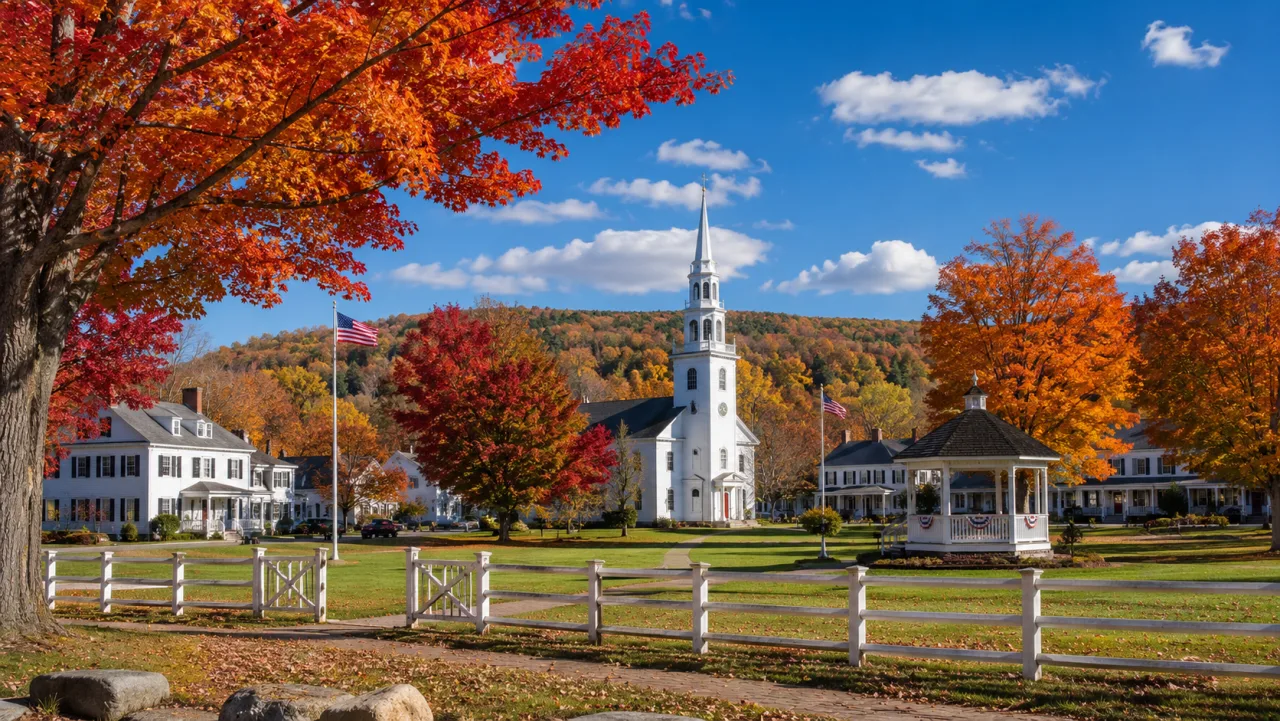
Where to live in New Hampshire — the regions in brief
New Hampshire is small on the map and enormous in variety. This is the ten-second version of each region; the town-by-town comparison lives in our best towns to live in New Hampshire list. (Full disclosure on the bias: this guide is written from the Lakes Region–White Mountains overlap.)
| Region | Anchor towns | Best fit | Trade-off |
|---|---|---|---|
| Seacoast | Portsmouth, Exeter, Dover, Durham | Walkable-town life, ocean, a manageable commute south | The most expensive region in the state |
| Merrimack Valley | Manchester, Nashua, Bedford, Windham | Boston commuters, families, the biggest job market | Suburban traffic at the border |
| Monadnock | Keene, Peterborough | Quiet, artsy, cheaper than the east | No interstate; Boston is a real drive |
| Lakes Region | Laconia, Meredith, Wolfeboro, Plymouth, Bristol | Lake life four seasons; Plymouth adds a college and hospital | True waterfront is scarce and priced accordingly |
| White Mountains | Lincoln, Campton, Thornton, Waterville Valley, North Conway | Skiers, hikers, remote workers | Resort markets and year-round towns behave differently |
| Upper Valley | Hanover, Lebanon | Top-tier healthcare and education | Expensive for how rural it looks |
| Great North Woods | Berlin, Colebrook, Pittsburg | The lowest prices in the state | Hard winters, few jobs, long drives to specialists |
In our own corridor, the choice is usually between homes for sale in Plymouth NH (in-town services, the university and Speare hospital), homes for sale in Campton NH (I-93 exits 27 and 28, fiber, room to spread out) and Lincoln NH real estate (Loon Mountain and a resort economy). The area pages for the Lakes Region and White Mountains cover each corridor town by town, and there is a running page of lakefront homes across New Hampshire for anyone moving for the water.
The where-to-live question always comes down to one counter-question — what does your Tuesday look like? Commuters belong south of Concord. Remote workers and lake people belong in the Lakes Region and the Whites. Retirees split between the Seacoast, the Lakes Region and the Upper Valley depending on whether the priority is culture, water or a hospital.
Pros and cons of living in New Hampshire
Every relocation conversation eventually gets here, so here is the honest list.
The pros:
- The tax structure. No tax on wages, no sales tax, and since the 2025 repeal, no tax on investment or retirement income either. Nowhere else in the Northeast comes close.
- Safety. New Hampshire perennially ranks among the two or three safest states in the country. It's the thing transplants mention first a year after moving.
- Public schools. Top-five nationally in the major state rankings, with small class sizes.
- The outdoors, all of it. Forty-eight four-thousand-foot peaks, the big lakes, the seacoast, and ski areas from backyard hills to Cannon and Loon. Most of the state lives within thirty minutes of something worth doing outside.
- Proximity without the price. Boston is one to two hours from most of the southern half of the state. You can use the city without paying to live in it.
- Four real seasons. Foliage season alone converts people. There's a reason the leaf-peepers clog the roads every October.
- The live-free culture. Light-touch government cuts across daily life here — no seatbelt law for adults and notably permissive firearms laws; New Hampshire has been a permitless-carry state since 2017. Depending on your politics that's a feature or a bug, so it's listed neutrally: it's the state's character, and worth knowing before the move.
The cons:
- Property taxes. Covered above, and worth repeating: the low-tax reputation is real overall, but the town tax bill will be the biggest tax you pay, and on a fixed income it needs planning.
- Winter is long. Reliable snow and cold from December into March, with shots on either side. Anyone who doesn't ski, sled, or at least own a good coat and a sense of humor will find five months a long time.
- Mud season and bug season. More below. They're real.
- Housing supply. Tight inventory means relocating buyers need to be decisive, and renters have it harder than buyers in much of the state.
- Rural distances. North of Concord, the hospital, the airport, and the good grocery store all get farther apart. City conveniences — delivery, transit, a choice of specialists — thin out fast.
- Demographics. New Hampshire is one of the oldest states by median age and not a diverse one. Young singles moving from a city sometimes find the social scene thin outside Portsmouth and Manchester.
Jobs, commuting, and the Massachusetts question
The classic New Hampshire play — and the reason moving from MA to NH is practically a regional tradition — is living north of the border and earning south of it. Fair warning on the taxes: anyone who physically commutes to a Massachusetts job still pays Massachusetts tax on that income. The full paycheck win comes when the job moves with you.
That's exactly what's been happening. Remote work turned New Hampshire's quiet migration gain into a surge — the Carsey School at UNH documented billions in income moving into the state during the pandemic years, overwhelmingly from Massachusetts, and the flow has settled back to a steady, decades-old pattern rather than reversing. A two-day-a-week office schedule redraws the map: at that frequency, Campton at two hours from Boston competes with Nashua at fifty minutes, and the mountains win more often than you'd think.
For the true commuters: I-93 and the Everett Turnpike are the arteries, and rush hour at the border tolls is genuinely bad — budget ninety minutes-plus from Manchester to downtown in traffic. Boston Express runs coach service from park-and-rides at North Londonderry (Exit 5), Salem (Exit 2) and Nashua (Exit 8) into South Station and Logan, and plenty of commuters drive to Lowell and ride the MBTA in. A Nashua–Manchester commuter rail extension has been studied for years; don't buy a house betting on it.
In-state, the job market is stronger than people expect — healthcare, defense and advanced manufacturing (BAE is one of the state's largest private employers), education, and tourism — with unemployment that habitually runs below the national rate. The honest limits: wages for many in-state jobs trail Boston, and the deep-career-market jobs cluster south of Concord and on the Seacoast.
Schools and healthcare
Schools are one of New Hampshire's quiet superpowers. The state consistently ranks in the top five nationally for public education, and districts like Hanover, Bedford, Windham, and Exeter compete with anything in Massachusetts. The critical local wrinkle: because schools are funded largely through local property taxes, quality and tax rates vary town by town, and school district lines drive real estate values here the way subway lines do in a city. When schools are the priority, shop districts first and houses second. On the Route 49 corridor, Campton kids go through a solid K–8 and on to Plymouth Regional — the Waterville Estates guide covers the local setup.
Healthcare deserves equal honesty. The flagship is Dartmouth Health, the state's largest health system, anchored by Dartmouth Hitchcock Medical Center in Lebanon — the state's only academic medical center, with a National Cancer Institute-designated comprehensive cancer center. The Seacoast and Manchester areas have strong hospital coverage too, and Boston's world-class hospitals remain reachable from the southern tier.
The rural reality is different, and retirees deserve it straight: north of the lakes, everyday care relies on excellent but small critical-access hospitals — Speare in Plymouth, Littleton Regional, Memorial in North Conway — with the serious cases referred to Lebanon or Manchester, an hour or more away. For a healthy sixty-five-year-old that's a footnote. For someone managing a condition that needs a specialist every month, it belongs at the center of the where-to-live decision, and it's a legitimate argument for the Upper Valley or the Seacoast over the mountains.
The seasons nobody warns you about
Everyone asks about winter. Winter is the one you already know about: it's long, it's real, and it's also the point — half the people moving here are moving for it. Buy the snow tires, line up a plow contract in September, respect ice dams, and you'll be fine. The people who struggle with New Hampshire winters are the ones who try to endure them instead of using them.
The seasons nobody warns you about are the other two.
Mud season. When the frost lets go — roughly late March through April — dirt roads turn to soup, towns post weight limits, and that gorgeous gravel driveway you bought in August becomes a rut farm. It's also the gray season: snow's gone, leaves aren't out, everything's brown. Locals schedule their Florida trips for April. Anyone buying on a dirt road should drive it in April before closing. Non-negotiable.
Black fly season. From about Mother's Day to Father's Day, tiny biting flies own the outdoors, worst near running water and worst of all up north — the UNH Extension has a whole fact sheet on them. Then come the mosquitoes, and everywhere in the state, ticks are a serious, check-yourself-every-hike reality from spring through fall. None of this stops anyone from living here. All of it surprises people who moved for the postcard.
What the postcard gets right: September and October in New Hampshire are as good as this continent does, and a clear July day on a lake makes the whole ledger balance.
Who thrives here, and who doesn't
After watching hundreds of relocations, the pattern is clear enough to just say.
People who thrive: families trading a Massachusetts mortgage for better schools and a yard; remote workers who wanted the mountains all along; retirees whose income now goes completely untaxed and who genuinely like four seasons; anyone whose ideal Saturday involves a trail, a lake, a chairlift, or a woodstove (our rundown of the best things to do in New Hampshire is a fair preview). Self-sufficient people, broadly — the ones who see a snowstorm and think about the generator, not the group chat.
People who struggle: anyone recreating city life — for delivery food, transit, nightlife, and an airport twenty minutes away, only a couple of NH zip codes even try, and none fully deliver. Sun-chasers — if February genuinely gets you down, five months of winter won't negotiate. Fixed-income buyers who fell in love with the "no taxes" headline and didn't model an $8,000 property tax bill. And people with intensive medical needs who buy deep in the woods — beautiful idea, hard reality.
Better to hear all of this before the move than to list the house two years after it.
Your first 60 days — the practical checklist
Once the moving truck is unloaded, New Hampshire gives you a clock. The checklist every relocating buyer should get at closing:
- Driver's license — 60 days. New residents who drive must get a New Hampshire license within 60 days of establishing residency. Bring the old license, proof of identity, and two proofs of the NH address; decide on the REAL ID version while you're at it.
- Vehicle registration — same 60 days. Registration is a two-stop dance unique to here: start at the town clerk's office (that's also where the town's portion of the fee is collected), then complete the state portion — many town clerks handle both in one visit. Miss the license deadline and the DMV won't renew the registrations, so do these together.
- Voter registration. No waiting period — register as soon as you live here, at the town clerk's office ahead of time or same-day at the polls, with proof of identity, age, citizenship, and residency. In a state that votes first in the nation and decides statewide races by a few thousand votes, a single ballot suddenly matters.
- Declare residency like you mean it. Leaving a state with an income tax means that state has an interest in claiming you didn't really leave. Change the license and registrations promptly, update the address with the IRS and the banks, register to vote here, and spend the majority of nights here — the accountant will approve at the first audit-free tax season.
- The unofficial list. Line up a plow contract and a heating fuel supplier before October, not during the first storm; confirm internet service at the actual address, not the town; introduce yourself to the town clerk, who in a small NH town is the operating system of daily life; and go to town meeting in March at least once. It's self-government at a scale you can see, and it's where that property tax bill gets decided.
Finding the right town
Moving to New Hampshire is really two decisions — whether, and where — and the second one is where a local broker earns their keep. Owl's Nest Real Estate has walked hundreds of out-of-state families through this exact move: an honest read on whether a budget works better in Laconia or Campton, the actual tax rate and school data for any town under consideration, and a drive up a dirt road in April if that's what it takes to make the decision real.
Start by browsing the newest listings, dig into the Lakes Region and White Mountains guides, and go in knowing what your Tuesday looks like — the right town follows from that.
Frequently asked questions
Does New Hampshire have an income tax?
No. New Hampshire has never taxed wages, and its last income tax — the Interest and Dividends Tax on investment income — was repealed for tax periods beginning on or after January 1, 2025. There is no general sales tax either. The state raises money instead through local property taxes and targeted taxes such as the 8.5% Meals and Rooms tax. Anyone who still commutes to a Massachusetts job pays Massachusetts tax on that income.
How high are property taxes in New Hampshire?
High. The average single-family property tax bill in New Hampshire was $8,174 in 2025, and the state's effective rate ranked sixth-highest nationally. Rates vary widely by town because schools are funded largely through local property taxes — Campton's 2025 base rate was $17.46 per $1,000 of assessed value, while some towns run under $10 and others over $30. Compare the town rate alongside the list price.
Is it cheaper to live in New Hampshire than Massachusetts?
Generally, yes. Cost-of-living indexes put New Hampshire roughly 10 to 15 percent above the U.S. average, compared with 35 percent or more for Massachusetts. With no sales tax and no tax on wages, most households moving from Massachusetts come out ahead. Housing is still not cheap — the statewide single-family median was $569,900 in August 2026 — and a higher property tax bill offsets part of the savings.
How long do new residents have to get a New Hampshire license and registration?
New residents have 60 days from establishing residency to get a New Hampshire driver's license, and 60 days to register any vehicle they own and drive here. Registration starts at the town or city clerk's office where you live; the state portion follows, and many clerks can complete both in one visit. Bring the title and proof of residency, and handle the license and registrations together.
What are the best places to live in New Hampshire?
The best place depends on how you spend a typical week. Boston commuters usually belong in the Merrimack Valley or on the Seacoast, remote workers and lake lovers in the Lakes Region and the White Mountains, and retirees who prioritize healthcare often choose the Upper Valley or the Seacoast. Our list of the best towns to live in New Hampshire compares them town by town.
How bad are New Hampshire winters?
Winters are long and real: expect reliable snow and cold from December into March, with shoulders on either side. They are manageable with snow tires, a plow contract lined up in September, and a heating fuel plan. The seasons that surprise newcomers are mud season in late March and April, when dirt roads soften, and black fly season from roughly mid-May to mid-June.
What are healthcare and jobs like in New Hampshire?
Healthcare is strongest in the south and the Upper Valley, where Dartmouth Hitchcock Medical Center in Lebanon is the state's only academic medical center. North of the lakes, small critical-access hospitals handle everyday care and refer serious cases an hour or more away. The largest job sectors include healthcare, defense and advanced manufacturing, education and tourism, with most deep career markets south of Concord and on the Seacoast.