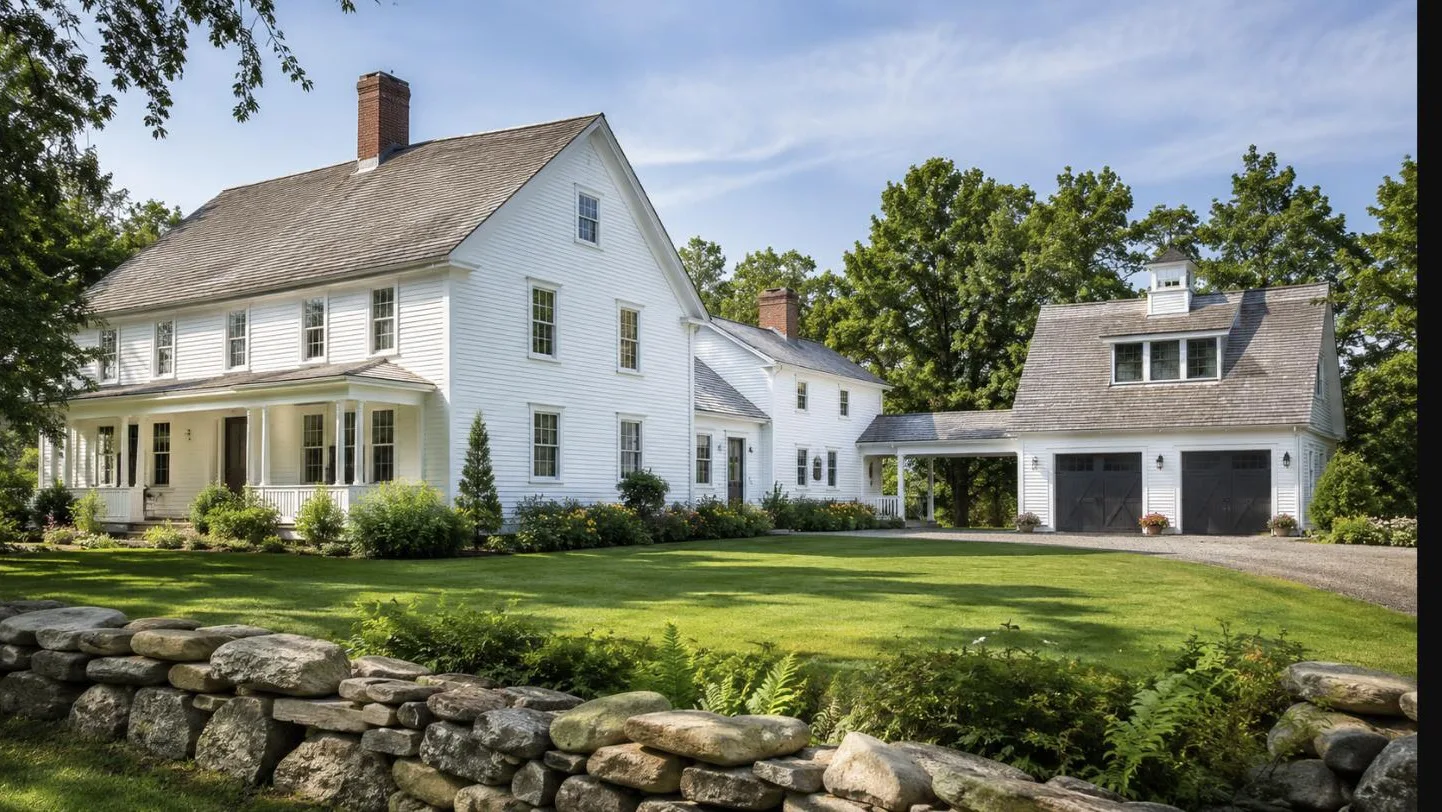

New Hampshire's ADU law changed substantially in 2025: under House Bill 577 — signed July 15, 2025 and effective as of July 1, 2025 — every municipality with a zoning ordinance must now allow one accessory dwelling unit, attached or detached, as a matter of right, in every zoning district that permits single-family homes. Towns can no longer require a conditional use permit or special exception for an ADU, can no longer refuse the detached form, and cannot cap unit size below 750 square feet. An accessory dwelling unit (ADU) is a second, self-contained living space on a single-family property — a basement or over-garage apartment, an attached in-law suite, or a small detached cottage — with its own kitchen, bathroom, and sleeping area. This guide covers what the revised law (RSA 674:71–:73) actually says, what towns can and can't still require, how to add an ADU step by step, and what an ADU means for value, taxes, and resale — questions that now come up in showings all over the state, from Dunbarton and the towns around Concord to Plymouth, Campton, and the Lakes Region towns we work every week.
Key takeaways
- HB 577 (effective July 1, 2025) rewrote RSA 674:71–:73: one ADU — attached or detached — is now allowed by right wherever single-family homes are allowed, with no conditional use permit or special exception.
- Towns may still set size limits, but not below 750 square feet; by statute an ADU may not exceed 950 square feet of living space unless the town authorizes more.
- Towns may still require owner occupancy of one of the two units (though not which one), and may limit properties to one ADU.
- Towns may not require extra lot size, setbacks, frontage, or design standards beyond what a single-family home requires, may not require a familial relationship between occupants, may not limit an ADU to one bedroom, and may not deny a separate electrical panel.
- The practical constraint is usually septic capacity: water supply and sewage disposal must be adequate for the added unit under RSA 485-A, though separate systems can't be required.
- Buyers want ADUs mainly for multigenerational living and rental income — and a permitted unit is worth far more at resale than an undocumented one.
What counts as an ADU — and what doesn't
The forms vary, but the statutory definition is consistent: an accessory dwelling unit is a residential living unit on the same lot as a single-family home, providing independent facilities for sleeping, eating, cooking, and sanitation. Around here that usually means one of three things:
- An attached unit — the classic in-law apartment: a basement or first-floor suite, a wing off the main house, or the connected ell so common on older New England farmhouses. Under the revised law, a unit built entirely inside a preexisting detached structure — a garage or barn that already stood on the lot — also counts as "attached."
- An over-garage apartment — popular because it adds a unit without changing the home's footprint on the lot.
- A detached cottage — a separate small dwelling on the same lot. This is the big 2025 change: towns previously could limit ADUs to the attached form, and now one ADU may be attached or detached at the owner's choice, by right.
What an ADU is not: a spare bedroom with a mini-fridge, a camper in the driveway, or a second full-size home on the lot. The "accessory" part matters — the unit is subordinate to the main dwelling, and the statute caps its living space at 950 square feet unless the town chooses to allow more. One more change worth knowing: under the revised law an ADU may be built at the same time as the principal home, not just added later.
What the NH ADU law says after HB 577
The statewide baseline, as amended by HB 577 (Chapter 197, Laws of 2025), now works like this: a municipality that adopts a zoning ordinance shall allow accessory dwelling units in all zoning districts that permit single-family dwellings, and one ADU — attached or detached — shall be allowed as a matter of right. No conditional use permit, no special exception. If a town's ordinance says nothing about ADUs at all, one ADU is simply a permitted accessory use to any single-family home, with no municipal approvals needed beyond ordinary building permits. And the town must allow that one ADU without additional requirements for lot size, setbacks, frontage, aesthetics, or design review beyond what it requires for a single-family home alone.
What towns can still require
- One ADU per single-family dwelling. Towns don't have to allow more than one (though they may).
- Size limits — within the statutory floor and ceiling. A town may set size rules but cannot cap an ADU below 750 square feet; the statute itself caps living space at 950 square feet unless the town authorizes more.
- Owner occupancy. A town may require that the owner live in either the main home or the ADU — but cannot dictate which.
- A bedroom cap of two. Towns may limit an ADU to two bedrooms — they just can't limit it to one.
- One additional parking space — and only if the town already imposes off-street parking requirements on the principal dwelling. The owner chooses whether the space is on-site or legally dedicated off-site.
- Aesthetic standards — only if the same standards apply to the principal dwelling.
- Certain exclusions. Towns may prohibit ADUs with attached single-family forms like townhouses, and on rented or leased land; and selling an ADU separately as a condominium is prohibited unless the town allows it.
What towns can no longer do
- Require a special exception or conditional use permit for the one by-right ADU.
- Refuse detached ADUs. The owner's choice of attached or detached is protected.
- Pile on dimensional or design requirements — no extra lot size, setback, frontage, space, or design-review rules beyond the single-family baseline.
- Require a familial relationship between the ADU's occupants and the main home's occupants.
- Limit the unit to one bedroom.
- Deny a separate electrical panel and separate electrical service for the ADU.
- Demand a separate septic system, or impose septic requirements stricter than the NH Department of Environmental Services requires.
- Block conversions of existing structures. Under RSA 674:72, XI, towns must allow ADUs converted from structures that existed on or before July 1, 2025 — including detached garages — even where those structures don't meet current setback or lot-coverage rules. (Towns are still working out how they administer this provision, so expect some process.)
That said, the town's zoning ordinance still matters — it's where the town's chosen conditions (owner occupancy, size within the statutory band, parking) live, and towns have been amending ordinances to conform to the new law since mid-2025. Before you design anything or write an offer based on ADU potential, call the town's planning, zoning, or building office and ask what the ordinance currently says and what the building-permit path looks like. Buyers comparing towns for exactly this kind of flexibility will find broader context in our guide to moving to New Hampshire.
How to add an ADU in New Hampshire, step by step
- Read the town's current ADU provisions (or confirm it has none — in which case the state baseline applies) and talk to the building department about the permit path.
- Answer the septic and water question first. Outside town water and sewer, this is the make-or-break item — see the next section.
- Design within the size band. Plan on 750–950 square feet of living space unless the town has authorized larger units; check any two-bedroom limit and owner-occupancy condition while you're at it.
- Decide the form: attached, over-garage, conversion, or detached. Converting a structure that predates July 1, 2025 — a garage, a barn — has its own protected path even on tight lots; new detached construction follows the same dimensional rules as a single-family home.
- Pull building permits and meet life-safety code — egress, smoke and CO protection, and the rest. A separate electrical panel for the unit is your right under the new law if you want one.
- Tell your insurer and lender. A second dwelling unit — especially a rented one — changes the insurance picture, and lenders treat rental income and added units in defined ways.
- Set up the rental legally, if renting is the plan: a proper lease and deposit handling for long-term tenants, or Meals & Rentals tax registration for short-term stays (below).
Septic, well, and the practical constraints
Septic and well capacity. Outside town water and sewer, this is where ADU projects live or die. The law requires adequate provision for water supply and sewage disposal for the ADU in accordance with RSA 485-A — a sewage disposal application is part of the process for new construction — but towns can't demand a separate system or impose stricter septic standards than NHDES. In practice: septic systems are sized by bedroom count, adding a dwelling unit adds load, and a system without current construction/operating approval — or one that's failing — will need to be brought up to standard. On private wells, confirm the well can serve both units. Get the septic design and approval records early; they tell you quickly whether ADU plans are realistic.
Permits and building code. A new or converted unit needs building permits and life-safety compliance regardless of the zoning changes. If you're buying a home that already has an "in-law apartment," verify it was permitted: an unpermitted unit can complicate financing, insurance, and resale, and a town can require it to be brought into compliance. Treat "the seller says it's fine" as the beginning of due diligence, not the end.
Insurance and financing. Tell your insurer and lender what the property actually is. A rented unit changes the insurance picture, and lenders treat properties with rental units differently — surprises here are cheap to prevent and expensive to discover.
Why buyers want ADUs
Two motivations drive nearly every ADU conversation we have.
Multigenerational living. Aging parents nearby but independent, an adult child getting established, a live-in caregiver — an ADU keeps family close with separate kitchens and separate front doors, which is usually what makes the arrangement work. And since towns can no longer require the occupants to be family, the same unit can serve family this decade and a tenant the next.
Rental income. A long-term tenant in an ADU offsets the mortgage on the whole property — meaningful in a market where buyers are stretching for mountain and lake-area homes; our NH investment property guide covers the landlord fundamentals. Some owners consider short-term renting instead; be aware that short-term stays bring New Hampshire's Meals & Rentals tax obligations (currently 8.5% on stays under 185 days, with operator registration through the NH Department of Revenue Administration — our Campton Airbnb guide walks through the licensing) and that some towns regulate short-term rentals separately from ADUs — check both sets of rules before counting on that income. Our guide to vacation rental property management in NH covers what operating one involves.
There's a quieter third reason: flexibility — the same space serves as a home office this decade, a parent's suite the next, and a rental after that. Buyers starting from bare ground and planning a home-plus-ADU build from day one — which the revised law explicitly permits — should start with our guide to buying land in New Hampshire, since septic capacity and siting decide what's possible.
How an ADU affects value, taxes, and resale
A legal, permitted ADU generally works in an owner's favor at resale: it widens the buyer pool to multigenerational households and income-minded buyers, and the documented option of rental income helps buyers justify a price they'd otherwise stretch to reach. "Legal and permitted" is doing real work in that sentence — at resale, the paperwork is the value, because an unpermitted unit becomes the buyer's risk and the appraiser's question mark. Note also that the statute bars selling an ADU separately from the main home as a condominium unless the town allows it — the two units travel together.
Expect the tax side to follow the value side: an ADU adds finished living space, and the town's assessor will account for it in the assessed value, which flows through to the tax bill at the town's rate. How New Hampshire assessments and rates actually work is covered in our guide to New Hampshire property taxes.
If you're weighing whether an existing ADU — or the potential to add one — changes what your home is worth, a free home valuation is the quickest way to find out, and our sellers page covers how we market properties whose extra unit deserves to be sold as a feature, not a footnote.
Frequently asked questions
Are ADUs legal in New Hampshire?
Yes — and more broadly than ever. Since July 1, 2025 (HB 577, amending RSA 674:71–:73), every municipality with a zoning ordinance must allow one accessory dwelling unit, attached or detached, as a matter of right in any district that allows single-family homes. Towns set limited conditions through their ordinances, but they cannot prohibit ADUs or require a special exception for the first one.
What is the new NH ADU law?
House Bill 577, signed July 15, 2025 and effective July 1, 2025. Its headline changes: one ADU — attached or detached — is allowed by right (no conditional use permit or special exception); towns can't cap size below 750 square feet (with a 950-square-foot statutory ceiling unless the town allows more); conversions of preexisting structures like detached garages must be allowed even on nonconforming lots; and towns can't require familial relationships, one-bedroom limits, separate septic systems, or deny a separate electrical panel.
Can I build a detached ADU in New Hampshire?
Yes — this is the core 2025 change. The one by-right ADU may be attached or detached at the owner's choice, and the town can't impose extra lot size, setback, or frontage requirements beyond what a single-family home needs. Septic capacity, building code, and the town's ordinary dimensional rules still apply, so start with the town office and a septic designer.
How big can an ADU be in NH?
The statute sets the band: a town may not restrict an ADU to less than 750 square feet of living space, and an ADU may not exceed 950 square feet unless the municipality authorizes more. Some towns do allow larger units — check the current ordinance.
Do I need a special exception or variance for an ADU?
Not for the first one. Under the revised law, one ADU is a permitted use by right wherever single-family homes are allowed — towns may no longer require a conditional use permit or special exception for it. You still need building permits and, where applicable, state septic approval.
Can I convert my garage into an ADU?
The revised law specifically requires towns to allow ADUs converted from structures that existed on or before July 1, 2025 — detached garages included — even where the structure doesn't meet current setback or lot-coverage rules. Towns are still settling how they administer this provision, so talk to the building department early.
Can my town require me to live on the property?
It may — a town can require that the owner occupy either the main home or the ADU (though it can't dictate which). What it cannot require is a familial relationship between the households. Read the town's current ordinance for its owner-occupancy language.
Can I rent out my ADU?
Long-term rental is the common case and what the ADU statute anticipates; owner-occupancy conditions, where a town has them, still apply. Short-term renting is a separate question — it brings state Meals & Rentals tax obligations and, in some towns, separate short-term rental rules. Check both before underwriting the income.
Does an ADU raise my property taxes?
Adding finished living space is the kind of change assessors account for, so expect the assessed value — and therefore the tax bill — to reflect it. Ask the town's assessing office how they handle ADUs.
Is a house with an unpermitted in-law apartment a problem?
It's a due-diligence item at minimum. Verify permits with the town before you buy; an unpermitted unit can affect financing, insurance, and what the town will require after the sale. It can still be a fine purchase — but know what you're buying.
Thinking about a property with an ADU?
Whether you're hunting for a home with an in-law apartment, weighing whether a lot could support a detached cottage under the new law, or selling a property whose second unit should be front and center in the marketing, contact our team — we can help you read the local rules and price the flexibility an ADU adds.
This article reflects RSA 674:71–:73 as amended by HB 577 (Chapter 197, Laws of 2025, effective July 1, 2025) and guidance published by the NH Municipal Association, and is general information, not legal advice. Town ordinances, permitting practice, and tax treatment vary and continue to change as towns conform to the new law — confirm current rules with the town's planning, zoning, and assessing offices and your attorney before relying on them.