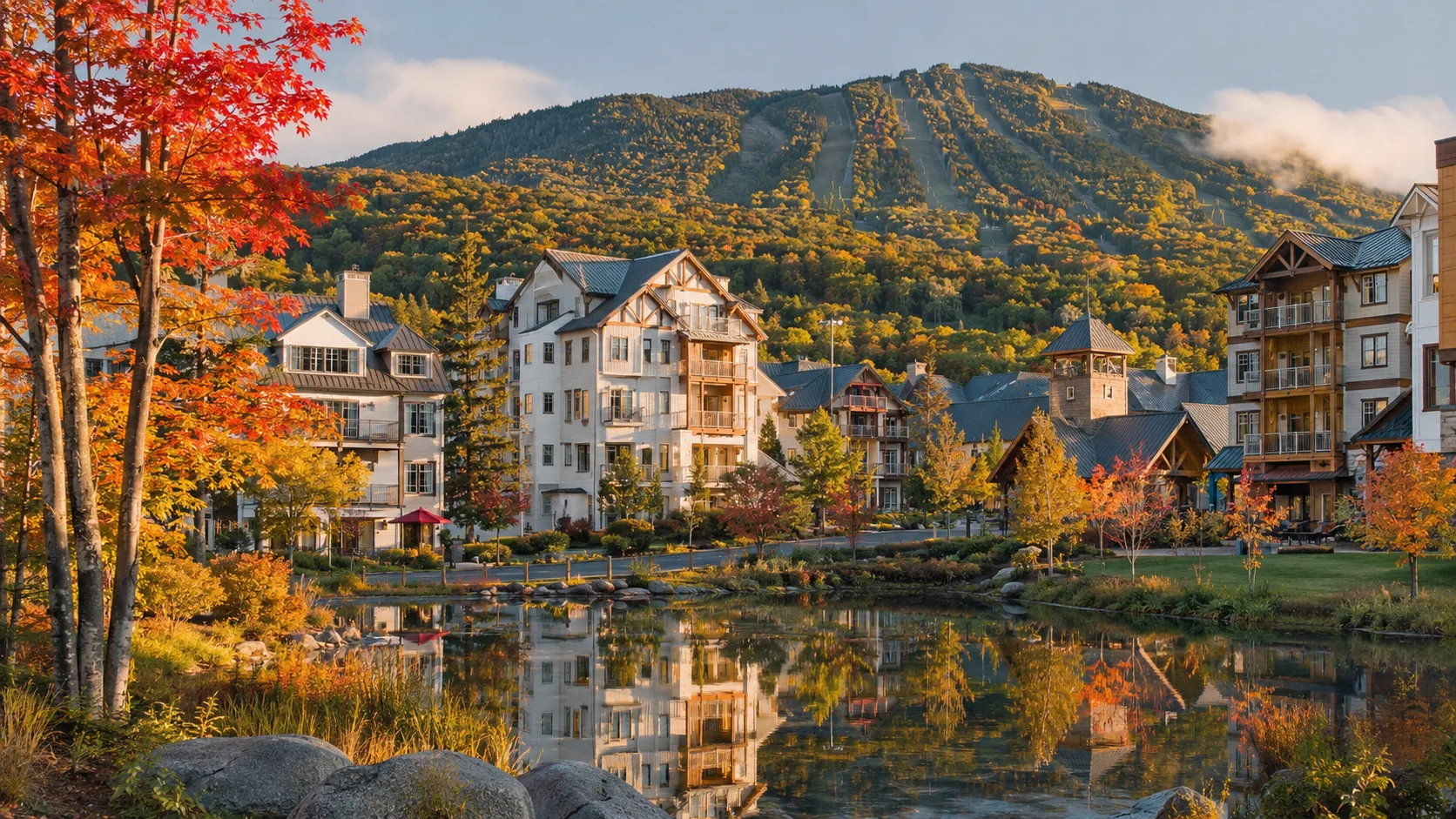

Waterville Valley condos are a market unlike any other condo market in New Hampshire — and the one distinction that confuses nearly everyone who starts their search on Zillow decides whether a purchase works. This guide covers how the market actually functions, what things cost, and that distinction — the conversation every first-time Waterville buyer needs before touring anything.
Why Waterville Valley is a condo town
Waterville Valley isn't a town that happens to have condos — it's a planned resort village that was built around them. The valley sits in a bowl entirely surrounded by the White Mountain National Forest, which means the buildable land ran out by design decades ago. When the resort took shape in the 1960s, association living was the model from the start, and it still is: condos dominate the housing stock, and single-family homes here are scarce enough that they trade like rare stamps.
That geography does two things for a buyer. First, supply is permanently capped — nobody is building a competing condo development on the edge of town, because there is no edge of town. Second, everything is close. The Town Square, the ski area, the golf course, Corcoran's Pond, the trailheads — from any condo in the valley you can reach all of it in a few minutes. You are not buying a location within Waterville Valley so much as buying Waterville Valley itself, in whichever size and vintage suits you.
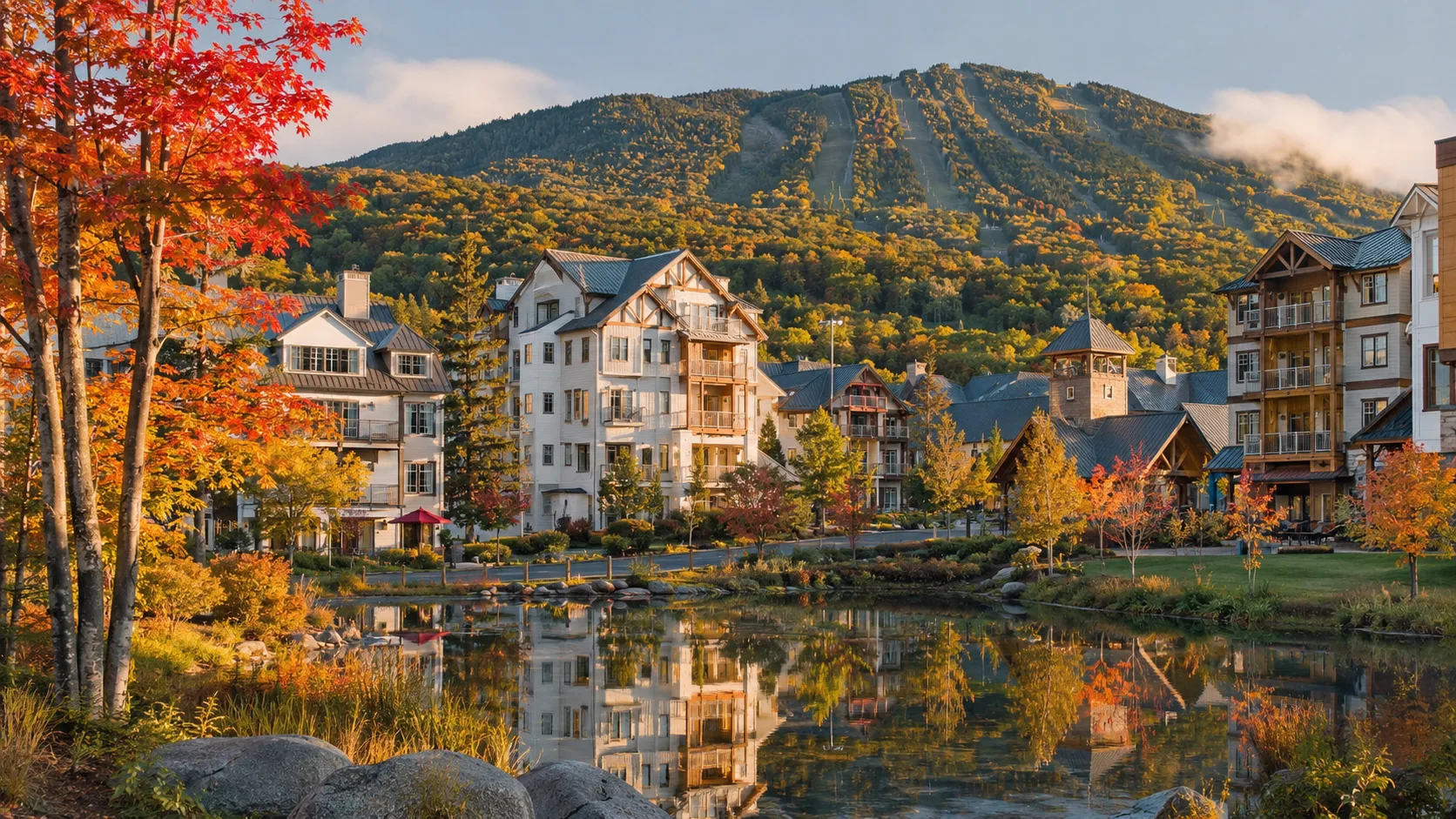
The first thing to understand — two markets wear one label
Here's the conversation I have most often, usually after a buyer sends me a link with some version of "why is this three-bedroom only $50,000?"
Waterville Valley runs two condo markets side by side, and the listing portals mash them together.
Whole ownership is what most people mean by buying a condo: you own the unit, all of it, all year. As I write this, there are a dozen whole-ownership condos on the market in the valley, running from about $175,000 for a one-bedroom to the mid-$600,000s for the largest three- and four-bedroom units. That's the real market.
Quartershares are fractional ownership — you buy a deeded quarter of a unit, typically giving you thirteen weeks a year on a rotating calendar, with the association handling housekeeping and upkeep between owners. Mountain Sun is the valley's best-known quartershare property, and at any given moment the portals are full of its listings at $40,000 to $60,000. Right now fractional listings actually outnumber whole-ownership listings here — which is why the "median condo price" a portal quotes for Waterville Valley is close to meaningless, and why that $50,000 three-bedroom is not the deal of the century. It's a quarter of a condo.
Neither is wrong. A quartershare can be a sensible way to own thirteen ski-and-summer weeks for the price of a used truck — I've sold them to families who use every week and love them. But know what you're clicking on: most lenders won't finance a fractional, so plan on cash; resale is slower; and you'll never rent it like a whole unit. If your goal is an appreciating asset you control, you want whole ownership, and you should read every listing's fine print for the words "quartershare" or "interval" before you fall for a price.
The associations, and how they differ
Ask a portal and Waterville Valley is one undifferentiated pile of condos. Ask anyone who lives here and it's a map of small associations, each with its own character, fee structure and quirks. A few of the names you'll meet, grouped the way I explain them to buyers:
The Town Square and lodge condos. Units in and around the Town Square put you above the shops and restaurants, steps from the beach at Corcoran's Pond — the pond at the Town Square end of Waterville Valley — the most walkable address in the valley and a perennial favorite for rental income. The nearby lodges blur the line between condo and hotel: Black Bear Lodge is condo-style suites with hotel services, a year-round pool and a front desk; Golden Eagle Lodge, the valley's landmark building, sells largely as fractional and vacation-ownership suites. Condo-hotel units rent easily but finance hard — many lenders treat them as commercial-adjacent, so talk to your lender before you offer, not after.
The classic garden and townhouse associations. This is the heart of the whole-ownership market: Village Condominium, Windsor Hill, Tripyramid, Forest Rim, Mountain Meadow, Mad River, Tyler Spring, Noon Peak, Snow's Brook and their neighbors. Most were built between the early 1970s and the late 1980s — the units on the market today have build dates like 1973, 1980, 1983, 1987 — and they range from compact one-bedrooms to four-bedroom townhouses. Character varies more than you'd expect: some sit in the woods, some face the mountain, some are a two-minute walk to the square.
What the ages mean. A 1970s or 1980s building is not a problem — it's a due-diligence agenda. The good associations here have renovated siding, roofs, and decks on a schedule and hold real reserves; a few have deferred and will fund the catch-up through special assessments. Same valley, same vintage, very different ownership experience. That's why I care more about an association's reserve study and meeting minutes than its curb appeal.
What a condo actually costs here
Numbers move, so treat these as the shape of the market rather than a price list — and check the live listings or run your own property search for today's truth. As I write this: one-bedrooms are listing from the high $100,000s, two-bedrooms cluster in the high $300,000s to low $500,000s, and three- and four-bedrooms run from just under $500,000 to the mid $600,000s. Compare that with what slopeside product costs at the bigger-name resorts an hour north and you'll understand why Waterville quietly converts so many browsers into owners.
On top of the mortgage, budget for three recurring lines every Waterville owner pays:
- Association dues — across today's whole-ownership listings, fees run roughly $200 to $500 a month, most clustering in the $300s and $400s, covering some mix of exterior, plowing, water/sewer, and sometimes cable and amenities. Get the current fee sheet and the last two years of budgets; a suspiciously low fee usually means a thin reserve.
- Property taxes — Waterville Valley is a tiny year-round town that maintains resort-grade infrastructure, so don't assume the rate from the town next door. Pull the actual tax card for any unit you're serious about, and I walk through how New Hampshire rates really work in my property tax guide.
- The extras that make the valley work — resort amenity access, ski passes, athletic club membership. What's bundled versus bought separately differs by association and changes over time, so make "what exactly comes with this unit" a written question during due diligence rather than an assumption at the closing table.
Renting it out, if that's the plan
Most of my condo buyers here intend to rent at least some weeks, and Waterville is well set up for it — a four-season resort calendar, families who return every year, and demand that doesn't depend on any single amenity. Ski weekends and vacation weeks carry the winter; summer brings the lake, golf, tennis and hiking crowd; foliage books itself. (For the guest's side of that demand — why visiting families increasingly pick a condo rental over a hotel room here — see rentals versus hotels.)
Two honest caveats from the management side of my desk. First, associations differ on rentals — minimum stays, rental caps, whether short-term renting is welcome at all. Verify the current rules in the condo documents themselves, not from a listing agent's recollection. Second, condo-hotel and Town Square units often plug into on-site rental programs, which are convenient but take a meaningful cut; independent management typically nets owners more on the units we run. I wrote up how our program works in the vacation rental guide, and the state's Meals and Rooms (Rentals) Tax applies in every town — my Campton Airbnb guide covers how that works — but Waterville Valley runs its own short-term-rental registration under the town zoning ordinance, so file the town's STR application before your first guest.
How to buy one without regrets
The mechanics of a New Hampshire condo purchase are ordinary; the diligence is where Waterville buyers win or lose. My standing checklist:
- Confirm what you're buying. Whole ownership or fractional, fee simple or condo-hotel. It sounds obvious. It is the single most common confusion in this market.
- Read the condo documents like they owe you money. New Hampshire's Condominium Act entitles you to the declaration, bylaws and budget — and the reserve study and recent minutes are where deferred maintenance hides. I read these with my buyers on every deal.
- Price the true monthly. Mortgage, dues, taxes, utilities, and a renovation line if the unit still wears its original kitchen. A cheap 1970s unit with a $40,000 refresh ahead of it is not cheaper than the renovated one next door.
- Ask the financing question early. Warrantable garden-style condos finance normally; condo-hotels and fractionals mostly don't. Your lender's answer should shape your search, not end it.
- Think in decades. Supply here is capped by the national forest and turnover is modest — the families who own in the valley tend to stay. Buy the unit you'll still want when the kids outgrow the bunk room.
Questions I answer every week
Can you live in Waterville Valley year-round? Yes — a small year-round community does, and the town runs real municipal services for its size. But be clear-eyed: most condos here were designed as vacation homes, the valley is quiet midweek in shoulder season, and everyday errands mean a drive down Route 49. Full-timers who thrive here are the ones who came for exactly that.
Do units come furnished? Usually, in practice — resort condos here commonly change hands turn-key, furniture and kitchenware included, especially anything that's been in a rental program. It's negotiated in the offer, so say what you want included rather than assuming.
What should winter logistics questions cover? Parking (assigned or scramble, and where snow gets pushed), ski and gear storage, and who shovels what. Unglamorous questions that decide how much you enjoy February.
Pets? Association by association — some welcome them, some restrict renters' pets but allow owners', some say no. If the dog is family, check the bylaws before you book a showing, not after.
Are Waterville Valley condos a good investment? I sell real estate here, so discount me accordingly — but my honest version is: as a lifestyle asset with capped supply, defensible rental demand and a forty-year track record of families holding on, the whole-ownership market has been kind to patient owners. As a pure yield play against a spreadsheet, plenty of markets beat it. Buy the weeks you'll use; let the rental income subsidize rather than justify.
Where Waterville fits in the bigger picture
If you're weighing the valley against its neighbors, the honest comparison is this: Waterville Valley gives you the resort itself — walkability, the square, the mountain — at the cost of association living and 1970s-80s building stock, while the corridor below it trades walkability for space and price. The Waterville Estates guide covers the big Campton-hills alternative, the condo communities index compares every association we track across the corridor, and the Waterville Valley area page has the full live market — every listing, every price change, straight from the MLS.
And if you'd rather just talk it through, that's genuinely the fastest route. Tell me how you'll actually use the place — ski weekends, summer base, rental machine, eventual retirement — and I'll tell you which three associations to look at and which to skip. It's a small valley. Knowing it well is the whole job.