
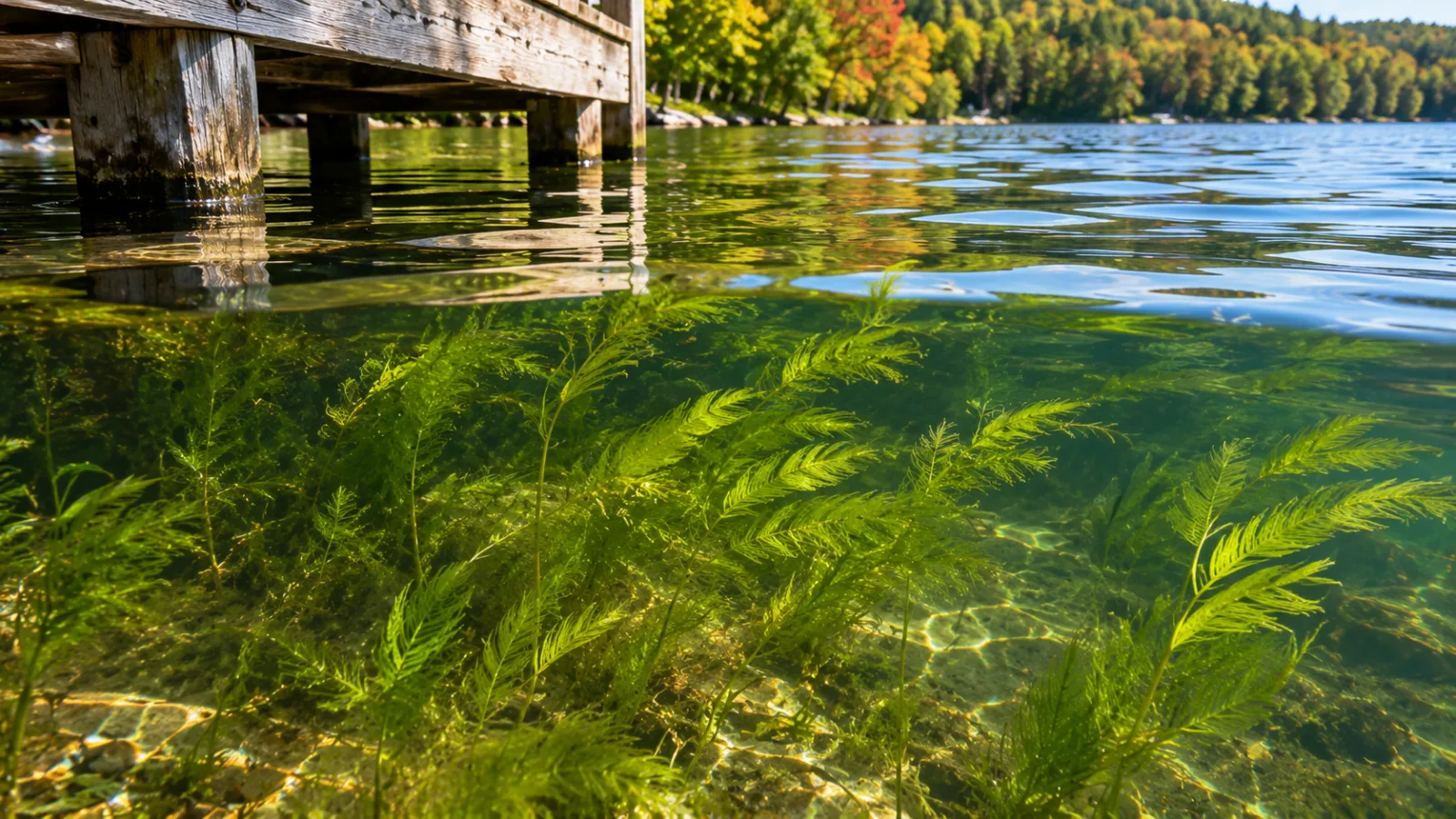

New Hampshire has 98 lakes, ponds and rivers with exotic aquatic species, holding 135 separate infestations, in the NH Department of Environmental Services Exotic Species Program's 2026 count. Variable milfoil is the most widespread, in more than 75 waterbodies by DES's 2019 count. Other invasive species in New Hampshire lakes include fanwort, Eurasian milfoil, brittle naiad, Chinese mystery snail, Asian clam and spiny water flea.
The DES invasive species page puts the total at nearly 100 waterbodies. The exact 98 and 135 figures come from the DES Exotic Species Program coordinator's 2026 Weed Watcher refresher, in the copy posted by the Pawtuckaway Lake association. The milfoil figure is from the DES variable milfoil fact sheet (WD-BB-23, 2019), posted by the Lakes Region Planning Commission. For the lakes themselves, start with our Lakes Region waterfront buyer's guide.
On this page
- Which invasive plants are in NH lakes?
- Which invasive animals are in New Hampshire lakes?
- Are Squam, Newfound and Winnipesaukee infested?
- What does New Hampshire law say about moving lake plants?
- What do invasive species mean for a waterfront buyer?
- Frequently asked questions
Which invasive plants are in NH lakes?
The invasive aquatic plants DES tracks in New Hampshire lakes are variable milfoil, Eurasian milfoil, fanwort, water chestnut, curly-leaf pondweed, brittle naiad and water violet. Variable milfoil, in New Hampshire since the 1960s, forms dense beds in the shallows that crowd out native plants and can grow an inch a day (DES fact sheet).
Eurasian milfoil is less of a threat in New Hampshire because it prefers more alkaline water than most New Hampshire lakes have. Water violet is the newest, first found in 2021 and most likely dumped from an aquarium. Hydrilla, a plant DES describes as spreading faster than milfoil and very hard to remove, has not been found in New Hampshire yet. On shorelines and wet ground, DES also flags phragmites (common reed) and purple loosestrife. For NH invasive species plants on land, the NH Department of Agriculture keeps a separate list of plants that are illegal to sell or plant.
Which invasive animals are in New Hampshire lakes?
The invasive animals DES lists for New Hampshire lakes are the Chinese mystery snail, the Asian clam and the spiny water flea, a tiny zooplankton that rides on fishing line. Spiny water flea was one of only two new infestations DES recorded in 2025 and turned up in Newfound Lake. The other 2025 newcomer was brittle naiad in Belleau Lake in Wakefield.
Are Squam, Newfound and Winnipesaukee infested?
Squam, Newfound and Winnipesaukee each have a different invasive-species record.
On Squam Lake, variable milfoil was discovered in the Squam Lakes and the Squam River in 2000. The Squam Lakes Association controls it with hand-pulling and diver-assisted suction harvesting and reports no new milfoil infestation on the lakes since 2007. On Newfound, the watershed association's 2025 shoreline survey found no invasive plants, but spiny water flea was confirmed in the lake in September 2025. On Lake Winnipesaukee, the picture varies bay by bay, so check the DES records and the town's milfoil program for the shoreline you're considering. Squam buyers can see current homes for sale on Squam Lake.
What does New Hampshire law say about moving lake plants?
New Hampshire law makes it illegal to transport aquatic plants such as variable milfoil on a boat, trailer or gear (RSA 487:16-c). Since 2017, RSA 487:16-d also requires you to drain your boat and any equipment that holds water, including livewells and bilges, and to remove or open drain plugs when leaving a waterbody.
At busy ramps, the NH LAKES Lake Host program offers free courtesy inspections; NH LAKES reports more than 1.6 million boats inspected and more than 1,600 invasive-species "saves" (2026 program information). Our boat launches guide covers the ramps. Only a licensed applicator may put herbicide into New Hampshire waters, so treating milfoil yourself is illegal.
What do invasive species mean for a waterfront buyer?
For a waterfront buyer, an infestation in front of the property is a real cost and a question worth asking early, not a footnote. DES's own fact sheet says variable milfoil "can devalue waterfront property," and it is usually first found near boat launches.
With lakefront buyers, we check DES's infested-waters records and the lake association's annual reports, which show whether there is an active management plan, who pays for it and whether the bed is near the lot. Ask the seller directly about milfoil and any treatment history. Our Lakes Region waterfront guide lists the rest of the lakefront diligence, from shoreland rules to septic, and our New Hampshire lake homes page shows current listings on these lakes.
Frequently asked questions
What is the most common invasive plant in NH lakes?
Variable milfoil is the most common invasive aquatic plant in New Hampshire lakes, found in more than 75 waterbodies by the NH DES 2019 count. It spreads mainly by fragments that ride on boats and trailers.
Is there zebra mussel in New Hampshire lakes?
Zebra mussels have not been reported in New Hampshire lakes in the DES Exotic Species Program's 2026 volunteer training, which listed the exotic animals as the Chinese mystery snail, Asian clam and spiny water flea. If you think you've found one, report it to DES.
Who pays for milfoil control on a New Hampshire lake?
Funding for milfoil control varies by lake, but the work follows a long-term management plan that DES prepares for each infestation. Ask the lake association or the town who pays for its program, and whether it relies on dues or town money, before you buy.
Can I pull milfoil in front of my own dock?
Check with the DES Exotic Species Program or your lake association before pulling milfoil, because broken fragments float off, root and start new colonies. Using herbicides is illegal unless a licensed applicator does it.