
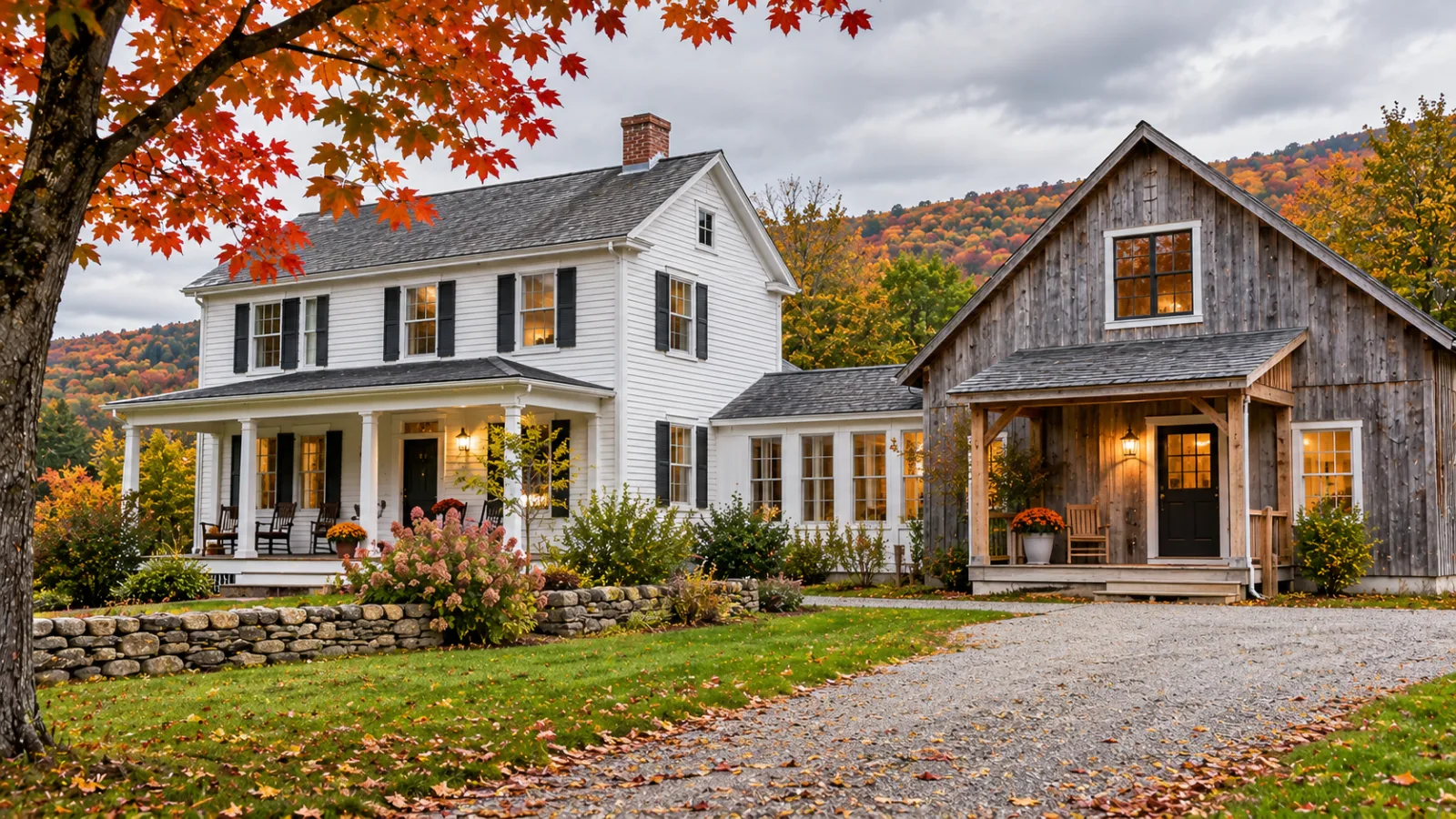

A dwelling unit, abbreviated DU in real estate, is one complete, independent home: the International Residential Code defines it as a single unit with permanent provisions for living, sleeping, eating, cooking and sanitation. New Hampshire's state building code moved to the 2024 edition of that code on July 1, 2026, and the DU count on a property drives zoning density, septic design and lending.
On this page
- What counts as a dwelling unit?
- How is an accessory dwelling unit different?
- Why does the number of dwelling units matter to a buyer?
- How do you check how many dwelling units a property has?
- Frequently asked questions
What counts as a dwelling unit?
A space counts as a dwelling unit when it has all of the essentials of a home on its own: a place to sleep, a bathroom and, above all, a permanent kitchen. A finished basement with a bedroom and a bathroom but no cooking facilities is usually just more of the main house. Add a stove and a separate entrance, and the town may see a second unit.
An "in-law suite" in a listing therefore deserves a question. A suite built without permits may be one unit on paper and two in practice, which matters to the buyer, the appraiser and the insurer.
A duplex has two dwelling units, a triplex three. In a condominium each unit is its own DU, even though the owners share the land.
How is an accessory dwelling unit different?
An accessory dwelling unit (ADU) is a second, smaller dwelling unit that goes with a single-family home, and New Hampshire law treats it differently from a duplex. HB 577, effective July 1, 2025, amended the ADU statute (RSA 674:71–73) so that towns with zoning must allow one ADU, attached or detached, as of right.
Towns can still cap the unit's size (950 square feet by default, and a town may not set the cap below 750) and apply the same setback and design rules as the main house, but since July 1, 2025 they may no longer require a larger lot for a detached unit (HB 577, 2025). Our guide to accessory dwelling units in New Hampshire covers what towns may and may not require.
Why does the number of dwelling units matter to a buyer?
The number of dwelling units matters to a buyer because zoning, septic capacity and financing are all counted per DU, so the count decides what you can legally use, rent or add. Three places it shows up on New Hampshire properties:
- Zoning density. Zoning ordinances commonly set density as a minimum lot area per dwelling unit, so a second house on one lot can need a variance or a subdivision, while an ADU does not. Check the ordinance for the town, whether that is Plymouth, Campton or elsewhere.
- Septic design flow. NH DES's design-flow table (Env-Wq 1008.03) counts a studio or one-bedroom apartment at 225 gallons per day and a larger apartment at 150 gallons per day per bedroom, and Env-Wq 1008.02 sets a 300-gallon-per-day minimum for any system. Adding a unit adds load, so the system's approved design flow can be the real limit on an ADU or a rental apartment.
- Financing. Residential mortgage rules stop at four dwelling units: federal due-on-sale protections in 12 U.S.C. 1701j-3(d), for example, cover homes with fewer than five units. A building with five or more units is financed as commercial property, with a different loan, down payment and appraisal.
Short-term rentals add a fourth reason. New Hampshire towns regulate short-term renting through zoning, and a cottage or apartment rented separately from the main house may be judged as its own use. Ask the town how it counts units before you buy for rental income; our short-term rentals in New Hampshire page covers the market.
How do you check how many dwelling units a property has?
Check the dwelling unit count at three places: the town assessing card, the building and zoning permits on file, and the NH DES septic approval for the lot. The three should agree. When the assessing card says one unit and the listing says two, ask the town before you rely on rental income from the second.
The septic approval is the easiest record to miss, because it states the design flow the system was approved for. The recorded deed can also carry covenants that limit units; our page on getting a copy of your deed in NH shows how to pull it.
Our guides to buying land in New Hampshire and building a new home in New Hampshire explain septic approvals, and our team can pull the town records on a listing you are considering.
Frequently asked questions
What is a DU in real estate?
A DU in real estate is a dwelling unit: one complete, independent home with its own kitchen, bathroom and sleeping space. Zoning ordinances use it to set density, for example one DU per so many acres, and lenders use the DU count to decide whether a building is residential or commercial.
Is an ADU a separate dwelling unit?
Yes. An accessory dwelling unit is a second dwelling unit that goes with a single-family home, with its own kitchen and bathroom. Since July 1, 2025, New Hampshire towns with zoning must allow one attached or detached ADU as of right under RSA 674:71–73, while a second full house usually needs more lot area.
How many dwelling units can I have on my lot in NH?
The number of dwelling units allowed on an NH lot is set by the town's zoning ordinance, usually through a minimum lot size per unit, plus one ADU as of right with a single-family home. The septic system's approved design flow can be a tighter limit than zoning, so check both.