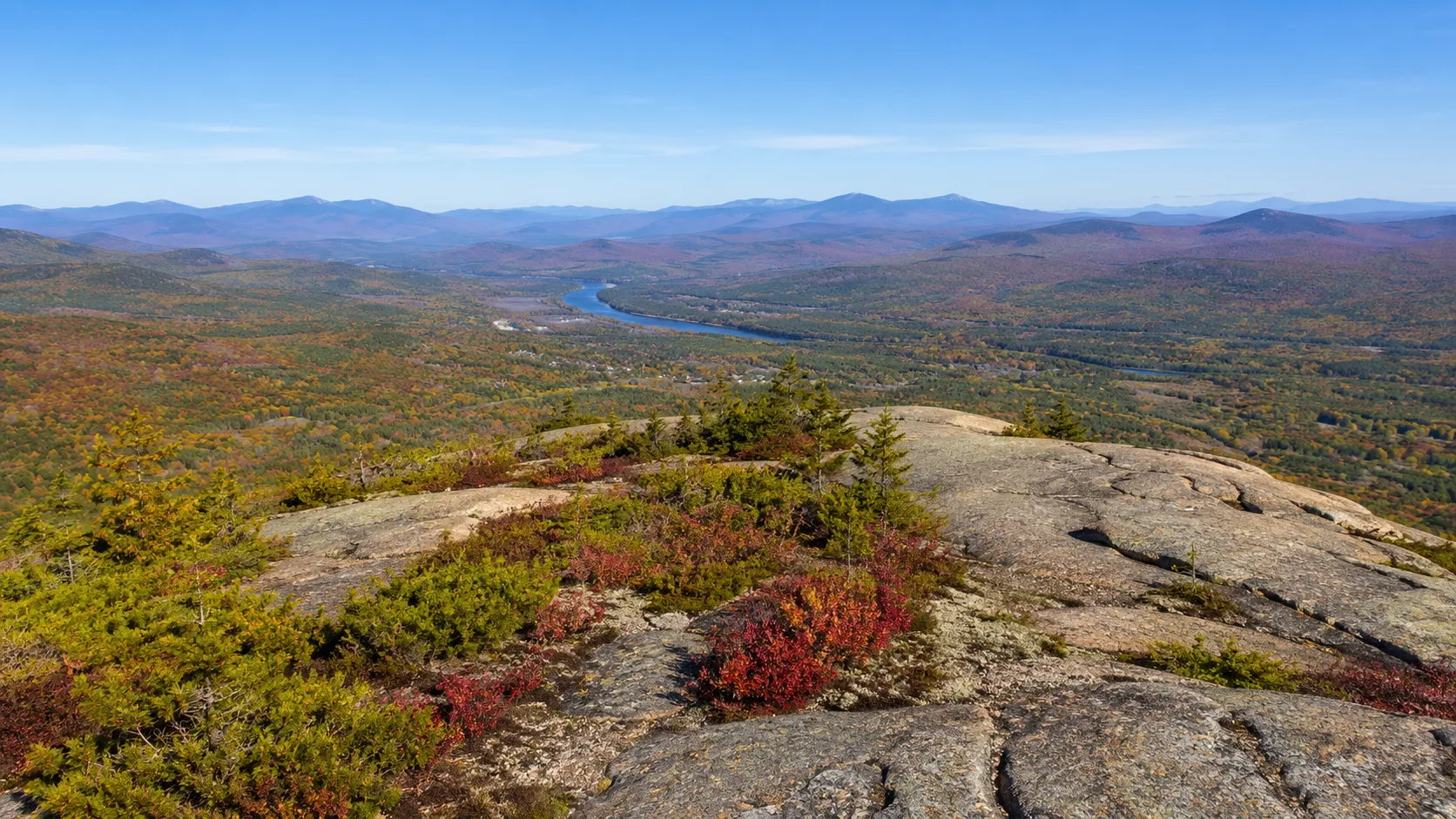

The best things to do in Campton NH don't come with a parking lot and a ticket booth — Campton doesn't advertise itself the way Lincoln does. What there is: two resort valleys within twenty-five minutes, a river running through town, three covered bridges, and a lot of quietly excellent days if you know where to point the car. This is the local list, season by season, with an honest take on what to skip.
Getting your bearings
Campton sits on I-93 at exits 27 and 28, about two hours north of Boston, at the mouth of two valleys at once. Turn east at exit 28 and Route 49 runs about 11 miles up the Mad River to Waterville Valley. Stay on the interstate north and you're in Lincoln in roughly twenty minutes. The Pemigewasset River forms the town's western edge, the Mad River cuts through its middle, and the White Mountain National Forest starts in the hills behind it.
That geography is the whole trick to enjoying Campton: the town itself is the quiet, pretty base, and almost everything below is either in town or within a fifteen-minute drive of it.
The covered bridges
Start with the thing Campton genuinely does better than its neighbors. The town has three covered bridges, and one of them is among the finest in the state.
Blair Bridge is the headliner — built in 1869, nearly 300 feet across the Pemigewasset, and restored top-to-bottom in 2014 so you can still drive through it (slowly, one lane, yield to the other side). Early morning light on the river through the portal is the photograph everyone comes home with. It's two minutes off exit 27 on Blair Road.
The bridge you drive through today is the 1869 rebuild — fire took the first one — and the 2014 restoration means it should be carrying traffic for another century. Stand inside it while a car rumbles through and you'll understand why people get sentimental about these things.
Turkey Jim's Bridge crosses West Branch Brook at Branch Brook Campground north of the village — smaller, walkable, and usually empty. Bump Bridge, tucked away on the old Beebe River roads, is the one even some locals haven't found. Doing all three makes a pleasant hour's loop by car or a good gravel-road bike ride, and in foliage season it's the best free itinerary in town.
While you're at Blair Bridge, book a table at the Covered Bridge Farm Table beside it — farm-style food with the bridge and river out the window. It's the restaurant I send every rental guest to first.
Summer
Summer is when Campton makes its case. The pattern is simple: water in the afternoon, mountains in the morning, golf whenever.
Swim the rivers. The Mad River along Route 49 hides swimming holes locals have used for generations — pull-offs between Campton and Waterville Valley, cold water even in August, smooth granite to sit on. Ten minutes up the road in Thornton, the pool on Smarts Brook is the reliable family option with an easy trail walk in. And on the Pemi just south of the village, Livermore Falls is the big one — a genuine gorge with a sandy river beach, the ruins of an 1880s iron bridge overhead, and a state-managed recreation area. It's popular on hot weekends for a reason; go on a weekday morning if you can.
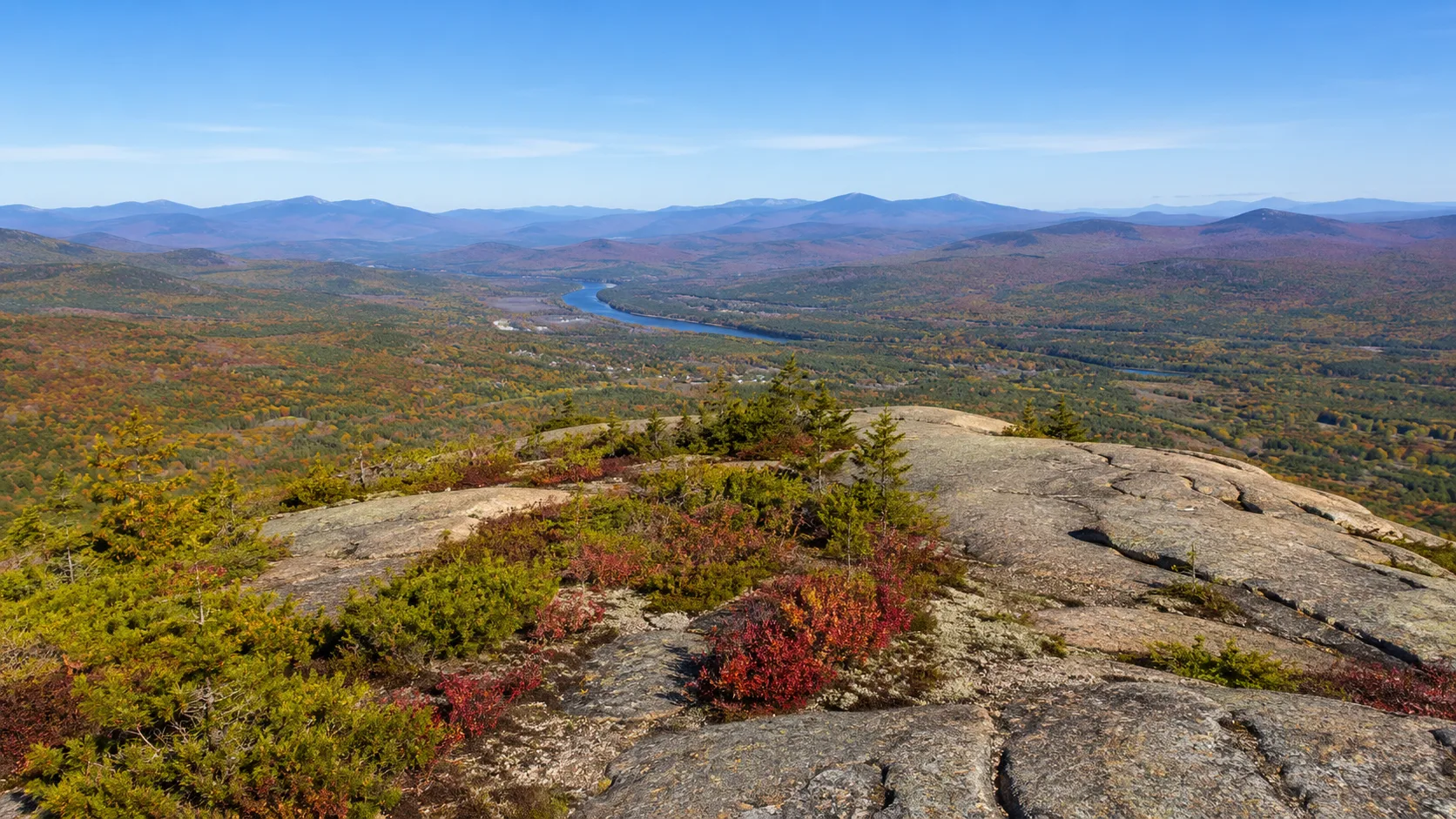
Hike Welch-Dickey. The Welch-Dickey Loop starts just over the Thornton line off Route 49 and it's one of the most-climbed loops in New Hampshire — about four and a half miles over two open summits with ledge walking most of the way. It earns its popularity: no other hike this close gives you that much open rock for that little effort. Start early; the trailhead lot fills by mid-morning on summer Saturdays.
Play Owl's Nest. Yes, I'm biased — the resort shares a name with my brokerage and we sell a lot of homes there — but the Nicklaus Design golf course at Owl's Nest Resort, just up Route 49, is legitimately the best round in this part of the state, and the Panorama Six82 restaurant and Lake Harold beach club give you somewhere to land afterward. My full Owl's Nest guide covers the resort in detail. Non-golfers in the family get pickleball and the water.
Paddle or fish the Pemi. The stretch of the Pemigewasset along Campton is forgiving flatwater-to-riffles paddling, and both the Pemi and the Mad River fish well for trout early and late in the day — NH Fish and Game stocks this corridor, and the locals you see standing in the river at 6 a.m. are not wasting their time. Campton Pond, at the Route 49 junction, is the easy put-in and the spot where beginners get comfortable. The pond and its dam are also the town's default scenic pull-over — if you've seen a photo of Campton, odds are it was taken there.
Go deeper into the forest. Campton is a doorstep town for the White Mountain National Forest, and the unglamorous move that makes a summer here is simply picking a different trailhead each weekend. The Sandwich Range rises directly east of town, most of its trailheads are inside half an hour, and none of them see Franconia Notch's crowds. Buy the annual WMNF parking pass instead of feeding the $5 iron rangers — it pays for itself by August.
Fall
I'll say what the tourism brochures won't: you don't need a destination in the fall here — you need a full tank and a slow afternoon.
Drive Route 49. The Mad River corridor to Waterville Valley is eleven miles of maples over moving water, and it peaks late September into mid-October most years.
Take Sandwich Notch Road. The rough historic dirt road off Route 49 climbs through the notch toward Center Sandwich the way travelers did two hundred years ago — narrow, slow, and gorgeous. Go in a vehicle you don't baby, and don't try it once winter closes it.
Tripoli Road out of neighboring Thornton is the other classic — a seasonal forest road through the national forest to Waterville Valley, all woods, no guardrails, closed in winter.
Foliage season is also when the covered-bridge loop earns a second visit, and when the golf course is at its most photogenic. It's the busiest stretch of the year for our rental portfolio — if you're thinking about visiting before buying here, book September and October well ahead.
Winter
Campton's winter pitch is the same as its rental pitch: two ski resorts, one address, and a cheaper pillow than either resort town.
Waterville Valley Resort is fifteen to twenty minutes up Route 49 — full-size mountain, ice arena, Town Square, and a big cross-country network in the valley. Loon Mountain in Lincoln is about twenty-five minutes the other way. Splitting a week between the two from one Campton base is a strategy plenty of our winter guests run every year, and I wrote up the Lincoln side of it in things to do in Lincoln.
Campton Mountain is the local secret — a small ski hill with tubing inside the Waterville Estates community in the hills above town, with a rec center, indoor pool and hot tubs attached. It's resident-and-guest access rather than a public resort, which is exactly why Estates properties rent so well in winter; I broke down the ownership math in the Waterville Estates buyer's guide.
Cross-country and quiet days. Waterville Valley's Nordic network is the serious cross-country option — a big groomed trail system through the valley floor that turns a non-downhill day into a full one. Closer to home, Smarts Brook is the snowshoe: the same brookside trail that hides the summer swimming hole runs quiet and mostly flat through hemlocks in winter, and it's my standard antidote to a crowded resort Saturday.
The overlooked winter move is doing nothing in particular: a storm day in a house in the Campton hills, wood stove running, followed by first chair at whichever mountain got more snow. That's the actual product people are buying when they buy here, and it's worth experiencing as a renter before you commit. The Airbnb guide covers what those winter weeks earn from the owner's side of the ledger.
Spring
I owe you honesty here: April in the Whites is mud season, and Campton is no exception. Trails are soft (stay off them — they erode), the rivers run high and cold, and half the seasonal roads are gated. What spring is actually good for: fishing as the water settles, the first quiet rounds at Owl's Nest when the course opens, and house-hunting — it's the season when inventory starts building and buyers who move early beat the summer rush. The reward for sticking around is late May, when everything opens at once and you get summer's trails without summer's trailhead lots.
Rainy days and small kids
Every White Mountains itinerary needs a wet-weather plan, and Campton's is its neighbors. Waterville Valley's Town Square covers the classic family half-day — the ice arena runs public skating sessions year-round, and the shops and cafés absorb the rest. Plymouth, ten minutes south, adds a movie theater, the Flying Monkey's live shows in a restored downtown theater, and Plymouth State's museum and gallery spaces. Lincoln's indoor attractions are twenty-five minutes north. With very small kids, honestly, the covered bridges plus an ice cream and a shallow spot on the Mad River is a full and successful afternoon — parents chasing a packed schedule here are solving a problem the town doesn't have.
A local's weekend, if you're sampling
People ask me for a one-weekend version of this article, so here it is. Saturday: Welch-Dickey at 8 a.m. before the lot fills, sandwiches from the exit 28 stores, the afternoon at a Mad River swimming hole, dinner at the Covered Bridge Farm Table with a walk through Blair Bridge after. Sunday: golf at Owl's Nest or a paddle from Campton Pond, then the covered-bridge loop by car on your way out, Sandwich Notch Road included if the season allows and your suspension forgives. That weekend has sold more Campton houses than any listing I've ever written.
Where to eat and resupply
Campton is not a restaurant town, and pretending otherwise would cost me your trust for the rest of this article. The Covered Bridge Farm Table by Blair Bridge is the standout meal in town, and the Sunset Grill on Route 3 covers honest barbecue and comfort food. For a pint, Dam Brewhouse on Route 175 pours a rotating list of small-batch beers out of a genuine house — Campton's one real taproom. Beyond that, the everyday essentials cluster at exit 28 — gas, coffee, a general store run — and two real dining scenes sit ten to fifteen minutes away in either direction: Plymouth's college-town restaurants to the south, and Waterville Valley's Town Square and Panorama Six82 at Owl's Nest up Route 49. Treat Campton as the quiet home base with good food a short drive out, because that's what living here is actually like.
Day trips that round it out
Anything in the western White Mountains works from here. Lincoln and North Woodstock's full menu — Loon's gondola, the Flume Gorge, the Kancamagus Highway — is twenty-five minutes north (my honest rundown is in the Lincoln guide). Squam Lake, of On Golden Pond fame, is twenty-five minutes east through Holderness. Franconia Notch's trailheads are under forty minutes. That radius is precisely why people who start as Campton renters end up as Campton owners: it's the cheapest seat in the middle of everything.
What I'd skip
Nothing in Campton itself — the town's short list is all genuine. But manage expectations on two counts. First, don't come expecting nightlife; the corridor goes quiet early, and that's a feature for the families and remote workers who buy here, not a bug. Second, skip Livermore Falls on a hot Saturday afternoon unless you like sharing a beach — it has been discovered. The Mad River pull-offs give you the same cold water in more privacy.
If the visit turns into a search
It usually does — about half the buyers I work with in Campton first came as renters or day-trippers. If that's where you're heading, start with how the town actually works as a place to own: my Campton Airbnb guide covers the rental math and town rules, the Waterville Estates guide covers the community most first-time buyers here look at, and the Waterville Valley area page has the live Campton market — every current listing, updated from the MLS. Or just call the office. It's in Campton, after all, and talking about this town is the best part of my job.